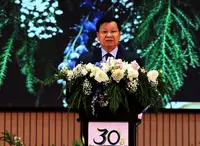
VIENTIANE: The government has set up a national steering committee to guide the implementation of plans to turn the country’s large working-age population into a driving force for national development before the demographic window of opportunity closes in 2060.
The formation of the National Population and Development Steering Committee was officially announced at its inaugural meeting in Vientiane on November 5, under a ministerial decision made in 2025.
The event also included the launch of the Lao Demographic Dividend Roadmap (DDR), which sets out strategies to harness the demographic dividend.
Developed through a partnership between the Ministry of Finance and UNFPA, the DDR calls for urgent investment in youth and the working-age population—who make up the majority of the population—so they are empowered to thrive and contribute to Laos’ economic growth.
According to the DDR, fertility declined from approximately 6.3 births per woman in 1950 to 2.4 in 2024, while life expectancy increased. As the working-age population grows relative to the dependent population, a window of opportunity has opened up, making this the best time to harness the current demographic dividend.
However, the demographic dividend is not automatic—it depends on whether people can access quality services, complete their education, and find decent work.
The Demographic Dividend Roadmap stresses that the demographic window of opportunity is time-limited and is projected to close between 2055 and 2060. Investment in human capital after this period may not be relevant.
In addition to the launch of the roadmap, a Costed Action Plan and Real-Time Dashboard were introduced to monitor progress in the implementation of the roadmap.
Speaking at the DDR launch, Deputy Minister of Finance Dr Sitthiroth Rasphone, who is Vice Chair of the National Steering Committee for National Population and Development, described the roadmap as a strategic guide for implementing the country’s population and development priorities.
“The Demographic Dividend Roadmap does not create a new or competing policy framework. It builds on existing policies, including the National Population and Development Policy for 2019-2030 and the Youth and Adolescent Strategy for 2021-2030,” he said.
UNFPA Representative Dr Bakhtiyor Kadyrov reaffirmed UNFPA’s commitment to supporting the government and its partners in translating the roadmap into practical investments.
“The Lao PDR’s demographic opportunity depends on the investments we make in people today. For young people, this means being able to stay healthy, complete their education and find decent work,” he said.
Dr Kadyrov said UNFPA would continue to support the Ministry of Finance and line ministries to translate the roadmap into a costed action plan that reflects local needs and sets clear budget priorities. The plan will help mobilise funding and deliver tangible benefits for women and young people across the country. - Vientiane Times/ANN