Garment workers largely resumed work after days of wage protests, although some factories remained closed and isolated demonstrations continued.
Bangladesh’s garment wage board agreed on Wednesday to raise minimum pay in the key sector, which generates around four-fifths of the country’s export earnings, worth up to US$38bil (RM154bil).
Gazi Jasim Uddin, who heads the police unit for industrial zones, said protests had dropped sharply compared with recent days.
“In Narayanganj, more than 95% of garment factories have resumed operations,” Uddin told reporters yesterday.
There were isolated protests in Gazipur and Ashulia, also industrial areas near Dhaka.
“Workers in Ashulia went to factories and started coming out an hour later,” he said. “In Gazipur protesters tried to occupy the highway.”
The South Asian nation of 170 million people is the world’s second-biggest garment exporter behind China.
Workers are demanding a minimum monthly wage of 30,000 taka (RM963), a 140% increase on the current 12,500 taka (RM401).
The wage board, comprising representatives of employers and workers, was set up by the government on Sunday to negotiate a pay rise.
In a statement, the board said the new minimum wage would be announced in December and take effect in January.
The dispute reflects longstanding tensions in an industry that employs more than four million people but has been dogged by complaints over pay, working conditions and labour rights.
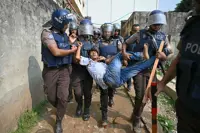
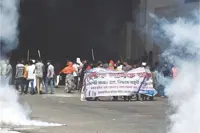
On Wednesday, before the deal was announced, tens of thousands of workers marched through industrial areas, with some hurling bricks, setting fire to police vehicles and erecting barricades as police fired tear gas to disperse crowds.
Monowara, 35, a garment worker in Gazipur, said large numbers of police officers were still patrolling the area.
She said she had been ready to resume work, but her factory had informed workers it would remain closed until Sunday. — AFP