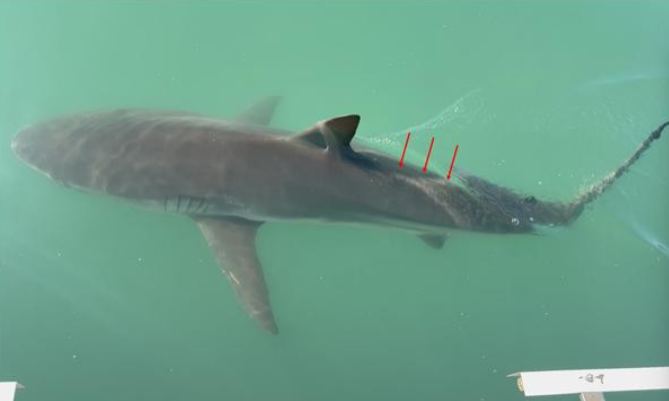
SEOUL: A marooned three-metre-long shark in South Korea has drawn more than a million visitors to the coastal city of Busan, boosting local retail sales and triggering a trademark war as authorities rush to stop opportunistic vendors from cashing in on the viral phenomenon.
The shark, nicknamed "Bukangi” in reference to the park where it has become trapped, has become an internet darling and tourist sensation after non-stop local media coverage about multiple failed efforts to encourage it back into the open ocean.
Busan authorities have moved to capitalise on the frenzy. The city has appointed the shark - which experts believe is a dusky shark - an honorary ambassador, giving it a starring role in local promotional campaigns. Some 1,062,800 people have visited the park to see the shark since Sept 19, the Busan Infrastructure Corporation said.
Bukangi is the latest example of how wildlife straying into urban environments can become tourist sensations supercharged by the internet, boosting the local economy.
In 2018, a mandarin duck - native to East Asia - went viral as it settled in New York’s Central Park, sparking themed merchandise. The same year, Londoners were thrilled by a Beluga whale frolicking in the River Thames.
In the week after the shark appeared in mid-September, CU convenience stores near the park reported a 76.7% jump in sales compared to earlier in the month, according to BGF Retail Co Ltd, which operates the popular chain. Sales of tangentially shark-related products, like the Jaws Bar popsicle, were up 26.5% nationwide, it said.
Busan has warned it will take action against any efforts to trademark the Bukangi name for private commercial use. "Bukangi has grown into a new symbol of Busan,” said mayor Chun Jae-soo, in a statement. "I will ensure that this name, created with the public, is not used exclusively by any single individual.”
Yet the business opportunities the shark presents may be limited. Yun Jinho, director at Choin Marketing Lab, said that while local store-owners may be nimble enough to release shark-related products, the animal’s eventual departure makes it tricky for larger companies to act.
"People love it because it’s a chance event that could vanish at any moment,” said Yun. Once the shark goes back to its natural habitat, "the random and unusual nature of it will become but a memory,” added Yun.
Last month, the city’s coastguard and fire department officials unsuccessfully tried to escort the Busan shark back to the ocean with high-pressure hoses and loud noise. A second rescue attempt last week involved a wide net to bring it closer to the exit. The next day, the shark had swum further inland, sidestepping the net.
Scientists at the National Institute of Fisheries Science will continue to monitor its movement and health, said Kim Hyun-woo, its senior researcher. Experts say once the water dips in temperature, the shark is likely to return to the ocean on its own, though the longer it stays, the weaker it will get.
"It’s been about 18 days since it has eaten,” said Choi Youn, professor emeritus of fish taxonomy and ecology at Kunsan National University.
The shark may be attracted to the magnetic field created by the undersea cables along the waterway, Choi added. Sharks are known to use Earth’s magnetic fields to orient themselves and navigate the ocean. - Bloomberg