



The JYY Group hosted the 2026 Malaysian Trigona Honey Scientific Symposium, bringing together representatives from government, academia, research institutions, industry, retail and the consumer sector to explore the next chapter for Malaysian Trigona Honey.
The symposium was officiated by Deputy Minister of Agriculture and Food Security, YB Datuk Chan Foong Hin, alongside Director-General of the Department of Agriculture Malaysia, Dato’ Nor Sam, researchers from Universiti Tunku Abdul Rahman (UTAR), Universiti Malaysia Terengganu (UMT) and Universiti Sains Malaysia (USM), and representatives from the Trigona Honey industry.
Through the symposium, JYY Group aims to establish a cross-sector platform that can bring greater scientific validation and international recognition to Malaysian Trigona Honey. The Group believes its potential extends beyond its traditional positioning as a wellness food, with opportunities to build a distinct Malaysian Trigona category and ecosystem through scientific research, quality standards, sustainable beekeeping, modern product innovation and stronger market development.
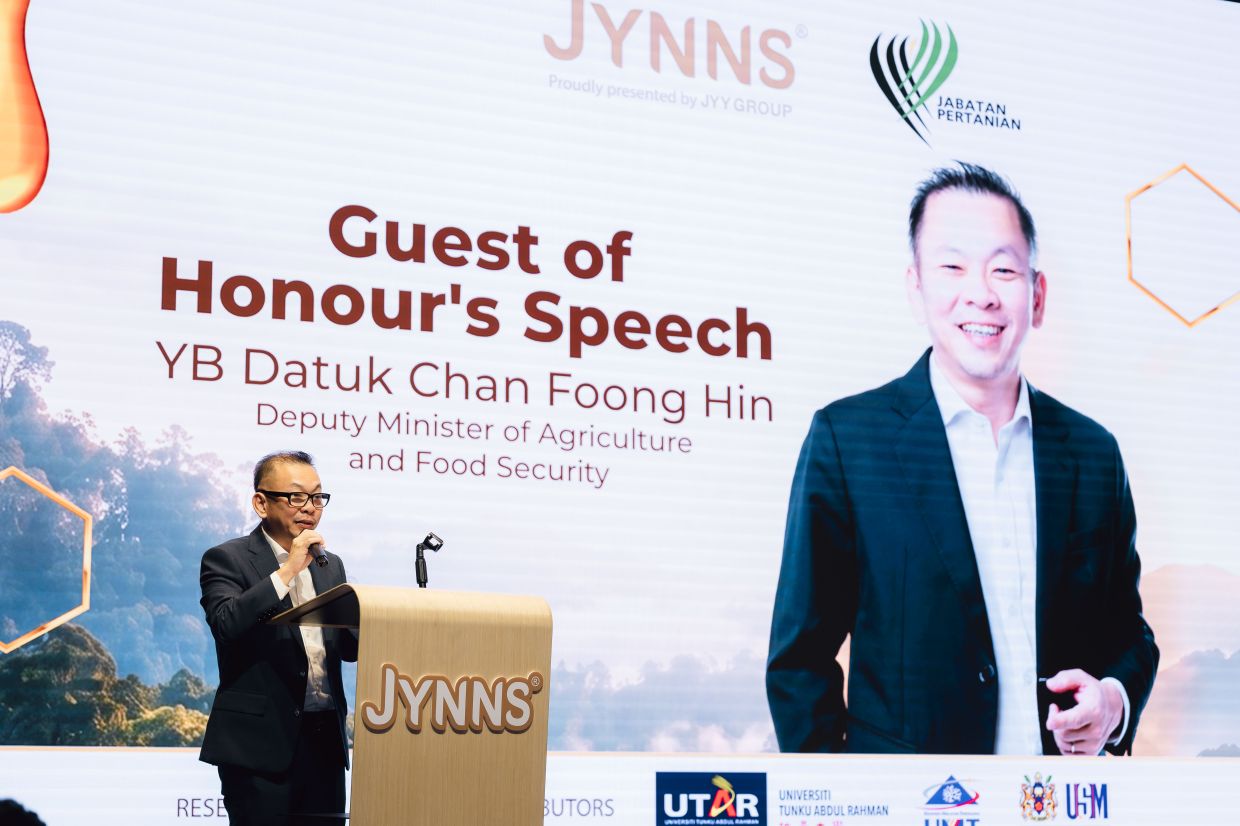
Datuk Chan Foong Hin, Deputy Minister of Agriculture and Food Security, said, “Malaysia is blessed with high-quality natural resources such as Trigona Honey, but bringing them to the world requires strong scientific research, quality standards, responsible production and industry participation. The Government will continue to support research and innovation, commercialisation and market development so that more high-quality Malaysian agricultural products can gain international recognition.”
“We are also encouraged to see private-sector players such as JYY Group investing in research and actively collaborating with local universities and beekeeping communities to create greater value for Malaysia’s agricultural sector.”
JYY Group Founder and Group CEO Alann Tan said, “We have always believed that the quality of a good honey begins at its source. JYNNS Trigona Honey is sourced from a single origin in Sarawak, East Malaysia, while the bee farm is also certified under the Department of Agriculture’s Malaysian Good Agricultural Practices.”
“We are pleased to further strengthen our collaboration with the Department of Agriculture, academia and the beekeeping community. By bringing these different strengths together, we hope to take Malaysian Trigona Honey further onto the international stage.”
A key highlight of the symposium was an expert panel featuring specialists across different areas of Trigona Honey research and development.
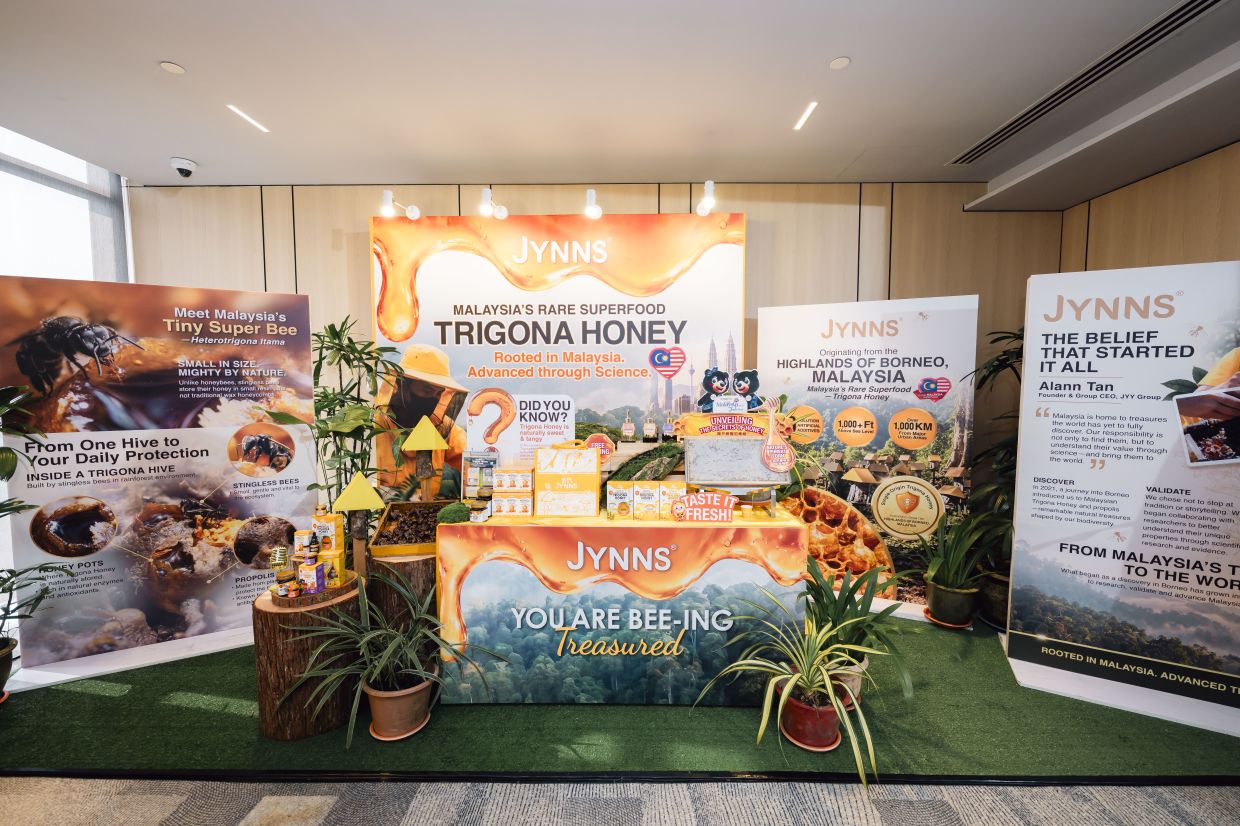
Professor Wan Iryani Wan Ismail of Universiti Malaysia Terengganu shared perspectives on the quality and standards of Malaysian Trigona Honey, while Dr Mohd Zulkifli Mustafa, a neuroscience researcher from Universiti Sains Malaysia, discussed ongoing research involving Trigona Honey in the field of neuroscience. Dr Ng Wen Jie, lead researcher from Universiti Tunku Abdul Rahman, shared insights into the latest scientific findings and validation of Malaysian Trigona Honey.
Meanwhile, JYY Group Founder Tan discussed how scientific findings can be translated into product innovation, consumer education and international market development.
The discussion highlighted that establishing Trigona Honey as an internationally recognised Malaysian treasure requires more than scientific evidence alone. Progress in research must be supported by quality standards, industry development, market access and consumer education.
To translate these conversations into longer-term action, a Memorandum of Collaboration (MoC) signing ceremony was also held during the symposium.
Witnessed by Deputy Minister of Agriculture and Food Security YB Datuk Chan Foong Hin and Department of Agriculture Malaysia Director-General Dato’ Nor Sam, the MoC brought together JYY Group, UTAR, UMT and USM to strengthen collaboration across Trigona Honey research, industry applications and sustainable beekeeping development.
Another key highlight of the symposium was the presentation of JYNNS Trigona Honey’s latest peer-reviewed research findings by the UTAR research team, providing further scientific insights into its characteristics and potential applications.
The research covered the low Glycaemic Index (Low GI) characteristics of Malaysian Trigona Honey, alongside the latest antibacterial research involving Trigona Honey and related products. Beyond honey itself, JYY Group has also expanded its research into Trigona propolis, extending the scientific exploration of the stingless bee ecosystem into modern wellness applications.
In the second phase of laboratory research, the antibacterial activity of the JYNNS Trigona Propolis Oral Spray was evaluated and compared against several commercially available propolis sprays.
Using the internationally recognised Broth Dilution Method for antimicrobial assessment, the study found that the JYNNS Trigona Propolis Mouth Spray demonstrated antibacterial activity against all 3 tested bacteria: Escherichia coli (E. coli), Salmonella Typhimurium and Streptococcus pyogenes.
For E. coli and Salmonella Typhimurium, its Minimum Inhibitory Concentration (MIC) and Minimum Bactericidal Concentration (MBC) results were better than those recorded for the other commercial and internationally recognised propolis sprays tested in the study.
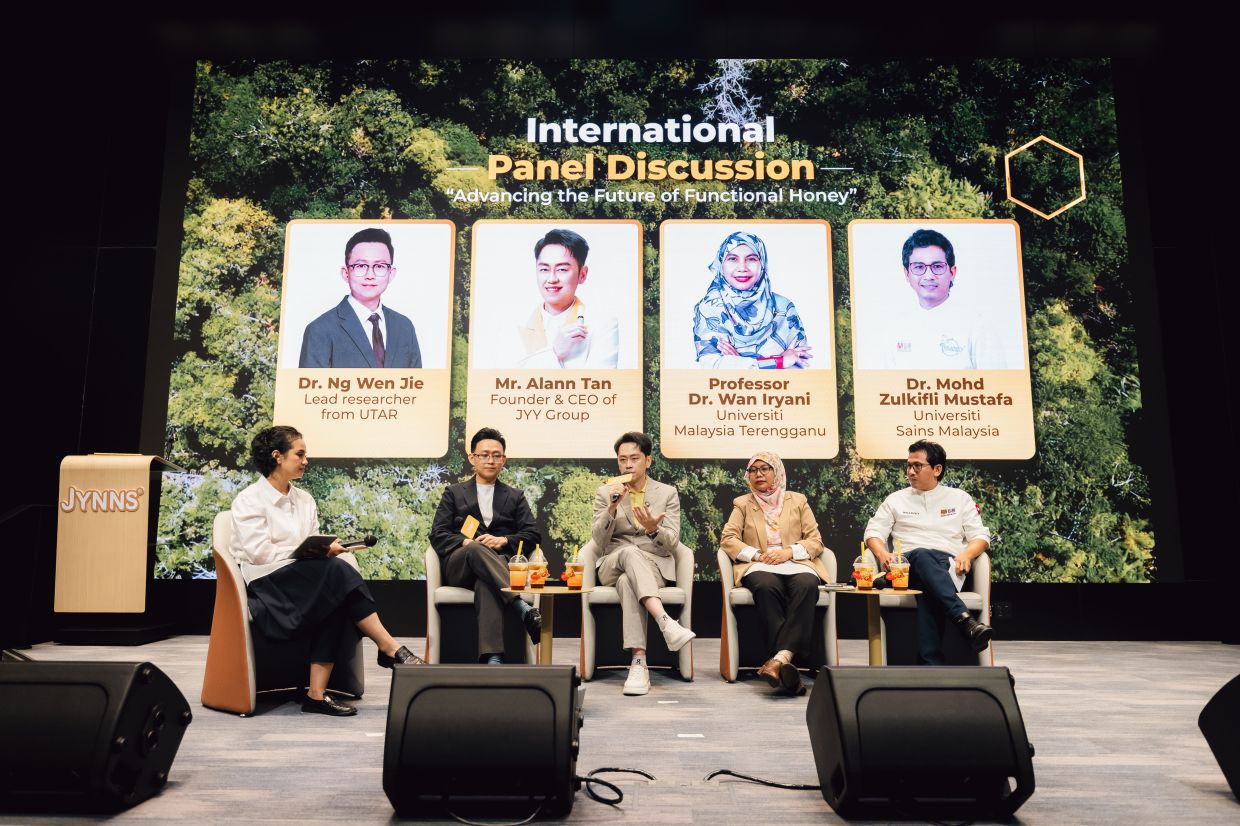
As a new milestone for the JYNNS Trigona Honey Series, the development of the new product also led to a significant discovery. Relevant testing showed that Trigona propolis demonstrated up to 99.9999% antibacterial activity. When Trigona honey and propolis were combined, the mouth spray demonstrated overall antibacterial activity at least three times that of some internationally recognised propolis sprays tested, marking an important breakthrough in the product’s development.
The new JYNNS Trigona Honey Propolis Mouth Spray brings together two Malaysian natural active ingredients — Trigona propolis and Trigona honey. The former demonstrated antibacterial activity in relevant testing and possesses anti-inflammatory properties, while the latter is characterised by its Low Glycemic Index (Low GI), combining the natural benefits of both ingredients in one convenient mouth spray.
The second-phase research marks a further expansion of JYY Group’s scientific work, from natural Trigona Honey itself to propolis and modern product applications, supporting the development of a more comprehensive research and product ecosystem around Malaysia’s stingless bee resources.
Marking another milestone in the development of the Malaysian Trigona Honey ecosystem, JYY Group and Watsons Malaysia, led by Trading Director Foo Hwei Jiek, formally signed a strategic retail partnership agreement, making Watsons the first retail partner to carry the complete JYNNS Trigona product ecosystem. The partnership will bring JYNNS Trigona Honey, Trigona Propolis and Trigona Propolis Mouth Spray to a wider retail network, making the products more accessible to Malaysian consumers.
Tan said Malaysia has never lacked valuable natural resources. The greater opportunity lies in combining science, commercialisation and brand-building to help the world recognise the treasures that originate from Malaysia.
He added that JYY Group’s ambition goes beyond developing more Trigona Honey products. Instead, the Group hopes to bring different stakeholders together to progressively build a more complete and sustainable ecosystem for the industry.
“We believe Malaysian Trigona Honey deserves to be recognised by the world. But this cannot be achieved by one brand alone. It requires the collective participation of government agencies, researchers, beekeepers, industry players and retail partners.”
“We hope that one day, when consumers around the world think of premium honey, Malaysian Trigona Honey will naturally be among the choices that come to mind.”
The 2026 Malaysian Trigona Honey Scientific Symposium represents a starting point for this longer-term ambition. JYY Group ultimately hopes to see Malaysian Trigona Honey establish a global identity in the same way that Manuka honey has become synonymous with New Zealand — evolving beyond a product category to become an international calling card for Malaysia’s natural resources, biodiversity and wellness heritage.
