Bangkok authorities declared a flood disaster across the Thai capital yesterday after almost 48 hours of heavy rain left canals full, roads submerged and residents wading through deep water.
Bangkok Governor Chadchart Sittipunt urged people to stay home after almost 300mm (11.8 inches) of rain fell, while Prime Minister Anutin Charnvirakul said he was cutting short a trip to London to return.
“The water keeps coming in. It’s hard to go out now. It’s like at my waist level now,” said Somkid Pheuk-ngam, 67, a vendor who lives near a canal just north of central Bangkok.
“I cannot go anywhere. I have had to close my shop for two days now,” she said, adding, “I think this time is worse than the 2011 flood.”
Widespread deluges across Thailand in 2011 killed more than 500 people and damaged millions of homes.
Chadchart said mid-afternoon yesterday that the situation had “stabilised”, adding: “If more rainwater doesn’t fall in the area, it will be solved.”
“If the rain stops, it is expected that it will take two to three days to drain the floodwater,” he said in an update broadcast on social media.
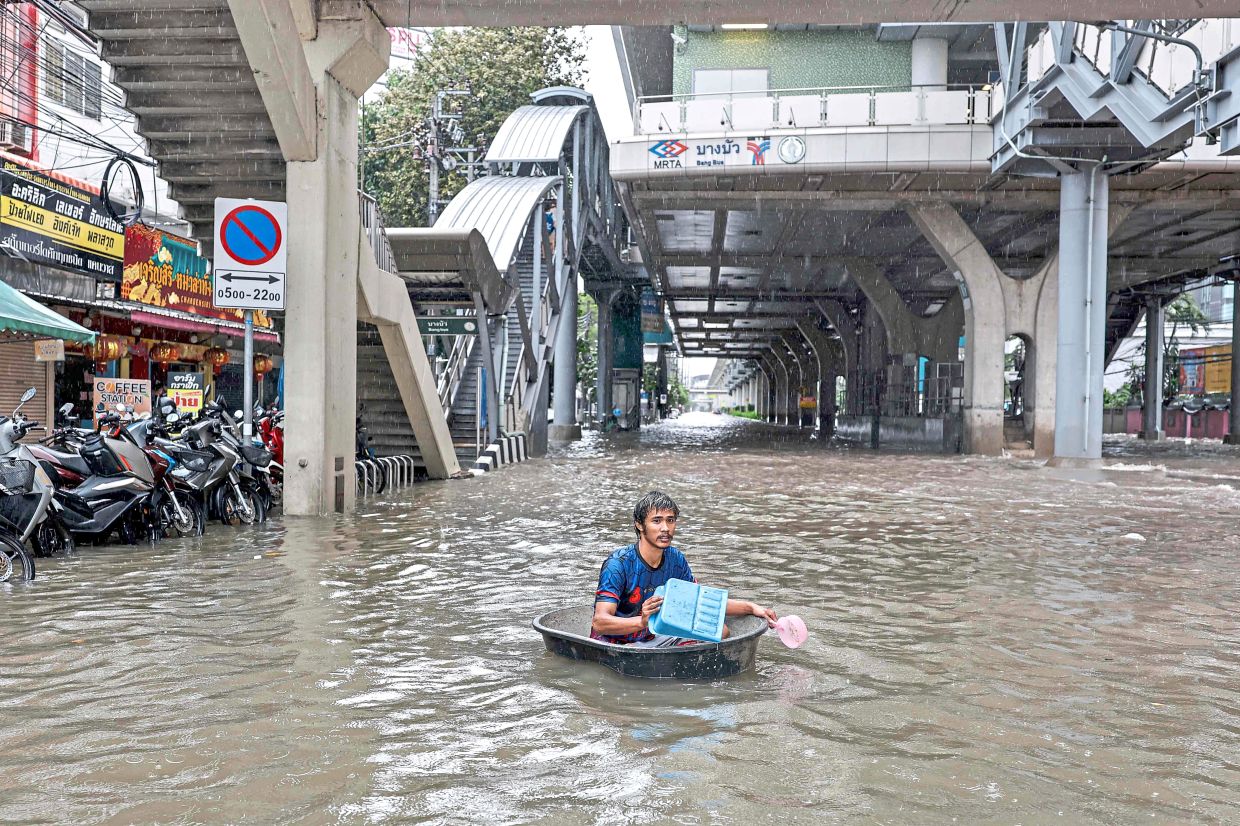
Almost continuous rain since Thursday afternoon has swelled Bangkok’s network of canals, sending murky water into surrounding homes, restaurants, shops and alleyways.
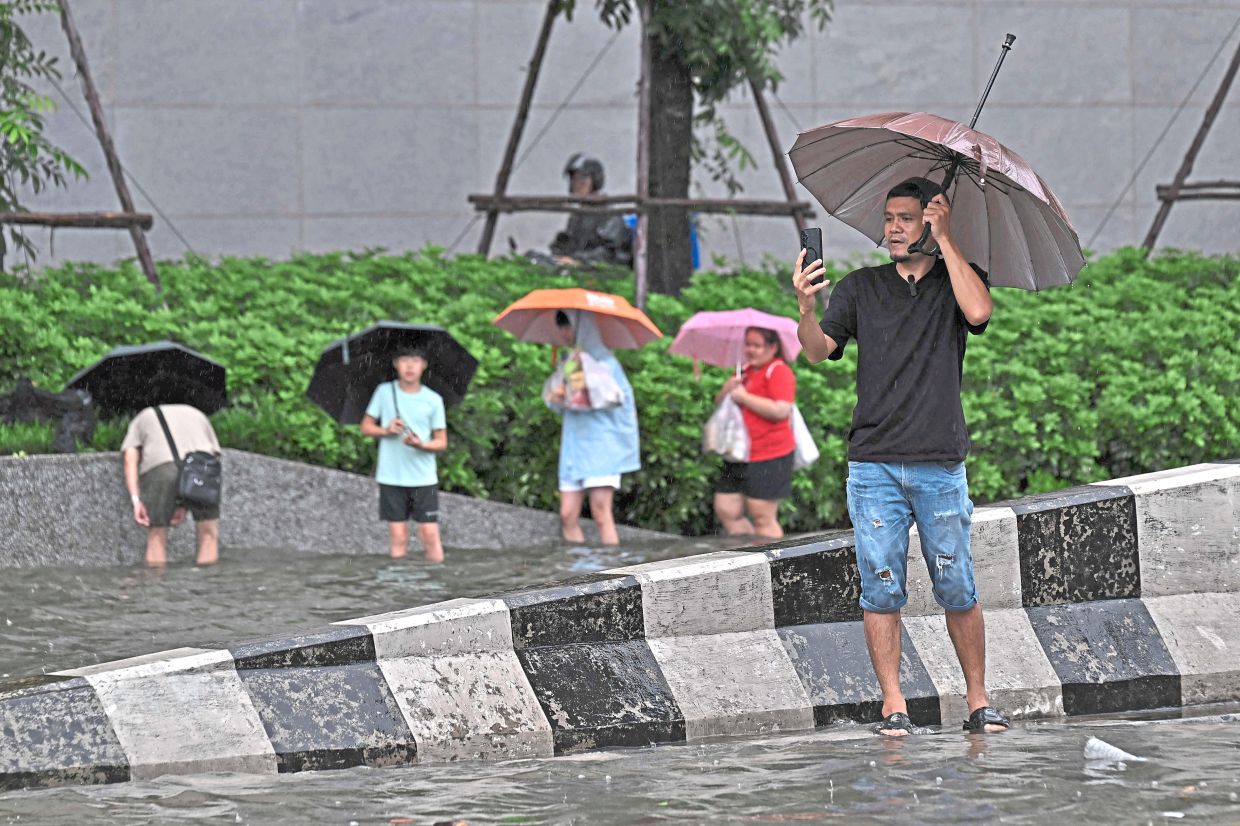
Chadchart said at least 13 roads were also flooded, and AFP reporters saw residents in several different neighbourhoods forced to wade through high waters.
The Bangkok Metropolitan Administration (BMA) declared a disaster for all 50 of the city’s districts, a move that gives local organisations special powers to act.
But the governor urged residents not to worry about potential food shortages caused by blocked roads, stressing: “The public don’t have to be panicked.”
Chadchart revealed that around 980 people were staying in temporary shelters, while authorities had transferred 36 bedridden people to hospitals.
“I woke up to go to work, and the street in front of my house was flooded,” said motorbike rider Samruay Nakkamnueng in the Ari neighbourhood.
“I worry that my motorbike would not be able to wade through this much floodwater.”
In the On Nut neighbourhood, an AFP reporter saw locals filling sandbags to take home to protect their homes and businesses.
With flooding worst in the city’s east and along canals, Chadchart urged residents to move belongings to higher ground.
“Our problem is that the canals are full,” Chadchart said in his afternoon update.
“We are cooperating with nearby provinces and trying to drain water out through other sides, minimising the amount that flows into Bangkok.”
Once dubbed the “Venice of the East”, the city is built on former marshland and rests about 1.5m (five feet) above sea level.
The BMA earlier said the city’s pumping stations were operating at full capacity, pumping some 1,200 cubic metres per second combined.
Municipal workers were also busy yesterday trying to keep the roads clear.
“Our job is to make sure rubbish along the road doesn’t block the drains, so the water can drain away quickly,” said Kwan Nobnom, one of a group wearing bright orange raincoats.
“We thought this year would be dry, so we didn’t expect the flooding to be this bad.”
September is the peak of the rainy season in Bangkok, but it has been wetter than usual, according to figures from the drainage and sewage department.
The capital recorded 487 mm of rain between Sept 1 and 25, compared to an average of almost 269mm for the same period from 1991 to 2020.
Scientists warn the intensity and frequency of extreme weather events will increase as the planet continues to heat up because of fossil fuel emissions.
The Department of Disaster Prevention and Mitigation warned of low pressure across eastern, northeastern and central Thailand until today. — AFP