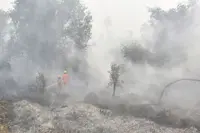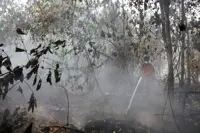
More than 170,000 respiratory cases were recorded in regions affected by haze in Indonesia, a health ministry official said, as the country battles fires that have caused toxic smog for weeks.
Blazes in Borneo, Sumatra and Papua have blanketed parts of the vast archipelago of more than 280 million people, as well as neighbouring Malaysia and Singapore, sending air quality indices plummeting.
The toxic smog contains pollutants including PM2.5, a fine particulate matter smaller than a human hair that can pose respiratory health risks, health ministry official Then Suyanti told a news conference yesterday.
“There were 174,694 cases of acute respiratory infections between August and Sept 21 in areas affected by forest and land fires,” she said.
More than 40,000 of the recorded cases involved toddlers, she said.
The overall figure, covering seven haze-affected provinces, was up from more than 113,000 cases reported as of Sept 9.
The health ministry had mobilised aid including oxygen concentrators, face masks and oxygen canisters to the affected regions, Then said.
“We advise (the public) to reduce outdoor activities when air quality worsen, wear a mask and maintain hydration,” she added.
Indonesia regularly battles wildfires during the dry season, which typically runs from July to October.
But the blazes are more intense this year, coinciding with what is expected to be the strongest El Nino climate phenomenon since comparable records began four decades ago.
The prolonged dry spell is also expected to delay the arrival of the rainy season.
Yesterday, the nation’s weather agency said the 2026 rainy season is expected to begin in November, with the El Nino pattern likely to persist until the first quarter of 2027.
The weather agency had previously forecast the wet season to begin in October, when it usually starts.
About 61% of Indonesia’s land area will experience the delay, agency chief Teuku Faisal Fathani told a press conference.
The rains are expected to arrive in early November in most parts of the country, including some areas of Kalimantan and the islands of Sumatra, Java and Sulawesi, Teuku said.
The extended dry season has contributed to Indonesia’s most intense wildfires in 11 years, as “super El Nino” conditions drive up temperatures and cause droughts.
Fires burnt 202,000ha of land between January and July, official figures show, while environmental group YKAN estimates another 600,000ha were affected in August.
The weather agency advised the food sector to adjust planting schedules and choose crop varieties with shorter growing cycles to prepare for the prolonged dry spell.
Rainfall is expected to peak in most parts of Indonesia in December, with heavy rain still likely in January and February 2027.
Another agency official, Ardhasena Sopaheluwakan, said El Nino was still having a strong impact across most parts of Indonesia in September.
He said the phenomenon was expected to persist until the first quarter of 2027, although its effect on drought would ease once the rains arrive. — AFP/Reuters