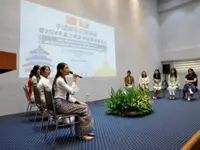
SHENZHEN: In an age when algorithms have the power to both empower and mislead, media leaders from across the Asia-Pacific gathered in a southern Chinese innovation hub, pledging to uphold journalistic responsibility while championing a distinctive narrative for the region.
The Asia-Pacific Media Forum opened on Saturday in Shenzhen, south China's Guangdong Province, with the theme of "Building a Path to Shared Prosperity for the Asia-Pacific Community: Media Consensus and Action."
More than 400 representatives from over 40 countries and regions, as well as UN agencies and international organisations, attended the event. At the opening ceremony, 16 founding organisations from China and abroad jointly formed the Organising Committee of the Asia-Pacific Media Partnership Program.
Participating guests emphasised that development and cooperation in the Asia-Pacific region depend on the active participation of media. The media are expected to share stories of openness and integration, provide comprehensive coverage of the region's progress and achievements across various fields, and help foster a favourable public opinion environment for the region's open development.
Artificial intelligence (AI), as an efficient tool for journalists, can also create misinformation and deepfakes on an unprecedented scale, according to Nur-ul Afida Kamaludin, chief executive officer of the Malaysian National News Agency (Bernama).
"Technology must therefore enhance journalism rather than replace its fundamental values," she said at the forum, adding that accuracy, balance, fairness, transparency and human accountability must remain at the heart of media work.
"In recent times there has been a lot of talk about the digital transformation of the media, but at the current stage the debate leads us to ask ourselves how we do this transformation without losing our journalistic responsibility," said Felix Paz Quiroz, general director of the Peruvian news agency Andina.
"Technology has allowed us to multiply our ability to report, but trust continues to depend on values that digital cannot replace," he concluded, highlighting the importance of verification, transparency, neutrality, ethics and responsibility.
U Ye Tint, deputy minister for Information of Myanmar, also cautioned against the spread of fake and false news in the era of AI, stressing that this makes the media even more critical in safeguarding peace, stability and prosperity in the Asia-Pacific region, as well as in building a stable, peaceful and harmonious society.
"Through responsible journalism, quality content and greater cooperation, the media can serve as a constructive force in bringing our peoples closer together," he noted.
In July, 29 countries signed an agreement in Shanghai on establishing the World Artificial Intelligence Cooperation Organization to cope with opportunities and challenges posed by thinking machines.
Aminath Namza, chairperson of Public Service Media of Maldives, noted that while much of the narrative about the Global South has centred on its vulnerabilities and crises, it is equally important to highlight its achievements and contributions to the world.
"Because some of the smallest nations can have stories from which the world can learn," she said.
Nur-ul Afida shared a similar opinion. "The Asia-Pacific is more than a collection of crises, disputes and economic statistics. It is home to diverse histories, cultures, aspirations and human stories that deserve to be understood," she said.
To better tell the region's stories, Virgandhi Prayudantoro, chief editor of Indonesia's national news agency LKBN Antara, stressed the importance of cooperation.
"Together, we can deepen media cooperation through joint reporting initiatives, collaborative learning, and regional knowledge-sharing, providing a robust platform for intellectual exchange and support for APEC members," he said.
Under its Asia-Pacific media partnership framework, Xinhua News Agency has launched a training programme for 100 Asia-Pacific media professionals this year, offering immersive sessions on China's media integration, AI applications, AIGC content creation and urban dissemination innovation.
Consensus should be translated into practical action through the exchange of news content and professional experience, joint reporting projects, expanded exchange programmes for young journalists, regional fact-checking networks, and the ethical use of AI, said U Ye Tint.
China will host the 33rd APEC Economic Leaders' Meeting in Shenzhen in November this year, which will mark the country's third hosting of the event following Shanghai in 2001 and Beijing in 2014.
This year marks the APEC "China Year", with the theme of "Building an Asia-Pacific Community to Prosper Together." Approximately 300 APEC-related meetings and events will take place in multiple Chinese cities throughout the year.
Adjacent to Hong Kong, Shenzhen was one of China's first special economic zones and has since evolved, over four decades, into a global hub for innovation and advanced manufacturing. - China Daily/ANN