SINGAPORE: Singapore’s success with Project Wolbachia to suppress the local mosquito population has drawn European Union officials to look at its battle against dengue, as climate change sends tropical, mosquito-borne diseases to the warming continent.
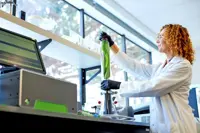
On Sept 1, the director-general of the European Commission’s Health Emergency Preparedness and Response Authority, Florika Fink-Hooijer, visited a mosquito production facility in Ang Mo Kio to find out if countries in Europe can adopt a Wolbachia approach to mosquito suppression.
Launched in 2016, Project Wolbachia controls the Aedes mosquito population here through the release of lab-grown male mosquitoes infected with the Wolbachia bacteria. Female mosquitoes that mate with these male mosquitoes produce eggs that do not hatch, thus reducing the mosquito population over time.
The mosquito population at Project Wolbachia sites has dropped by 80 per cent to 90 per cent, while the risk of acquiring dengue has been lowered by more than 70 per cent.
By October, more than half of all households here will be covered by the project.
As impressive as Singapore’s approach is, it will not be possible to simply transplant Project Wolbachia in the EU because of differing environmental conditions, mosquito species and regulatory issues, Fink-Hooijer told reporters after a visit to the National Environment Agency’s (NEA) facility.
“Wolbachia will take a little time because it is not really transportable (to Europe)... We are now looking at what would be the barriers if we were to put such a Wolbachia approach forward, or what would be the enablers,” she added.
For one thing, it is the greenery-loving Tiger mosquito that carries dengue in Europe, while the indoors-loving Aedes aegypti mosquito is the main vector in Singapore.
This would change how male mosquitoes are released and tracked in Europe, compared with Singapore’s methods, said Ng Lee Ching, group director of NEA’s Environmental Health Institute.
“It’s not going to be a one-size-fits all... You can only develop from your own epidemiological setting, your landscape... and maybe within Europe it’s going to be different as well. How you do community engagement is going to be different,” the associate professor added.
Traditionally, dengue impacts tropical and sub-tropical regions around the world, which have hot and humid climates primed for mosquitoes to thrive.
But with climate change, dengue cases are rising even in temperate regions such as North America and Europe, which are seeing shorter and warmer winters.
Fink-Hooijer noted that between 2015 and 2024, dengue cases in the EU surged by 300 per cent.
“Initially we had (dengue) only in the very southern countries like Italy, Portugal, Greece, Spain, but now it goes up and up and you can find it in Belgium,” she said, adding that cases are no longer just imported.
As at August 2026, France has had a few cases of locally transmitted dengue.
Beyond dengue, other mosquito-borne diseases like chikungunya and West Nile virus are emerging in the region as well.
The EU’s Health Emergency Preparedness and Response Authority was formed in the aftermath of the Covid-19 pandemic to anticipate threats and potential health crises.
Vector-borne diseases – or viruses carried by mosquitoes and ticks – are among four medical threats that the authority is looking into, alongside antimicrobial resistance, pandemics, and chemical, biological and radiological as well as nuclear risks.
At least 12 countries in Europe have reported locally acquired cases of West Nile virus, and one death was reported in the Netherlands on Aug 26.
Fink-Hooijer warned: “It is not endemic yet, but we are realising that if we are not acting now, it can very quickly become (so). And once these vector-borne diseases are festering and endemic, then you cannot turn it back.” - The Straits Times/ANN