
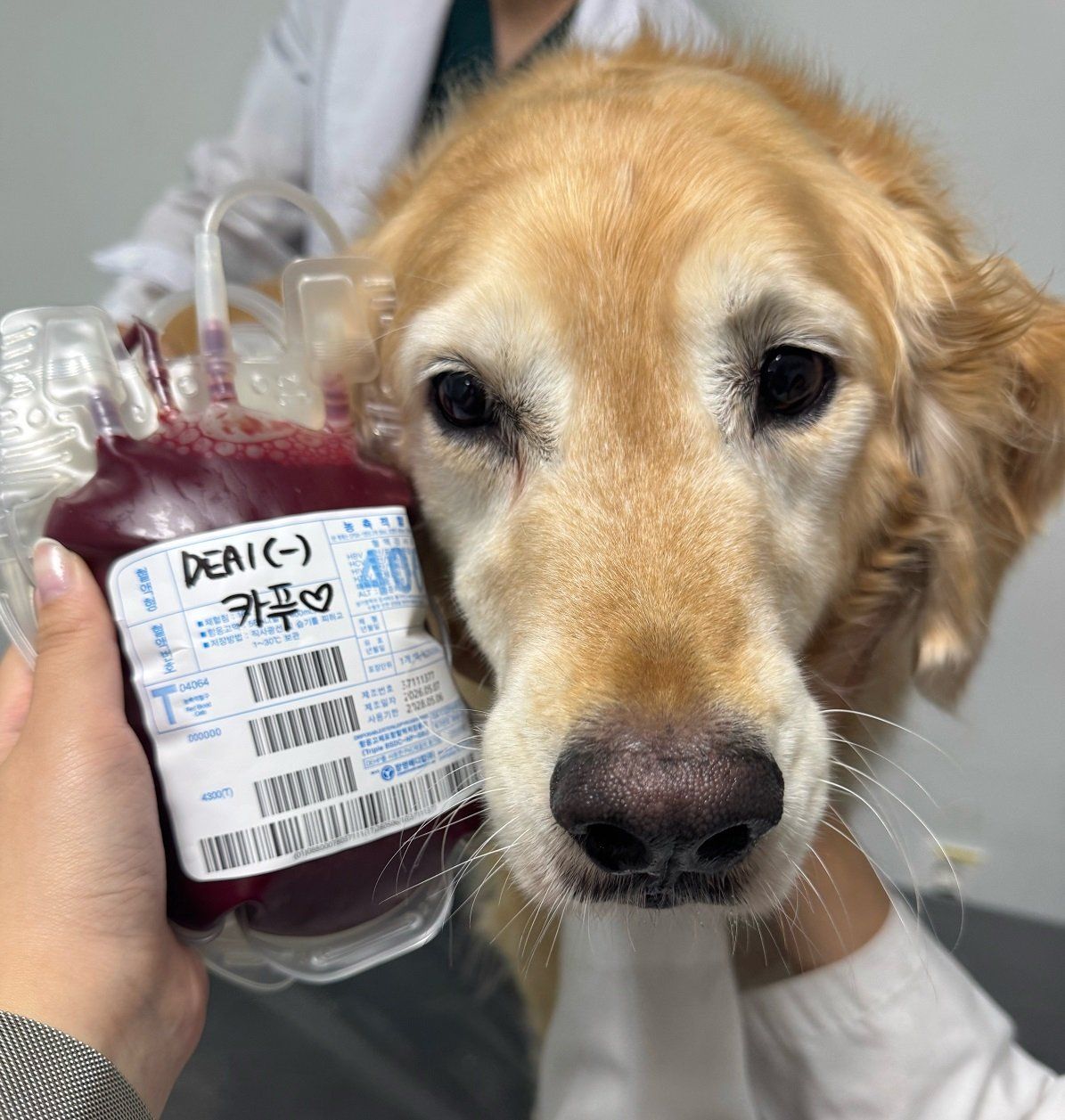
SEOUL: Cappu is seven years old, weighs 31 kilogrammes and, by most measures, lives an ordinary golden retriever’s life. But over the past four years, he has quietly built up an unusual record: 10 blood donations.
His latest and final donation came on July 31 at Konkuk University’s KU I’m Dognor Blood Donation Centre in Gwangjin-gu, Seoul.
By then, Cappu had collected the full set of colorful scarves the center gives canine donors as they mark each donation milestone.
For his guardian, Jo Hang-deok, the idea of having a dog donate blood was not something he had initially considered.
“I knew that dogs can sometimes need blood transfusions, but I did not know much about the fact that companion dogs could actually participate in blood donation themselves,” Jo told The Korea Herald on Wednesday (Aug 19).
“I happened to learn about canine blood donation and decided to participate because I thought Cappu could help other dogs.”
Cappu is part of a still-small but growing effort to change how canine blood is supplied in South Korea in recent years.
Changing the system
Unlike the human blood supply, which is supported by a nationwide system driven by organisations such as the Korean Red Cross, canine blood remains far more fragmented.
Individual veterinary hospitals differ in their ability to collect and store blood, while access to outside suppliers also varies.
Donated blood must be tested and stored properly, and its limited shelf life makes it impossible for hospitals simply to stockpile large quantities indefinitely.
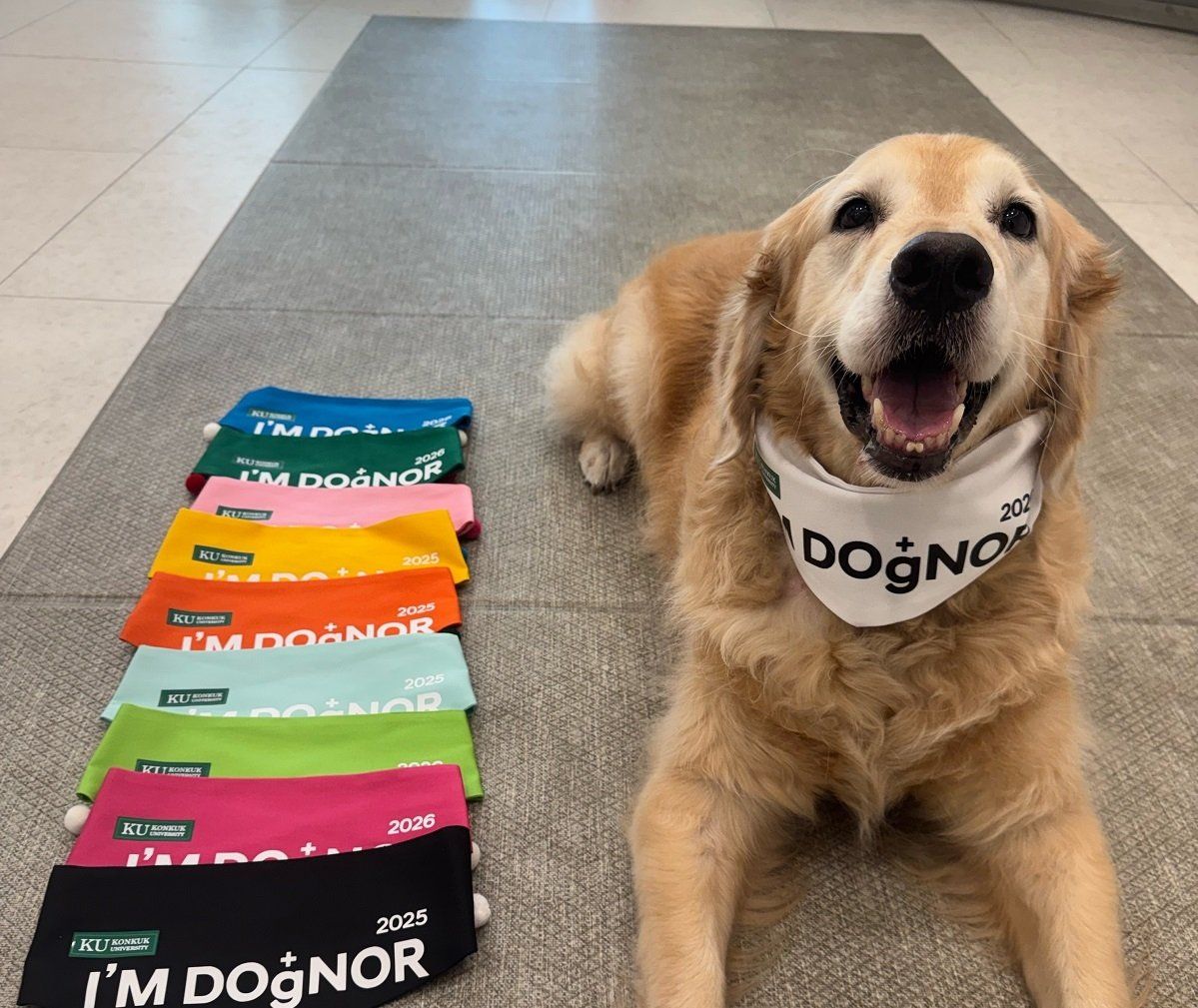
Historically, much of South Korea’s canine blood supply relied on "commercial donor dogs" — large dogs kept primarily to provide blood for transfusions.
However, repeated blood collection and the living conditions of such animals have fueled persistent animal welfare concerns.
Yet voluntary donations still account for less than 10 percent of the canine blood supply needed nationwide, according to veterinary industry insiders, underscoring the limited reach of the system.
South Korea has only a handful of dedicated canine blood donation facilities, including Konkuk University’s KU I’m Dognor Blood Donation Centre in Seoul and a similar center at Kyungpook National University in Daegu.
Both are linked to Hyundai Motor Group’s "I’m Dognor" campaign, which has also operated mobile canine blood donation vehicles at various locations across the country.
The campaign was launched in 2019 by the South Korean automobile giant as an initiative aimed at building a voluntary canine blood donation culture and improving animal welfare.
Beyond these programmes, guardians interested in having their dogs donate can turn to veterinary hospitals affiliated with the Korea Canine Blood Donor Association, which maintains a network of partner hospitals nationwide.
While nationwide figures for canine blood donations are not available, Konkuk University’s center says more than 570 dogs have donated there at least once since 2023, with the total number of donations surpassing 1,000.
For a large healthy dog, a typical donation can amount to roughly 300 to 400 milliliters, depending on weight, health and condition on the day.
Before a dog can donate, veterinarians assess its overall health and run blood tests to screen for potential problems.
Dogs also need to meet strict eligibility criteria. The donors generally must be healthy, weigh at least 25 kilogrammes, fall within the eligible age range and have no history of infectious disease. Regular heartworm and parasite prevention is also required.
A willing guardian alone is not enough. The dog’s temperament and condition on the day matter, too. If a potential donor becomes excessively nervous or stressed in an unfamiliar environment, the procedure does not go ahead.
That blood can be used for dogs requiring transfusions during emergency surgery, treatment for anemia and other serious conditions.
However, a single bag from a large donor can potentially help several smaller dogs.
Gwangju Animal Medical Centre, one of the largest veterinary centers in the southwestern city, began its voluntary canine blood donation programme in 2019.
Over the past seven years, around 100 dogs have donated blood through the programme, helping hundreds of other dogs, according to the centre.
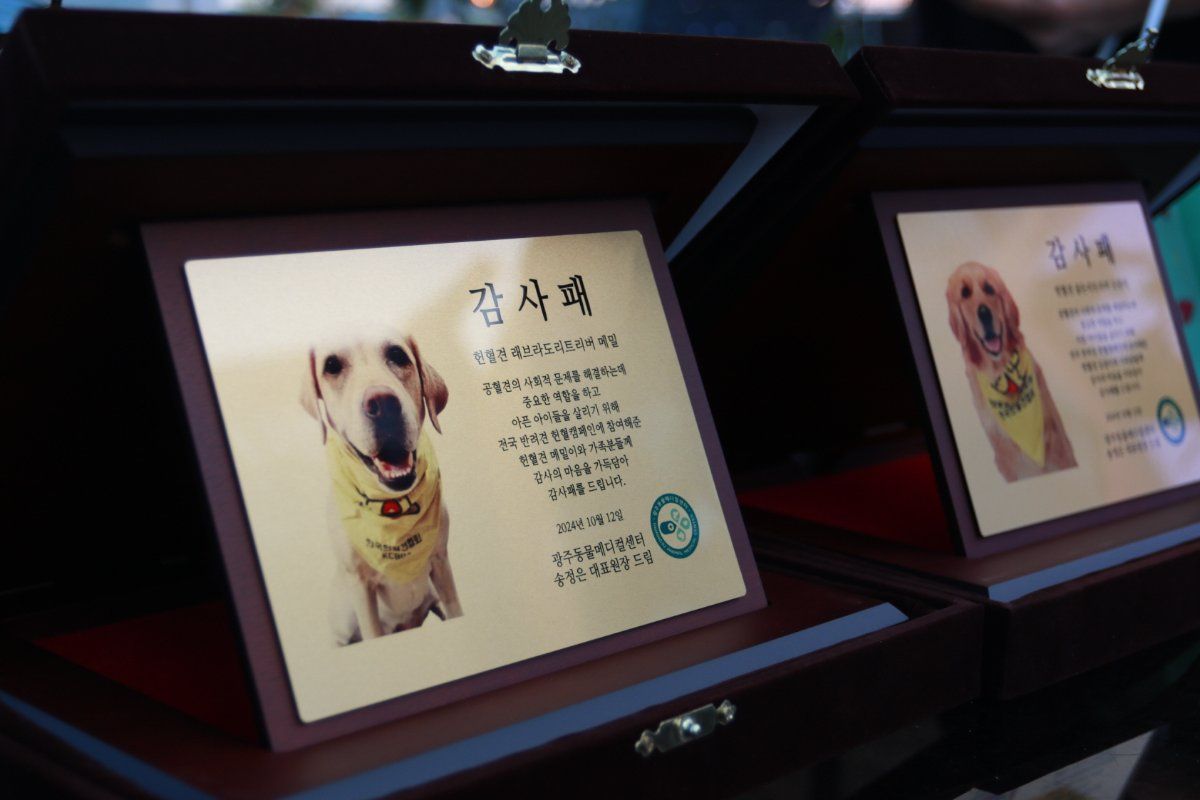
Dr Song Jeong-eun, director of the centre, said each donation requires considerable care.
A team of four to five professionals, including veterinarians and veterinary technicians, typically stays with a donor dog throughout the process, which can take around two hours.
“We make sure the dogs do not become anxious and carefully look after them throughout the process,” Song said.
But Song cautioned that voluntary donation has not yet grown to the extent of being able to replace the existing system of commercial donor dogs.
“If the existing donor-dog system disappeared overnight, operating rooms at veterinary hospitals across the country would inevitably be paralyzed,” he said.
Rather than abruptly eliminating the system, Song said the more realistic approach would be to gradually expand the voluntary donor network and reduce dependence on dogs kept specifically to supply blood.
“If the voluntary blood donation network grows and demand for commercial donor dogs decreases, the value placed on canine blood will increase, which should naturally lead to improvements in the living conditions and welfare of the remaining donor dogs,” he said.
While a handful of canine blood donation programmes have benefited from corporate campaigns and institutional partnerships, much of South Korea’s voluntary donor network still depends on the efforts of individual veterinary hospitals, veterinarians and dog guardians, with little public-sector support.
Song said greater public awareness and institutional backing are needed if voluntary canine blood donation is to develop into a sustainable nationwide system.
“At present, there is no public support, so our hospital makes honorary scarves and plaques of appreciation for canine donors ourselves,” he said.
He called for broader public campaigns and local government support to raise awareness, encourage more guardians to participate and ultimately build a more stable canine blood donor network.
Importance of raising awareness
Again, the larger challenge is awareness.
Many people simply do not know that healthy companion dogs can donate blood at all, Jo, Cappu's owner said.
“I think there is still a lack of awareness and information about canine blood donation,” he said.
“Many guardians simply do not know that their dogs can donate blood, so I think we need much more public information about how blood donation works and why it is necessary.”
He believes stories about dogs that survive because donated blood was available could also make the issue more tangible for other families.
“It would also help if more stories were shared about dogs whose lives were saved through donated blood,” he said. “I think that would help guardians better understand the significance of blood donation and encourage them to consider participating.”
Jo said every one of Cappu's 10 donations is meaningful, but the final one stands apart.
“Seeing people leave messages of thanks in comments on articles and on social media made me realise that what Cappu had done went beyond simply donating blood — it could give hope to other families with companion dogs,” he said.
“That gave me a tremendous sense of pride.”
And his message to other dog guardians is simple.
“What may seem like a small act of giving by our dog can become a tremendous source of hope that keeps another dog alive,” Jo said.
“If your dog is healthy, I hope you will consider giving them the precious opportunity to become a blood donor.” - The Korea Herald/ANN