
BANGKOK: It may have been 10 years ago but the memories remain fresh in Surasit Nok-Ouam’s mind.
It started as early as in kindergarten, said the now 20-year-old gig worker, and went on for about four years into his early primary school days. “It wasn’t only verbal. There was physical bullying too,” he recalled.
Surasit said he has always been an introvert, making him an easy target for bullies in school. But he is not the exception.
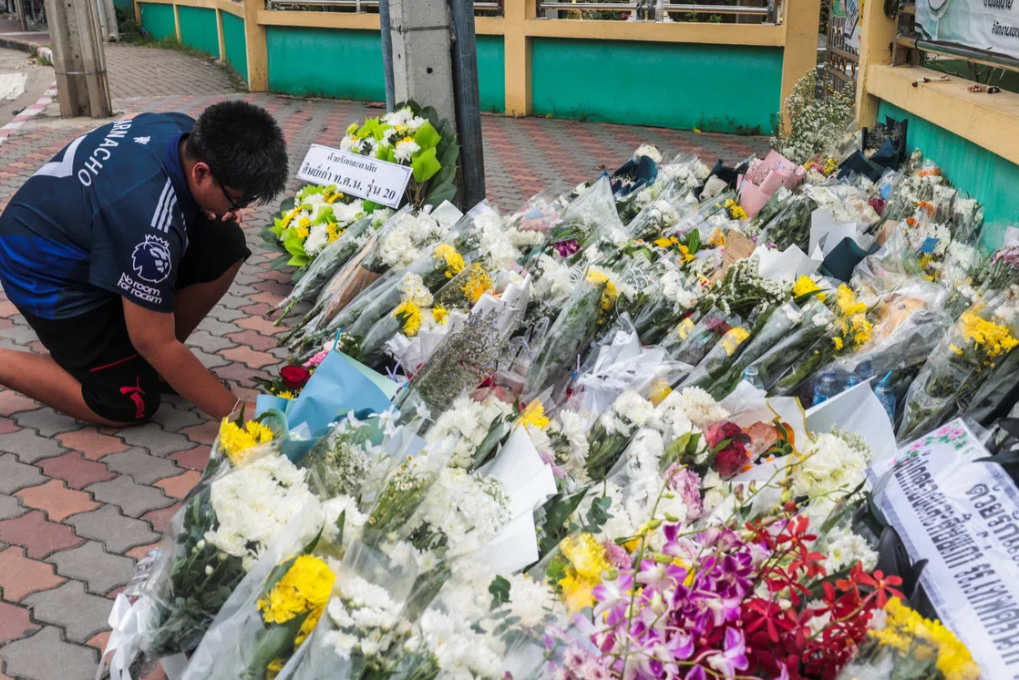
Bullying in schools continues to be a major problem in Thailand and this issue has resurfaced in the news following the Aug 7 shooting by a 14-year-old student in Debsirin Nonthaburi School on the outskirts of Bangkok, killing a total of nine people including himself.
Media reports have suggested that the teenage gunman, a quiet boy raised by loving grandparents, was a victim of bullying.
However, police investigations are ongoing, and it is too early to say if bullying was one of the causes of his rampage. Exposure to violent gaming content and academic pressure were also cited as potential causes.
Nonetheless, discussions about the issue of bullying and its repercussions intensified in the wake of the shooting, with some netizens posting videos of past school bullying cases on social media.
One such video showed an incident that had occurred on July 21 at one of Thailand’s most prestigious private schools, St Gabriel’s College in Bangkok.
In the video, two students were seen standing over a younger boy, taking turns to beat and kick him. One of the perpetrators was also seen holding a gun, which police later said was an airsoft gun.
Aranee Vivatthanaporn, a lecturer at the criminology and justice administration faculty at Rangsit University, told The Straits Times: “Incidents of bullying have become more visible because they are more frequently recorded, shared through social media, and brought to public attention.”
She added that this does not necessarily mean the number of school bullying cases have risen in Thailand. “Rather, it may reflect both the continued prevalence of the problem and the greater public visibility and disclosure of bullying incidents in the digital era,” Aranee said.
The authorities are well aware of the state of bullying in Thai schools. In September 2025, a government survey found that 65 per cent of 42,000 young people aged six to 25 had experienced bullying.
Being teased about their names or parents and family members was reported as the most common form of bullying.
About 28 per cent of those surveyed had experienced physical abuse such as being kicked and punched, with 83 per cent saying schools are the most common location where bullying took place.
Prieo To-uam, a freelance counsellor for about four years, told ST she has been seeing more adolescents seeking help over the last year.
“Bullying is extremely prevalent in the cases I see, almost every teen I counsel mentions it, whether they attend local Thai schools or international schools,” she said.
“Many have experienced being bullied and a few admit to having bullied others. Often, it starts as what they perceive as harmless teasing or typical adolescent play, but it quickly escalates,” she added.
The survey also showed that victims often suffer physical and mental consequences. Among them, at least one in four have contemplated self-harm.
Chinun Boonroungrut, a lecturer in the department of psychology and guidance at Silpakorn University, said bullying can lead to problems such as depression, anger and an accumulating sense of grievance. But he was quick to add that adolescent bullying does not always lead to extreme violence or school shootings.
Bullying can take on different forms: verbal bullying includes insults or spreading false information, while physical abuse includes forcefully shoving, punching or locking a peer inside a bathroom.
Surasit told ST that when he used a bathroom stall in school, a group of boys would follow him in and splash water on him, calling him names.
“After a while, I became constantly anxious whenever I needed to use the bathroom. I would wonder whether someone was going to follow me, bully me, or splash water at me again,” he recounted.
He added that there was another incident where a bully deliberately pulled his sweatpants down during physical education class.
“Sometimes I would get angry or try to respond, but even my reaction became entertainment for them. It was part of the fun,” Surasit said.
Prieo, the freelance counsellor, said she noticed that bully victims become more vulnerable as they lack parental understanding or someone to turn to for help.
She added that many Thais subscribe to a cultural concept called kreng jai, or extreme consideration, resulting in some victims not reporting the bullying.
“Societal expectations prioritising politeness, deference, and social harmony frequently pressure youth to internalise negative emotions,” Prieo said.
“This suppression prevents early disclosures of distress, allowing unresolved psychological crises to compound over time until they manifest in sudden and explosive outbursts,” she added.
Are schools still a safe space?
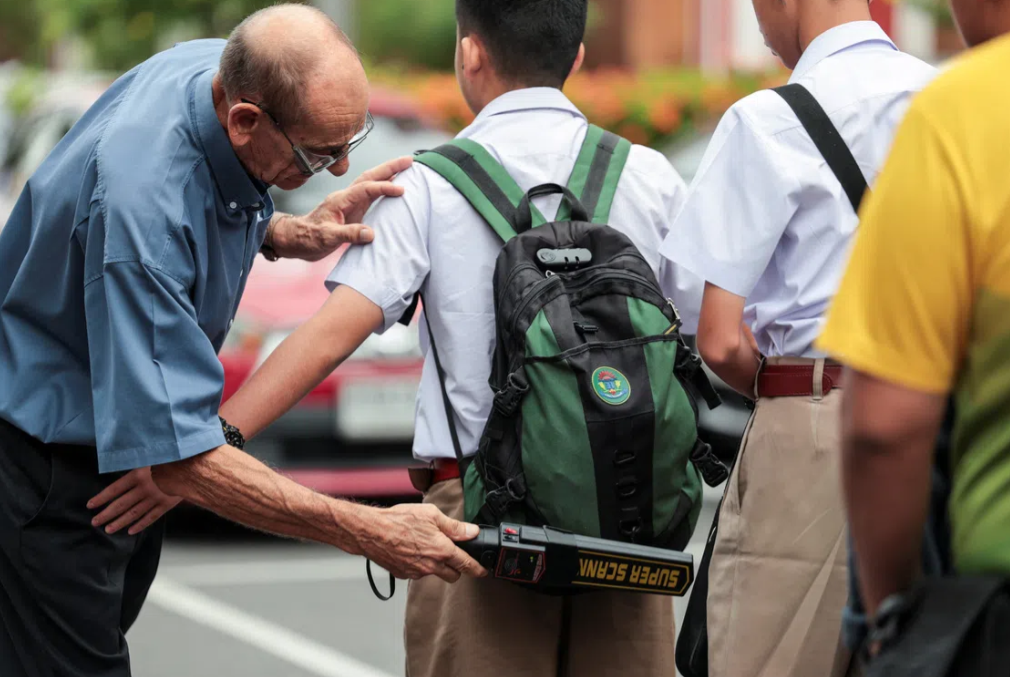
Following the Debsirin student school shooting, Thailand’s Education Ministry announced several measures to be introduced by early November. This includes a zero-tolerance bullying policy, better weapon detection and referral mechanisms for at-risk students.
The ministry will also aim to push through a new “Student and School Safety Act” which will include monitoring the mental health of those affected and screening for post-traumatic stress disorder.
“The real test will come after the policy is announced,” said Chinun of Silpakorn University. “Its success will depend on whether schools receive sufficient resources, trained personnel, effective referral networks, clear monitoring mechanisms and continuing support from both the education and health sectors.”
Experts also believe that schools must go beyond addressing a bullying incident only when it happens or brushing it off as mere youth conflict or rough play.
Aranee of Rangsit University suggested that all schools should establish a permanent anti-bully programme to identify, intervene and monitor. A dedicated committee comprising school administrators, teachers and parents should have the authority to formulate policies, as well as implement preventive and corrective measures against bullying.
“The school should also provide a clearly designated and accessible reporting mechanism through which students can report bullying incidents and seek assistance,” Aranee added.
“Such a system would help ensure that students understand what to do when bullying occurs, whom they can approach,” she said.
Beyond these measures, however, a mindset change among adults to take bullying more seriously is needed. Surasit told ST he has heard some teachers often saying things like “don’t take it so seriously”. And with kreng jai, many victims of bullying typically end up not reporting an incident in order to not “cause problems”.
As someone who experienced bullying at a young age, Surasit encourages all victims to speak up and get help. He hopes that adults too will pay more attention to complaints of bullying and not be dismissive about any incidents.
“One problem is that adults sometimes look at a child’s experience and say, ‘Why are you making such a big deal out of something so small?’ But for a child experiencing something for the first time, that ‘small thing’ can feel enormous,” he said.
Though Surasit has tried to put his past experiences of being ridiculed behind him, the anxiety he faced then still lingers into his adulthood today.
“Bullying left emotional scars. Maybe they aren’t visible to other people, but certain experiences stay with you.” - The Straits Times/ANN