
SEOUL: As an unprecedented heat wave grips the country, with daytime temperatures nearing 40 degrees Celsius, many Koreans are trading outdoor activities for air-conditioned escapes closer to home.
The sweltering heat has fuelled the rise of the "mallcation." Rather than leaving the city, many people are turning shopping malls and department stores into daylong summer vacations -- enjoying meals, shopping and cultural attractions in a climate-controlled space.
"Department stores have so many exhibitions and pop-up stores these days that there’s always something to do, even if you stay for hours. When I travel, I'm constantly moving from one place to another. In this heat, even thinking about going on a trip is exhausting," Lee Hye-ji, a 28-year-old office worker in Seoul, told The Korea Herald.
According to Lotte Department Store on Tuesday, about 450,000 people visited Lotte World Mall in Seoul's Jamsil-gu over the weekend, some 30,000 more than a week prior.
During the same period, The Hyundai Seoul in Yeouido saw visitor numbers rise 15.2 per cent from a year earlier, while E-mart stores nationwide recorded an 11.6 percent increase in customer traffic.
Large bookstores, libraries and cafes have also become popular destinations for students on summer break.
"In the summer, I love going to big cafes with a nice view. Running the air conditioner at home all day gets expensive, so my son and I grab a snack, read a book and just spend time together. Even though we're still indoors, it's nice to get out of the house. It just feels refreshing," said Lee Jin-seon, a 41-year-old mother of a 12-year-old son who lives in Buam-dong, Jongno-gu.
But for many older adults, the best refuge from the heat is one that does not cost a thing, like riding free, air-conditioned subways to the airport.
The first-floor lobby of Gimpo International Airport's international terminal, for example, has become a familiar gathering place for seniors each summer. They fill the benches in the open seating area facing a large-screen television, with some eating packed lunches while others play "janggi," a traditional Korean board game.
Some just ride air-conditioned trains for hours with no particular destination in mind.
"I usually spend time in the air-conditioned waiting area or just stay on the subway for a few stops. Sometimes I go to Sadang Station because it's connected to a shopping mall. If I stay home, I just lie around all day. It’s nice to get out and be around people," Kim Jung-soo, a 69-year-old resident of Seoul’s Yangcheon-gu, told a local news outlet.
What brings many older adults to public transportation facilities is the free subway fare programme for residents aged 65 and older, which has been in place since 1984.
For those who prefer to stay close to home, senior centers — a fixture in nearly every apartment complex and residential community in Korea — have become popular places to escape the heat.
Senior centers are among the roughly 4,000 public and welfare facilities across Seoul designated as cooling shelters, as a prolonged heat wave drives more older adults to seek relief indoors.
Some senior organisations are also expanding indoor cultural and recreational programs, offering older adults a way to stay active while escaping the extreme heat.
Some senior organisations are expanding indoor cultural activities to help older adults stay active amid the extreme heat.
The Busanjin-gu branch of the Korean Senior Citizens Association in Busan recently hosted a Rummikub tournament to diversify leisure activities for seniors beyond traditional card games.
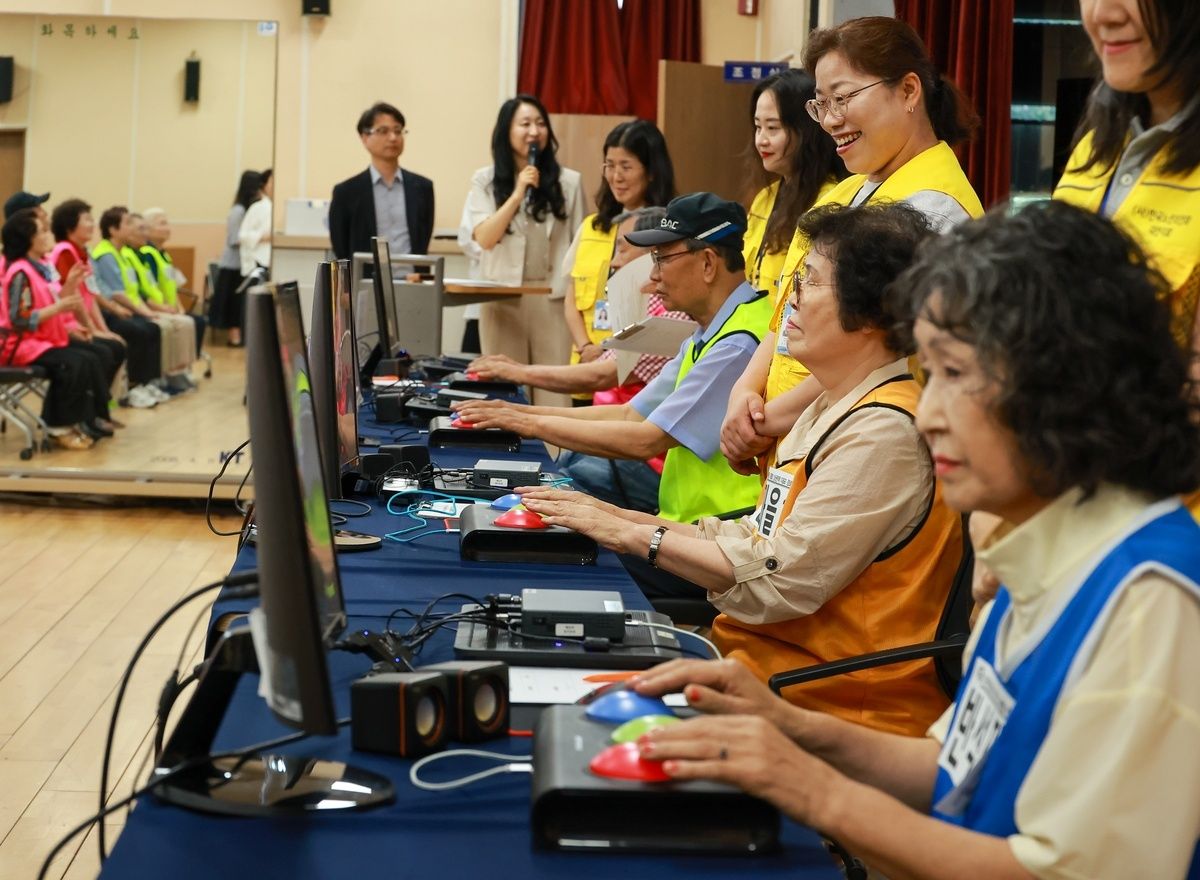
At a welfare center in Yuseong-gu, Daejeon, late last month, older adults competed in cognitive games using interactive touch pads designed to help prevent dementia.
"The hot weather can leave older adults feeling drained. We wanted to help them beat the boredom by giving them more things to do indoors instead of playing Go-Stop or janggi every day," a center official said.
The Korea Meteorological Administration expects the extreme heat to persist for at least 10 more days. - The Korea Herald/ANN