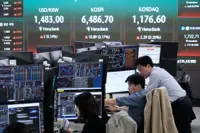
SOUTH-EAST ASIA (Reuters): South Korean shares closed sharply lower on Tuesday, with the benchmark index triggering a temporary trading halt, as a selloff in Samsung Electronics deepened doubts over how long the AI-led rally can last.
The chip-heavy KOSPI index closed down 4.9% after falling as much as 8% earlier in the session. The MSCI EM Asia index fell as much as 3.2%, while Taiwan stocks slipped more than 2%.
Samsung Electronics fell nearly 7% despite forecasting a 19-fold jump in quarterly earnings, as investors remained concerned about the sustainability of the AI-driven chip boom.
"Investors are concerned about whether top-tier memory chip makers in South Korea and Taiwan, which have allocated the majority of their resources to AI chips, could increase output of their conventional products," said Perris Lee, head of equity capital markets for Asia Pacific at Mergermarket.
"More broadly, this also reflects recurring concerns that share prices in these two markets may have run ahead of fundamentals following their strong rally. This is something investors will be watching closely."
In Southeast Asia, Thai stocks fell as much as 1.4%, with electronics manufacturer Delta Electronics Thailand down nearly 3%. Singaporean stocks rose about 1.4% to a record high, with banks OCBC, UOB and DBS gaining 2.4%-3.1%.
Stocks in Jakarta advanced as much as 0.8% to hit a more than one-week high, while the rupiah lingered around 17,980 a dollar.
In the Philippines, shares rose as much as 1.2% after data showed annual inflation slowed in June and the central bank said it was prepared to take further monetary action as needed. The next scheduled policy review is on August 27.
"While the June CPI print offers some reassurance that inflation has peaked, underlying price pressures remain elevated. This is likely to keep the central bank cautious for several reasons," said Deepali Bhargava, ING's Asia-Pacific regional head of research.
In Malaysia, stocks edged lower, while the ringgit appreciated to 4.0740 a dollar. The currency has firmed by around 1.5% since June 24 when the central bank announced measures to support it after it had weakened more than 5% earlier that month.
Bank Negara Malaysia is expected to keep its benchmark interest rate unchanged for a sixth straight meeting at 2.75% on Thursday, a Reuters poll showed, as inflation is subdued and economic growth remains strong. -- Reuters