JAKARAA: In early May, President Prabowo Subianto summoned a handful of his most trusted advisers to his house in south Jakarta to discuss how to find more revenue as surging oil prices stretched Indonesia’s finances.
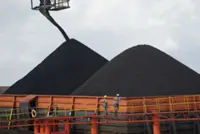
The small group eventually agreed on a sweeping change that would fundamentally upend one of the most important sectors in the resource-rich South-East Asian economy: The creation of a new state entity under sovereign wealth fund Danantara to oversee Indonesia’s world-leading exports of palm oil, coal and ferro-alloys, which together amounted to more than US$65 billion last year.
Prabowo had long railed against Indonesia’s tycoons, accusing them of harnessing national wealth for personal gain.
He believed drastic action was needed to plug leakages that cost Indonesia billions of dollars a year, according to people familiar with the inner workings of the president’s office.
They requested anonymity to speak about private discussions, along with about a dozen others in government and industry circles who contributed to this account.
The full extent of the plan was kept under wraps for weeks, held so closely that even top officials at Danantara were in the dark as rumours of the overhaul began spreading on Tuesday throughout the capital, prompting the benchmark stock index to plummet.
Danantara executives including CEO Rosan Roeslani urgently sought clarification from Prabowo’s inner circle, which finally came later that day.
Upon finding out, Danantara chief investment officer Pandu Sjahrir immediately started calling industry executives, asking them how it was possible for the one-year-old agency to implement such a brazen strategy. One insider simply replied: "Unworkable.”
Panic also spread through some of Indonesia’s biggest companies. Employees at one of the nation’s top coal firms frantically texted contacts in Prabowo’s government to get confirmation, but received no response. Even on Wednesday, as the president prepared to address parliament, some in the resources sector insisted it was all a hoax.
Yet shortly into Prabowo’s speech, it became evident that the 74-year-old former Special Forces commander was ready for bold action. Railing against colonial powers that seized the nation’s wealth and treated Indonesians as "beneath dogs,” the president said he was increasingly convinced he must enforce a constitutional provision declaring that "the land, water and all natural resources contained within them must be enjoyed by all Indonesians.”
"If we continue on this path, Indonesia will never become prosperous,” Prabowo told the nation’s lawmakers.
"We will remain a weak nation, afraid of the dollar exchange rate, afraid of fuel shortages and external shocks, despite our enormous blessings.”
The president then dropped the hammer, confirming that all exports of palm oil, coal, ferro-alloys and potentially other strategic commodities must now be conducted through state-owned enterprises.
iting data showing that Indonesia’s revenue-to-GDP ratio is among the lowest in the world, Prabowo said eliminating practices such as under-invoicing could save the nation $150 billion a year. He also left tycoons with a warning of more measures to come.
"Technology now allows us to monitor illegal activities more effectively, including illegal mining, illegal plantations and hidden wealth,” Prabowo said. "The era of impunity is ending.”
The speech sent shock waves around global markets, with commodity traders scrambling to understand the implications.
Indonesian officials clarified later Wednesday that exporters would be required to report their sales to Danantara starting June 1, and three months later the sovereign wealth fund would start handling contracts, shipping and export-payment processes.
Representatives for Danantara and the Government Communications Agency, which handles the president’s communications, didn’t immediately reply to requests for comment.
More broadly, investors are trying to understand where Prabowo is taking Indonesia.
While the president has said similar things for months, including at the World Economic Forum in Davos in January, until now it had been mostly rhetoric.
His move on Wednesday amounted to arguably the biggest assertion of state control over Indonesia’s economy since the days of former dictator Suharto, who ruled for 32 years and was formerly Prabowo’s father-in-law.
To some in the financial world, that’s not necessarily a bad thing. Stronger government oversight of the resources sector could lead to more money flowing into state coffers, providing funds for infrastructure, healthcare, education and other initiatives to lift living standards in the world’s fourth-most populous nation.
The big question mark is on implementation, an area where Prabowo has struggled. The chaotic rollout on Wednesday only added to wider concerns that have prompted investors to punish Indonesia’s currency and stocks, which are the world’s worst performers this year by a large margin.
In cutting its outlook on Indonesia’s credit to negative in March, Fitch Ratings Inc. cited concerns of "consistency and credibility amid growing centralization of policymaking authority.”
"The proof of the policy’s effectiveness will only reveal itself if the government manages to actually increase revenues and reverse the flow of net export duties back to government,” said Brasukra Gumilang Sudjana, country director for Indonesia at Vriens & Partners, a corporate advisory firm.
"Currently the pendulum is swinging towards protectionism,” he added. "But if investors’ perception goes really bad, the government will shift course.”
Since Prabowo took power in late 2024, international investors have been shaken by concerns Prabowo’s administration is embracing a more interventionist economic model that is testing long-held fiscal guardrails and threatens to stifle the private sector.
Anxiety deepened after the February 2025 launch of Danantara, which quickly assumed management control of hundreds of billions of dollars in state assets.
Sudden policy moves since then have contributed to a sense of disarray. Top tycoons were pressured into buying "patriot bonds” with below-market yields, long-time Finance Minister Sri Mulyani Indrawati was removed from office and costly flagship programs were rolled out, including a free school meals project. MSCI Inc. in January threatened to downgrade Indonesia to frontier market status, prompting Prabowo to oust key regulators and hurry to meet the index compiler’s repeated demands for greater transparency.
"Investor confidence in Indonesia is being undermined just as the country is seeking large-scale capital inflows to support ambitious growth and development goals in an increasingly challenging economic outlook,” said Laura Schwartz, senior Asia analyst at risk intelligence company Verisk Maplecroft. Wednesday’s news also "contradicts the ‘open for investment’ rhetoric Prabowo and administration representatives regularly seek to portray abroad.”
The creation of an entity to oversee commodity exports has echoes of the recent saga over one of Indonesia’s biggest gold mines. Reports emerged in February that Danantara was considering a takeover of Martabe gold mine, leading to concerns from key investors of Jardine Matheson Holdings Ltd., a Hong Kong-based conglomerate that controlled the deposit.
The move similarly caught Danantara executives by surprise, and the mine’s status remains in limbo.
Now a range of companies are similarly racing to figure out what Prabowo’s latest move means for their operations.
Some businesses have started to discuss contingency plans, including scaling back or closing shop in Indonesia entirely if export proceeds are required to flow through Danantara, according to people familiar with the matter. Commodity traders wondered if they would have a job by the end of the year.
Central to those concerns is that payments may face significant delays once they are routed through a third party, the people said. Several also worried about the risks of regulatory pressure by officials once current and past transfer-pricing practices are exposed.
Under-invoicing has long been a widespread problem in Indonesia. The practice involves a company selling to a fully-owned entity overseas at below-market prices, allowing profits from subsequent sales to accrue in lower tax jurisdictions.
While Prabowo’s figure of $150 billion in lost revenue is hard to verify, a study by Washington-based research group Global Financial Integrity estimates that Indonesia lost $6.5 billion in tax revenue in 2016 from the practice.
The family member of one major Indonesian tycoon, who asked not to be identified, said they understand why the government wants to tackle the problem, but the current proposal is very harmful to businesses.
A better option, they said, would be for the government to require exporters to use letters of credit for transactions, which would address transparency concerns more effectively without requiring the introduction of a centralized entity under Danantara.
"As usual, a lot is riding on implementation,” Barclays Plc economist Brian Tan said. In fluid global macro circumstances, he added, it’s "best when policymakers carefully manage investor sentiment with clear and transparent communication.” - Bloomberg