As global fuel markets reel from the Middle East conflict, motorists in the country are increasingly turning to electric vehicles, with high demand putting a strain on dealerships.
Electric microbus driver Purushottam Adhikari said he was now shuttling more passengers along the 300km journey between his town in Chitwan district and the capital Kathmandu.
“In fact, more people are choosing EVs.”
Soaring global oil prices and fuel supply disruption since Iran effectively closed the Strait of Hormuz have led to long queues at gas stations in countries like Bangladesh and Pakistan, but Nepal has largely avoided the worst of the crisis.
“One of the main reasons is the increased penetration of electric vehicles on Nepal’s roads,” alternative energy expert Govind Raj Pokharel said.
The country of 30 million people has an estimated 50,000 EVs, still a small fraction of the total 6.2 million motor vehicles, but a figure officials expect would keep increasing.
The price of petrol in Nepal, which imports all of its gasoline, has nearly doubled since the conflict began in late February with US-Israeli strikes on Iran.
While transport fares have gone up, Adhikari said his prices remain unchanged at 700 rupees (RM18) for a one-way trip in his Joylong A6, which in turn costs US$8 (RM31) for a full recharge.
A full tank for a similar diesel vehicle would have cost “more than US$66 (RM259)”, he said.
An expanding network of charging stations along major highways has made long-distance electric travel increasingly viable.
Boarding Adhikari’s van, 20-year-old Susmita Bishowkarma said she prefers to travel in EVs because they are “environmentally friendly, comfortable and comparatively cheap”.
Buoyed by a surge in hydropower generation and a greener electric grid than neighbouring India and Bangladesh, Nepal has emerged as one of the world’s fastest adopters of EVs.
The Himalayan nation imported more than 13,500 EVs between mid-2024 and mid-2025 – double that of petrol vehicles and a sharp rise from just seven a decade ago, government data shows.
Fume-free taxis and cars manufactured in China are a common sight in Kathmandu, with traffic officials estimating that up to 60% of microbuses entering the city from key routes are now electric.
Customs department spokesperson Kishor Bartaula said the number of EVs would rise further with hundreds awaiting clearance at Nepal’s ports.
In line with its clean energy policy, the government is seeking to replace some 10,000 vehicles damaged during anti-corruption protests last year with EVs, finance ministry spokesperson Amrit Lamsal said.
Concerns that ongoing conflict in the Middle East could prolong global fuel uncertainty are also influencing consumer behaviour.
Shraban Bhattari, 49, who recently bought a BYD Atto-2, said the Chinese-made car is saving him daily fuel expenses.
“I no longer need to go to the petrol pump,” he said.
In April, the government approved a legal framework to allow people to convert their petrol and diesel vehicles into electric ones, known as “retrofitting”.
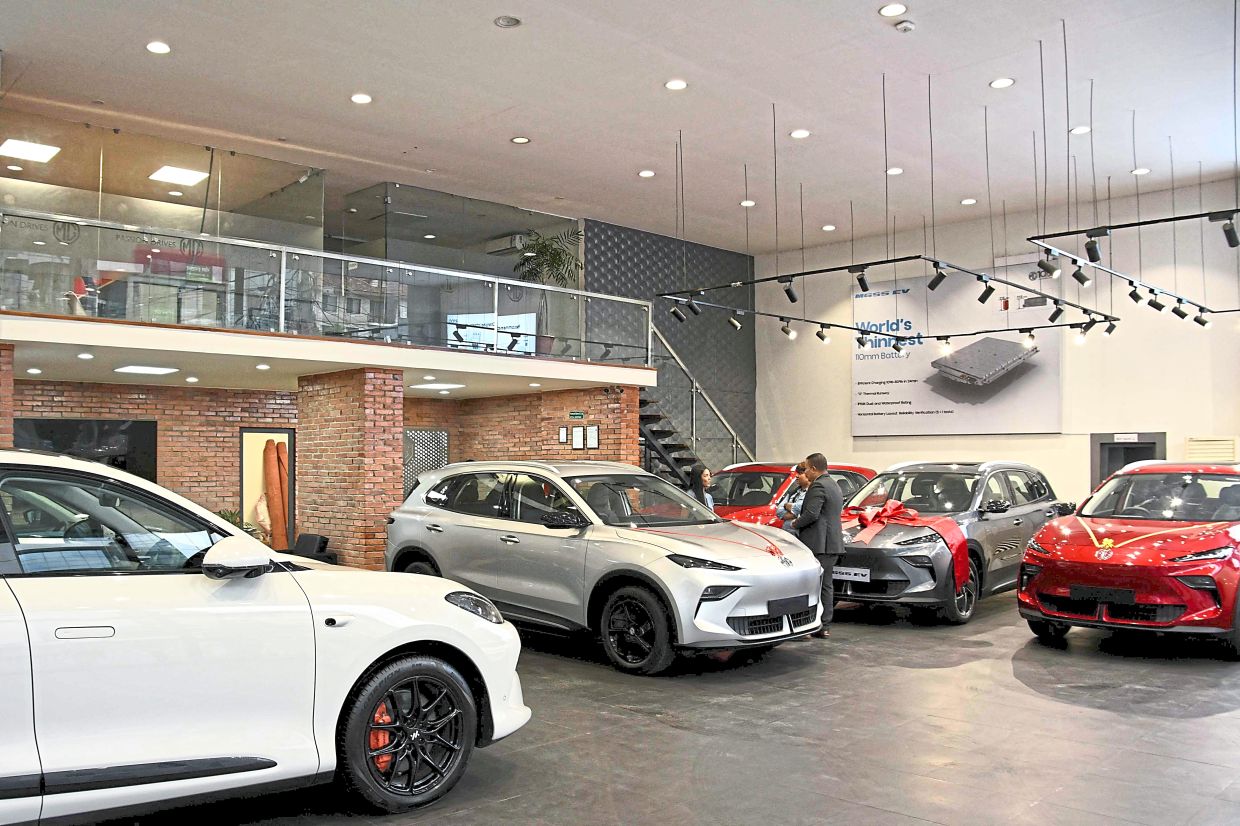
But EV dealers said they were struggling to meet demand.
“It is getting challenging to meet the demand,” said Ritima Pandey, customer relations officer at Venture Motors.
“As the price of diesel has gone up, many people are coming to trade in fuel vehicles for EV vans.”
Schools and colleges are also exploring electric fleet purchases, dealer Dinesh Raj Pandeya said, signalling a shift beyond individual commuters.
Energy expert Pokharel urged policymakers to build on the momentum by encouraging domestic EV manufacturing and assembly.
“This will give us a long-term solution,” he said. — AFP