Seven years after Sri Lanka’s Easter Sunday bomb blasts that killed 279 people, survivors still bear deep physical and emotional scars, compounded by the failure of successive governments to deliver justice.
Coordinated suicide bombings targeted three churches and three luxury hotels on April 21, 2019. Among those killed were 45 foreigners, while 500 people were wounded.
No one has been convicted, but in February, the former intelligence chief was detained for questioning regarding “conspiracy and aiding and abetting” the attacks, accusations he denies. He remains in custody, held under the Prevention of Terrorism Act.
Initial inquiries into the bombings found the attacks were the work of local militants who declared an affiliation with the Islamic State group.
Investigators have since linked state security, including military intelligence, to the bombers, alleging a plot to create chaos and clear the way for Gotabaya Rajapaksa, a former military officer, to come to power.
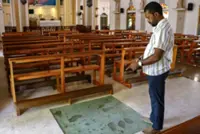
The deadliest attack was at St Sebastian’s Church in Negombo, where 117 Catholics were killed and many more injured.
“Our only prayer is that something like this never happens again,” said Mercy Philomina Tissera, 67.
She was standing near the main entrance of the packed church when a man walked in through a side door and detonated a backpack of explosives.
“Suddenly, I felt something hit my head. I just said, ‘Oh my God’... that is all I know of that moment,” Tissera said at her home near the coastal town of Negombo, north of the capital.
When she regained consciousness, she was covered in blood. She held her broken jaw with one hand until volunteers rushed her to hospital.
Dinal Fernando, 52, a marketing executive who survived the blast, pointed to the grave of an eight-month-old baby boy.
“There have been three governments since the attack, but they all worked to cover it up,” said Fernando, who helped take victims to hospital and now campaigns for justice.
He said he hoped the current government of President Anura Kumara Dissanayake would deliver on its promise of justice.
“They have built greater trust than before,” he said. “We want to know why this was done to us. Who did it? They want to find that out, and we remain hopeful.”
Two days after the attacks, Gotabaya – a brother of former president Mahinda Rajapaksa – declared his candidacy for the November 2019 election, which he won.
However, he was forced out of office in July 2022 when the country faced economic meltdown. He has denied plotting the attacks.
The arrest two months ago of a retired army general linked to Rajapaksa has raised hopes of justice, according to the Catholic Church.
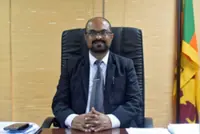
Retired Major General Suresh Sallay, a former head of the State Intelligence Service, has been in custody since February for questioning on “conspiracy and aiding and abetting the Easter Sunday attacks”, according to police.
Sri Lanka’s Supreme Court in January 2023 ruled that then-president Maithripala Sirisena and his top officials had failed to heed prior intelligence warnings and prevent the attacks.
Evidence presented during a civil case brought by relatives of the dead showed that Indian intelligence officials had warned Colombo of the attack more than two weeks earlier.
Former president Sirisena and his top police and intelligence officials were ordered to pay 310 million rupees in compensation to victims.
The UN has urged an independent investigation with international assistance to establish the “full circumstances” of the bombings.
Cardinal Malcolm Ranjith, the leader of the Catholic Church in Sri Lanka, said it was regrettable that attacks had turned into a political debate.
“Unfortunately, it hurts the people who have lost their loved ones and are suffering,” Ranjith said.
He said hopes of a proper investigation were raised under the new government, but that they were also facing obstacles from “interested parties”.
On the anniversary today, he will lead a prayer march for justice in Negombo following a memorial service at St Anthony’s Church in Colombo, where 51 Catholics were killed.
“At the end of the seventh year, what do I say? I say we are still hoping and waiting and expecting,” Ranjith said.
“But if nothing happens, then we will be forced to take to the streets and campaign for a just solution to this issue because we will never give up our struggle for truth and justice.” — AFP