HANOI: Vietnam’s party chief and newly appointed president, To Lam, is set to meet Xi Jinping in China this week, seeking to shore up energy security as the war in Iran raises global supply risks and pushes Hanoi to deepen cooperation with its largest trading partner.
Lam is expected to oversee the signing of agreements including a potential aircraft deal between budget carrier VietJet Aviation JSC and Commercial Aircraft Corp of China Ltd, known as Comac, though it’s unclear whether this would involve purchases or leases, according to people familiar with the matter who asked not to be identified discussing confidential matters.
The two countries are also expected to sign pacts on metro construction in Ho Chi Minh City, as well as energy and telecommunications, the people said.
"Both sides will seek reassurance that there will be minimal disruption to existing trade and investment cooperation,” said Carl Thayer, professor emeritus at the University of New South Wales, who has written several books on Vietnam.
With the Iran war dragging on, "To Lam is highly likely to solicit more Chinese investment in rail connectivity and energy cooperation.”
Vietjet and Comac did not immediately respond to requests for comment.
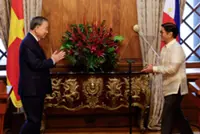
The visit marks Lam’s first overseas trip since securing the presidency last week, consolidating his grip on power as both head of state and Communist Party General Secretary.
While new Vietnamese party chiefs traditionally make China their first foreign stop, the trip was delayed by the leadership transition, with Lam instead visiting the US earlier to maintain ties with Hanoi’s other key economic partner.
It comes as China has maintained a measured diplomatic approach in Asia, even as the Iran conflict disrupts global energy flows.
China has already offered limited relief, providing about 100,000 barrels of distillate fuels to Vietnam as part of small shipments to South-East Asia, while it tightens export controls more broadly.
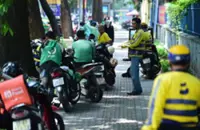
Vietnam says it has enough fuel to last through April, though rising costs and disruption risks have already led to cancelled flights and long lines at gasoline stations.
The country relies heavily on imported oil and gas, and has rolled out contingency measures including tax freezes and a push toward greener energy.
Lam is also expected to seek further Chinese investment in infrastructure, particularly rail. When Xi visited Vietnam last year, the two sides expanded cooperation on major rail corridors, including a US$7.8 billion line linking the port city of Haiphong to the Chinese border.
Additional technical agreements were signed in March, and Chinese firms are already involved in metro projects in Hanoi.
Vietnam’s trade with China reached $256 billion last year, up 24.7% from the year before, according to Vietnamese government data, underscoring Vietnam’s reliance on Chinese inputs at the same time as it exports heavily to the US.
That balancing act has become more complex amid rising trade tensions, including US scrutiny of transshipment and potential tariffs.
"They will look for any advantage to limit the damage during this crisis,” said Adam Farrar, a senior geoeconomics analyst at Bloomberg Economics.
"If China wants to give fuel, great, and Vietnam may adjust its relationship to get those things.”
Security cooperation is also deepening. Ministers from both countries met in Hanoi last month to discuss border management, crime and data sharing, while companies including Huawei Technologies Co. and Viettel Group have expanded collaboration on next-generation telecoms.
One longstanding flashpoint - competing claims in the South China Sea - is unlikely to see progress, despite the fact that Vietnam has accelerated island-building and continues to protest Chinese actions in disputed waters.
Still, the two sides are "likely to step up security cooperation between their respective public security ministries involving the transfer of mass surveillance and AI technologies accompanied by related training in China,” said Thayer. - Bloomberg