THE country is increasingly edging closer to China’s model of governance, embracing Chinese technology and regulation as its most powerful leader in decades heads to Beijing this week, according to internal documents, public policy plans and sources.
Vietnam is leaning more openly toward Beijing, as China-friendly security figures rise in Hanoi under party chief To Lam, a former public security boss.
Lam will meet China’s leader Xi Jinping tomorrow on his first overseas trip since becoming state president on April 7, a move that formally unites two of Vietnam’s most powerful roles, echoing Xi’s own concentration of authority and breaking from Vietnam’s traditional emphasis on collective leadership.
“Vietnam-China relations have entered a new stage, marked by higher political trust, more substantive defence and security cooperation, deeper and more practical cooperation across sectors,” Lam said in a joint statement with Xi after they last met in April 2025.
This week’s visit is expected to yield dozens of cooperation agreements, people briefed on the plans said.
While such documents are often non-binding, the relationship is becoming more tangible: China’s exports to Vietnam are at record highs, and Chinese investment in manufacturing south of the border is booming.
The people spoke on condition of anonymity due to the sensitive nature of the topic.
Technology has emerged as one of the clearest markers of warming ties between Vietnam and China.
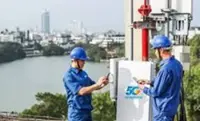
Vietnam has dropped earlier concerns about the use of Chinese equipment in its 5G network, while the country’s largest Internet provider FPT announced investments in an undersea cable to be built by a Chinese vendor the United States considers linked to sanctioned telecom giant Huawei.
A telecom company under Vietnam’s public security ministry is in talks with Chinese companies for additional 5G deals.
Chinese firms are simultaneously exploring investments in Vietnamese data centres, a strategic asset, according to people familiar with the discussions.
“Chinese interest in Vietnam’s data-centre market has increased noticeably over the past 18-24 months,” said Mickael Driol, head of investment advisory firm Mekong Partners.
He said much of that is driven by manufacturers who moved operations to Vietnam from China.
Unencumbered by public opinion that has grown less critical of China, the Vietnamese Communist Party is also advancing a more China-style economic model centred on subsidies, public investment and large infrastructure projects, sometimes in direct cooperation with Beijing on sensitive projects including high-speed rail links.
The shift has been reinforced by TikTok’s popularity in Vietnam, where positive narratives about China often dominate.
China’s influence is also visible in finance. Vietnam relies on unconventional monetary policy tools such as lending mandates to banks reminiscent of China’s policy, maintains tight foreign ownership caps in key sectors, and is grappling with a property bubble echoing China’s experience.
Now Hanoi is considering deeper intervention in equity markets. Proposed measures include a government-backed stabilisation fund to buy stocks during downturns – an idea explicitly modelled on China.
“China created one and succeeded in reassuring investors,” said an internal security ministry document reviewed by Reuters. — Reuters