
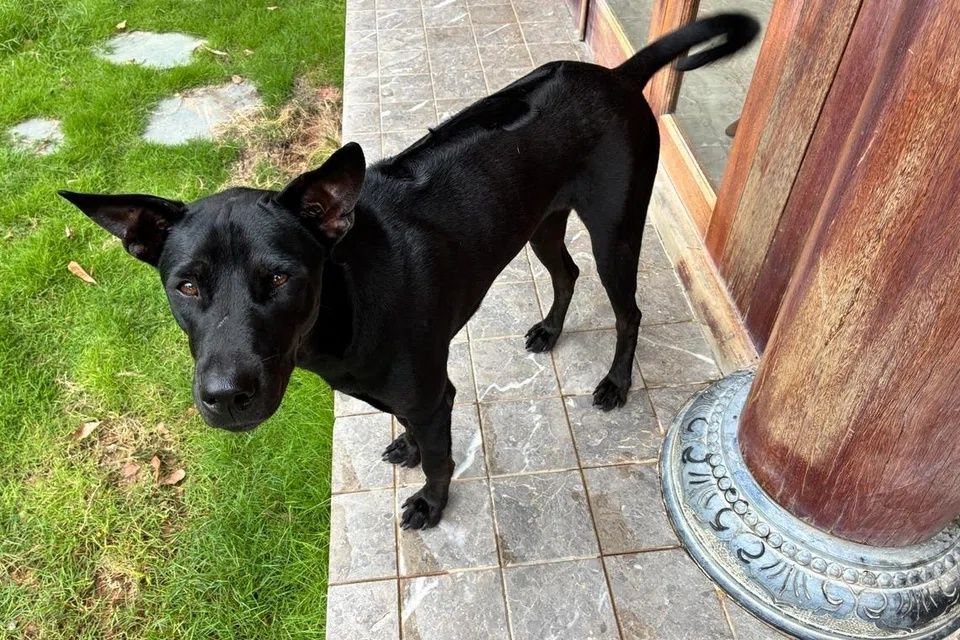
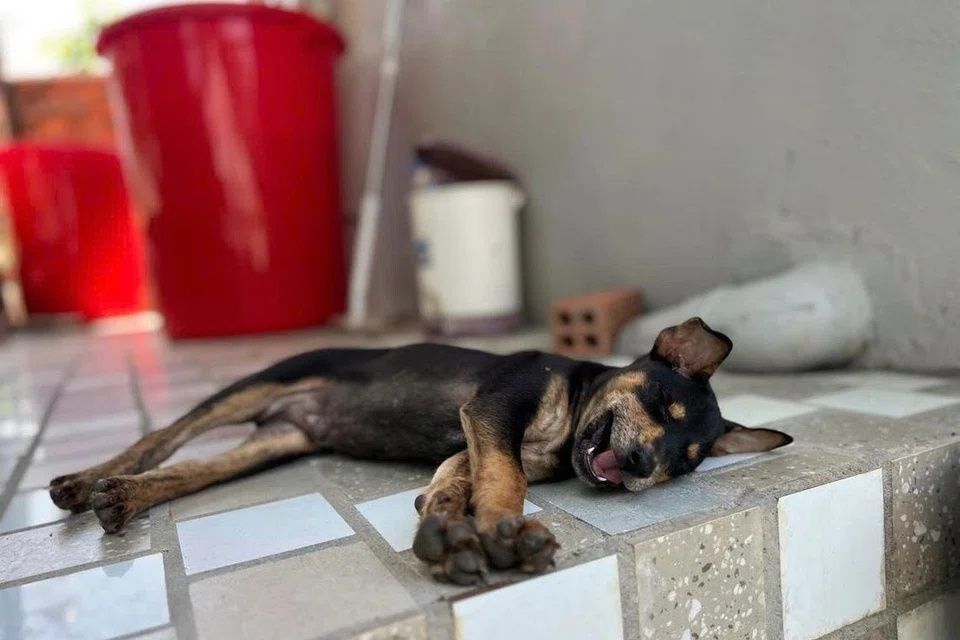
PHU QUOC, (Vietnam): At Cosian Bay Resort in Phu Quoc, southern Vietnam, guests checking into the beachfront hotel are often greeted first not by staff, but by a four-month-old puppy named Barbecue.
The frisky Phu Quoc Ridgeback trots alongside new arrivals, escorts them to their rooms, and lingers just long enough to be rewarded with a scratch behind the ears.
“Barbecue should be promoted to the reception desk,” joked receptionist Nguyen Cuu Tho, 36, grinning as the pup weaved between guests. “He’s more popular than us.”
But the friendly tan-and-black pup, named for his partiality to barbecued fish, is more than a novelty.
He belongs to one of the world’s rarest dog breeds, native to Vietnam’s largest island.
Once near extinction, the beloved Phu Quoc Ridgeback is making a comeback. But breeders face a tough challenge: protecting what makes the breed distinct as they strive for global recognition.
“Loyalty is one of the most distinctive and valuable traits of Phu Quoc dogs, along with other characteristics like excellent hunting ability, agility, memory and pack orientation,” said Mr Le Quoc Tuan, the owner and founder of Thanh Nga Dog Farm on the island.
Thanh Nga is one of a handful of top-tier breeders and the largest conservation centre in the country, spanning 5ha, and home to over 300 Ridgebacks. Also known as the Thanh Nga Phu Quoc Ridgeback Conservation Centre, it is dedicated to the conservation, breeding, and training of the native dog breed.
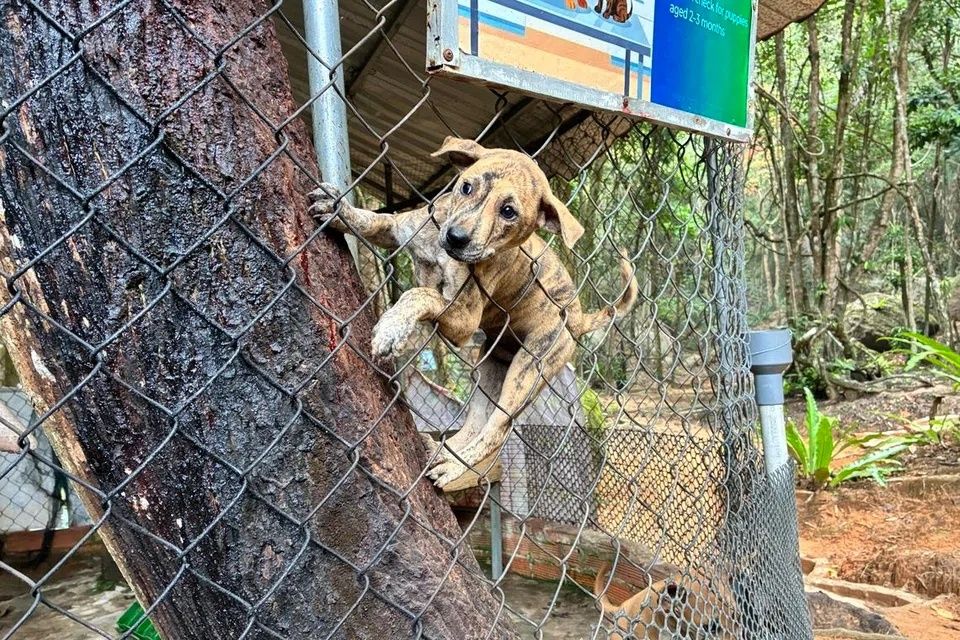
Lean and athletic, the Phu Quoc Ridgeback is famous for its feline-like agility and is one of the few dog breeds in the world capable of climbing trees. It makes an excellent guard dog, hunter and swimmer – partly due to the webbing between its toes. The medium-sized breed weighs up to 22kg when fully grown.
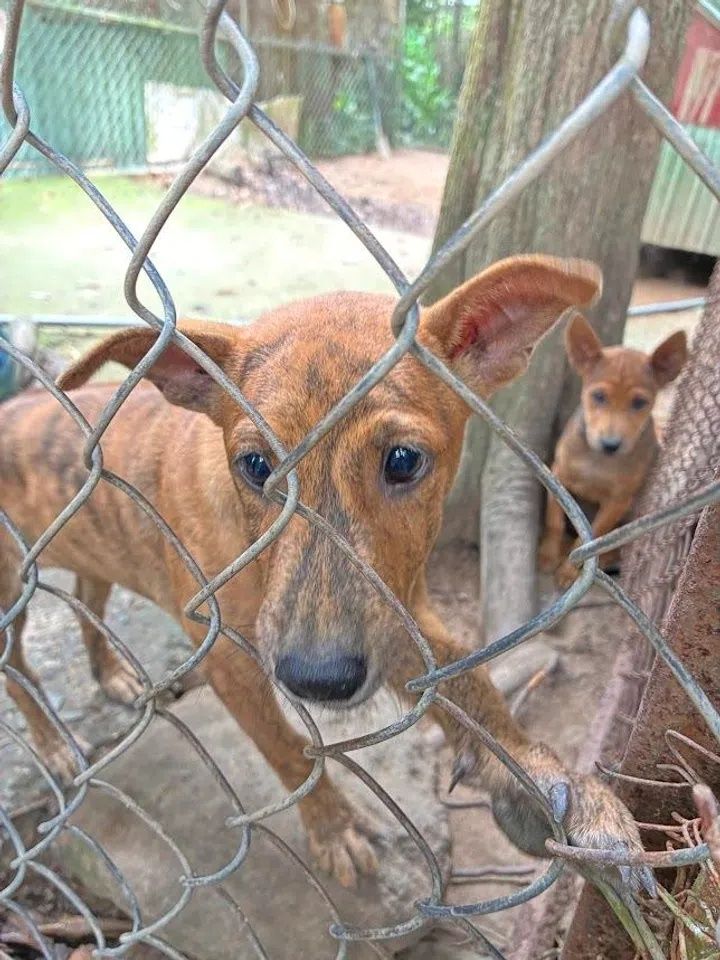
While recognised domestically by the Vietnam Kennel Association (VKA), the country’s leading canine authority, the Phu Quoc Ridgeback is still absent from major international registries such as the Federation Cynologique Internationale (FCI), the world’s largest federation of national kennel clubs.
Without that recognition, it cannot compete on the global stage. However, the process will be long and arduous, say Vietnamese canine experts.
For breeders, the road to global recognition also raises a harder question: What, exactly, makes a Phu Quoc Ridgeback “authentic”?
Shaped by legend and survival
The Phu Quoc Ridgeback is one of Vietnam’s four national dog breeds, alongside the Bac Ha, the Hmong Bobtail and the Indochina Dingo.
Legend traces the ridgeback to the 18th century, when four Phu Quoc dogs protected Nguyen Anh during his flight from rebels. The future Emperor Gia Long, founder of Vietnam’s final dynasty, eventually honored them as “Great Generals of Divine Dogs”.
Whether myth or history, the breed’s origins remain contested. Some believe they were introduced by traders. Others point to centuries-old Vietnamese carvings as evidence of a longer lineage.
What is not disputed is how close they came to disappearing.
The Vietnamese ridgeback first gained international notice in the late 19th century when French colonial officials shipped several specimens to Paris. At the time, they warned that without intervention, this unique island dog would face the risk of extinction.
War, interbreeding and neglect drove the dogs to the brink of extinction in the late 20th century. They survived largely because of the island’s isolation and a small group of breeders who began rebuilding the population in the 1980s.
As numbers recovered, the dogs shifted from semi-wild hunters to symbols of national pride, admired for their intelligence, agility and distinctive ridge of hair running along the spine.
That dorsal ridge places them among a rare trio globally, alongside ridgeback breeds from Thailand and southern Africa. But experts say the similarities are superficial: the three breeds evolved separately and are not closely related.
The Phu Quoc Ridgeback gained international attention in 2011, when two dogs from Vietnam appeared at the World Dog Show in Paris.
“The dogs were calmly strolling around with their tails always held up, eyes serene and at ease, neither aggressive nor fearful of any unfamiliar sights, people, or dogs, even giant ones,” Vietnam’s Tuoi Tre newspaper reported then.
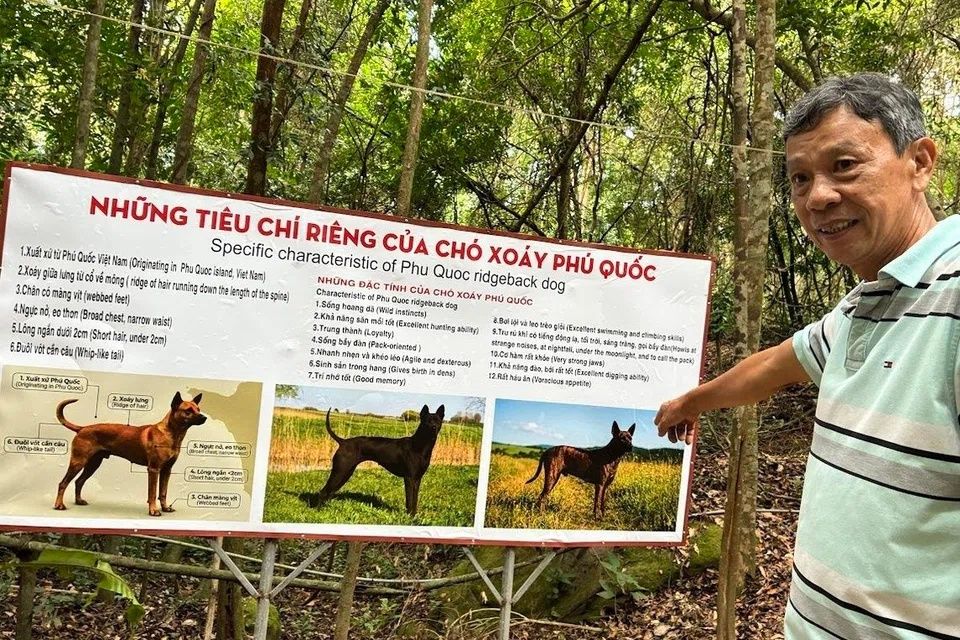
Dom (Spotty) and Ven (Brindle) – the parentheses indicate the “call names” or nicknames of the show dogs – impressed observers with their calm temperament and poise, but could not compete for top honours because the breed was not officially recognised by international canine authorities like the FCI.
Fifteen years on, that recognition remains elusive – and the focus has shifted from just seeking a prestigious title on the world stage to a race for genetic preservation.
Defining the breed
Comprehensive headcounts have become rare as conservationists move away from simple tallies toward rigorous DNA tracking.
Consequently, while the last broad VKA census in 2017 recorded a sprawling population of 3,700 dogs in Vietnam – this count includes “village dogs,” pets, and second- or third-generation offspring that may have a ridge but lack official documentation or strictly unmixed bloodlines – its official registry has since been refined to roughly 800 certified purebreds.
This small but vital base represents the foundation being groomed for the global stage, highlighting the stark difference between the total population of Phu Quoc dogs that look like the breed and the small fraction that meets strict purity standards.
But as interest in the breed grows, so does the pressure to define, standardise and scale it.
To gain recognition from global bodies such as the Belgian-based FCI, breeders must meet strict criteria: a sufficiently large and stable population, consistent physical and genetic traits across generations, and detailed pedigree records.
Organisations including the VKA and breed-specific clubs are working to build pedigree databases, standardise breeding practices and demonstrate the breed’s stability – all necessary steps towards international recognition.
The process is slow and exacting, requiring not just numbers, but consistency: dogs that reliably exhibit the same physical and behavioural traits over multiple generations.
For a breed that has only recently recovered from near extinction, that is a demanding standard.
“There are many hurdles to overcome,” stressed Nguyen Trong Khiem, a VKA official responsible for native dog breeds.
In practice, that means many dogs that resemble Phu Quoc Ridgebacks, or are sold as such, may not qualify for the official breeding pool.
The challenge is not just growing numbers, but defining authenticity.
When popularity becomes a problem
The breed’s revival has brought with it a surge of interest, both within Vietnam and among overseas Vietnamese communities.
Clubs dedicated to the Phu Quoc Ridgeback have sprung up in the United States and Europe, while social media has amplified its reputation as a rare, intelligent and uniquely “Vietnamese” dog. Currently, there are only “a few thousand documented” purebred Phu Quoc dogs worldwide, according to Vietridgebacks.com, a US-based website dedicated to the breed. However, they may not all be part of the elite, show-standard registry.
But popularity comes with complications.
“There are some misconceptions about Phu Quoc dogs,” said Sang Nguyen, a breeder based in Ho Chi Minh City. “They are semi-wild hunting dogs. They have a lot of energy and need a large space. Not many people can afford that, especially in cities.”
Bred for agility and endurance, the dogs are known to dig deep dens, chase prey and, at times, clash with other pets – traits that make them ill-suited to small, urban homes.
The result, breeders say, is a mismatch between expectation and reality. Some owners, drawn by the breed’s rarity, are unprepared for its temperament and needs. Others are less concerned with pedigree.
A puppy without proper certification could fetch 3 million dong (S$150) to 5 million dong, which is double or triple the price of a non-pedigree pup from a pet shop. Meanwhile, a purebred pup can fetch more than US$1,000 (S$1,275) – a significant sum locally.
That price gap creates incentives for shortcuts.
Dr Tran Hoang Dung, an associate professor at the University of Industry and Trade in Ho Chi Minh City who has studied the breed, said: “If standards are not tightly controlled, the market will push breeders towards easier options” including crossbreeding with other ridgeback breeds or mislabelling dogs to meet demand.
The risk is not immediate extinction, but gradual dilution.
“We may end up with many dogs bearing the name Phu Quoc, but fewer that are truly worth representatives of that ridgeback breed,” he said.
Walking a fine line
At the forested Thanh Nga facility established on Phu Quoc island in 2000, dogs roam the grounds freely, moving between shaded enclosures and open spaces. Here, Tuan set up the first dedicated racetrack on the island to hone and showcase the breed’s natural speed and agility. The dogs must navigate various challenges through the 400-metre obstacle course, including running through tall grass, climbing over trees, crawling through tunnels, and swimming across water.
At its peak just three years ago, the centre housed more than 400 dogs. Today, the number is down by nearly a quarter – a reflection of the costs and constraints involved.
“Breeding a true Phu Quoc dog is very difficult and expensive,” said Tuan, who is a central figure in the ridgeback community. Each month, the dogs consume tonnes of rice and hundreds of kilograms of fish. There are also ongoing expenses for vaccinations, veterinary care and disease control.
Selective breeding, ensuring that only dogs with the right lineage and traits reproduce, is particularly challenging when the pool of certified animals remains small.
“There are more and more dogs that have similar traits but are not true Phu Quoc ridgebacks. They may have been cross-bred, with only a small percentage of the original (Phu Quoc) gene,” he explained.
Maintaining standards requires not just careful pairing, but detailed record-keeping across generations – a level of discipline that not all breeders follow.
For conservation efforts to continue, they must also be financially viable.
Private breeders and centres rely in part on selling puppies, creating a delicate balance between maintaining strict standards and generating income.
“Commercialisation is only acceptable when it serves conservation,” said Dr Dung. “Meaning, the money goes back to veterinary care, breeding control, microchipping, record-keeping and research.”
Without that reinvestment, he warned, the push for profit could undermine the very traits breeders are trying to preserve.
The challenge is compounded by the relatively small genetic base.
“Conservation requires the correct pedigree supported by the right reproductive resources,” he said, noting that “the availability of purebred parents is becoming increasingly difficult”.
That tension, between expanding the population and maintaining genetic integrity, lies at the heart of the current effort.
Without careful management, increased visibility could accelerate the very pressures – overbreeding, crossbreeding, mislabelling – that threaten the breed’s integrity.
For many in Vietnam, the Phu Quoc Ridgeback is more than just a dog. It is regarded as a national treasure and a living symbol of Vietnamese resilience.
“Everybody loves Phu Quoc Ridgeback dogs,” Tuan said. “They are unique, and that’s why I am determined to keep this heritage of ours alive.”
Back at the resort, Barbecue darts across the sand, pausing briefly to greet another arriving guest before bounding off again.
For now, he remains blissfully unaware of debates over bloodlines, standards and international recognition.
But whether dogs like him will one day be recognised on the world stage, and what will be required to get them there, remains to be seen. - The Straits Times/ANN