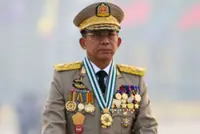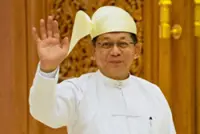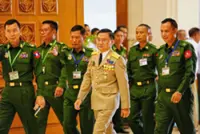
Junta chief Min Aung Hlaing was sworn in as president, continuing his rule from a civilian post five years after snatching power in a military coup.
As the nation’s armed forces chief, Hlaing ousted the elected government of Aung San Suu Kyi in 2021 – detaining the Nobel Peace Prize laureate and triggering a civil war.
After a half-decade of ruling by diktat, he organised an election concluding in January excluding her party and securing a walkover win for military allies in civilian politics who backed him into the top office.
“Myanmar has returned to the path of democracy and is heading toward a better future,” the 69-year-old said in a speech yesterday, after reading aloud the presidential oath to start his five-year term at a triumphant parliamentary ceremony in the capital, Naypyidaw.
Hlaing has resigned as top general to take over as president of the new government ahead of Myanmar’s Thingyan holiday starting Monday, which celebrates the new year with water-splashing ceremonies of renewal and rejuvenation.
Democracy watchdogs deride the transition as a rebranding of military rule in a civilian disguise.
Over two-thirds of Hlaing’s 30 ministers, also sworn in yesterday, are either retired or serving army members.
A similar proportion served in the post-coup junta leadership, while more than ten have been subject to international sanctions.
AFP reporters saw bomb squads patrolling Naypyidaw hotels ahead of the ceremony, and parliament was sequestered by rings of checkpoints.
The lead-up to Hlaing’s swearing-in has seen some political prisoners from Suu Kyi’s administration pardoned and government workers blacklisted for quitting in protest over the coup invited to return to their jobs.
Critics likewise dismissed those steps as cosmetic measures, but Hlaing said his government will “grant appropriate amnesties to support social reconciliation, justice and peace”.
He did not mention Suu Kyi – held incommunicado since the putsch, serving a 27-year sentence on charges rights groups dismiss as politically motivated.
More than 22,000 others have also been locked up in Myanmar’s jails since the coup, according to the Assistance Association for Political Prisoners, while thousands perished in the civil war.
The junta trumpeted the election as a return of power to the people and a chance for reconciliation in the civil war.
Analysts say another aim of the election was to normalise their image with a veneer of legitimacy, unfreezing foreign engagement, including investment projects.
Hlaing said his government will “work to restore normal relations” with the Association of South-East Asian Nations regional bloc, which has ostracised Myanmar’s leaders since the coup. — AFP