
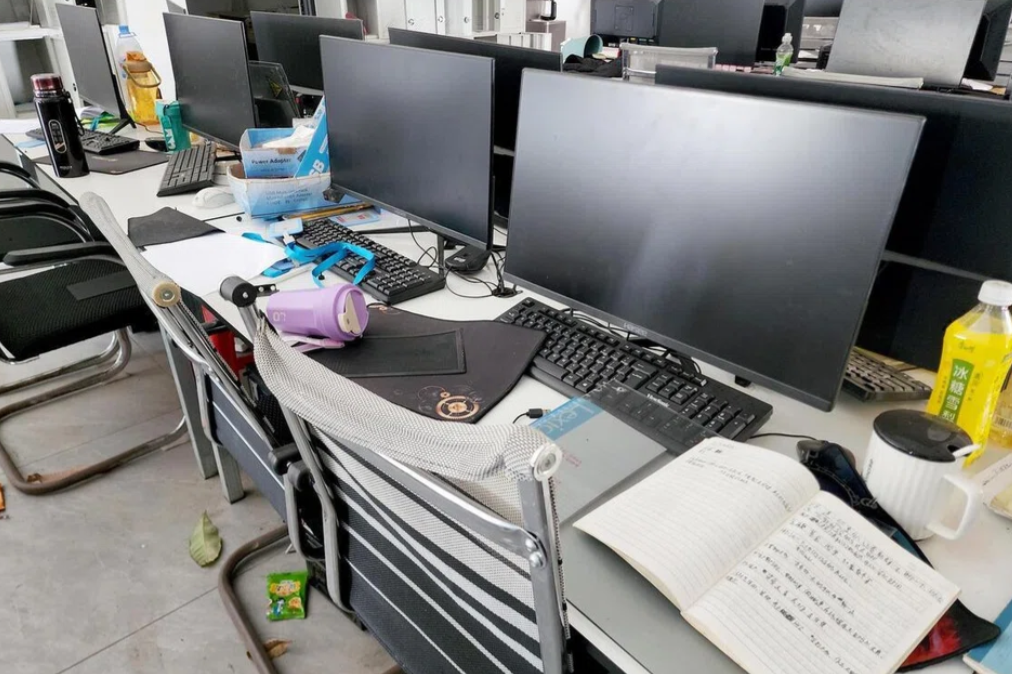
O’SMACH, Cambodia: A notebook lies open on a table littered with keyboards and industrial USB hub ports with charging cables left plugged in. One entry in English reads: “I’m single and I’ve been busy with work in recent years. So I rarely make new friends. I’m from Singapore. From which country are you from?”
Another handwritten entry below continues “in Singapore, a job like yours generally earns 1,500 to 2,000 SGD per month. How much do you earn in a month in your country?”
These entries appear to be a chat guide which a cyberscammer could use with an unsuspecting victim. Hundreds of such notebooks are found inside rooms which look like open office workspaces in a compound located in O’Smach town in Cambodia, bordering Thailand.
The massive compound, occupying 80 hectares or up to 125 football fields, is infamous for its transnational cyberscam activities.
On April 7, The Straits Times was among 15 news outlets taken on a tour of the compound, whose operations were crippled by Thailand’s military in December 2025 during the border clashes with Cambodia.
The Thai military and foreign ministry had organised at least three media tours to the area, as they wanted to show the industrial scale of the organised crime operations in Cambodia.
Thailand had accused Cambodia of using the vast compound, about 400m from the border in Thai’s Surin province to store military weapons, launch grenade attacks into Thai soil and position snipers to target Thailand. After attacking the compound which included two casinos, Thailand discovered that the facilities were used as scam centres after its military occupied the location.
The entire compound, home to 157 low-rise buildings, has now been emptied after the Thai attacks.
The Thai military believes at least 10,000 people were operating in the compound, which had services such as a hospital, a pharmacy, a hair salon and even hotel accommodation.
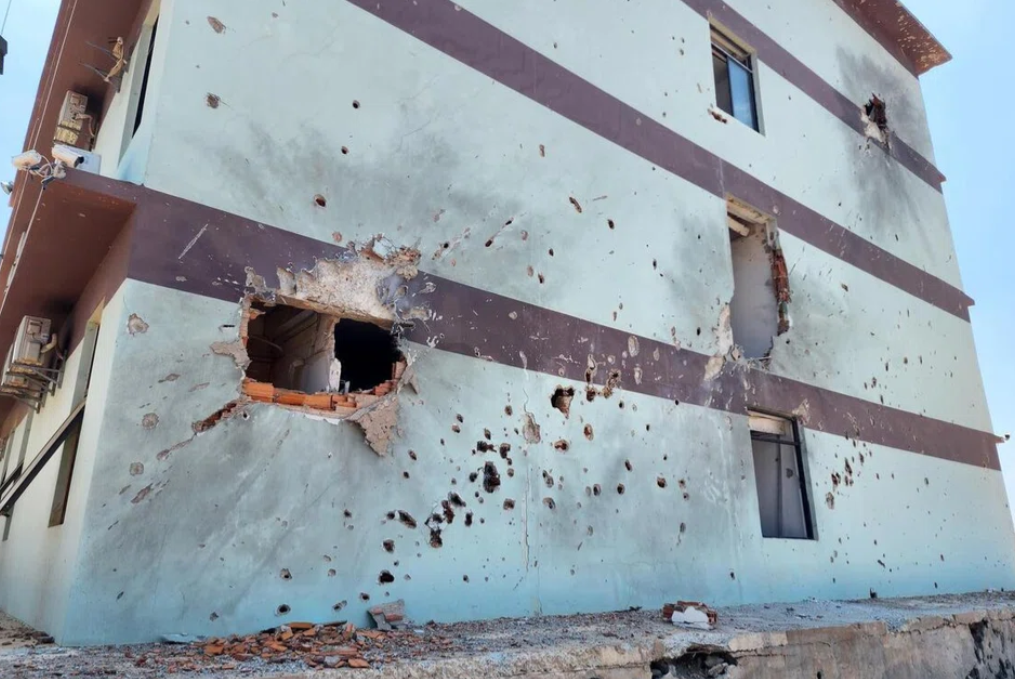
While being driven around the site – too vast to cover on foot – the journalists observed what resembled an ordinary, self-contained neighborhood, except for the shattered windows and bullet-riddled walls.
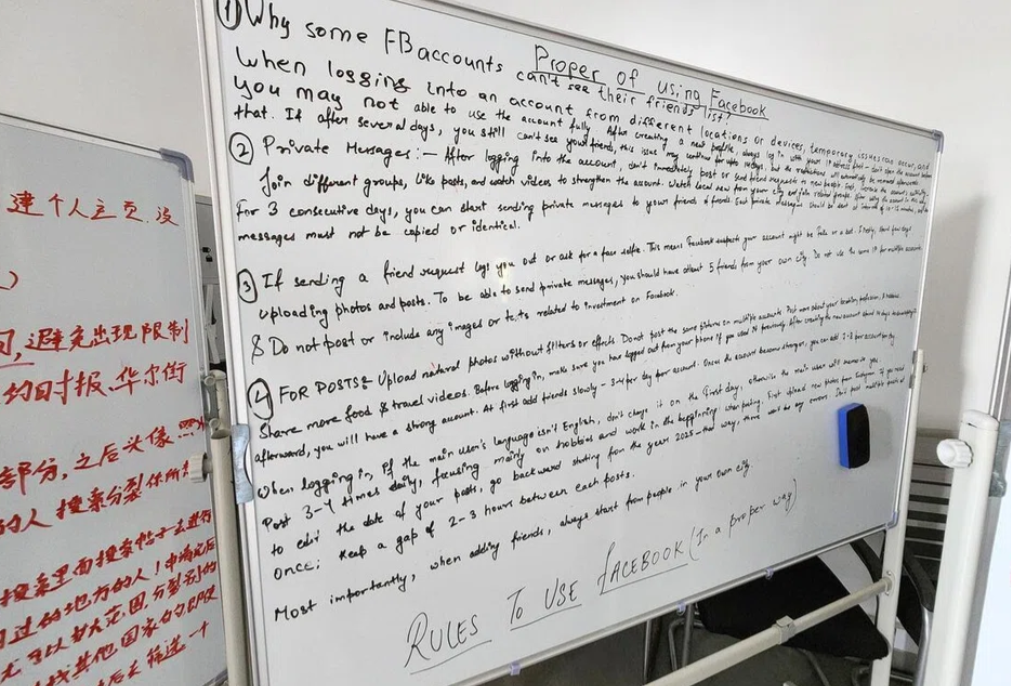
Inside most of the buildings that ST visited, room after room was filled with long tables and chairs with computer screens and keyboards strewn all over, and whiteboards with instructions on how to use social media to entrap scam victims.
For example, to make their fake Facebook accounts look real, scammers were taught to like posts and watch videos to “strengthen” the account, “join related groups” in the city of the scammer and “upload natural photos” and not to post the same pictures on multiple accounts.
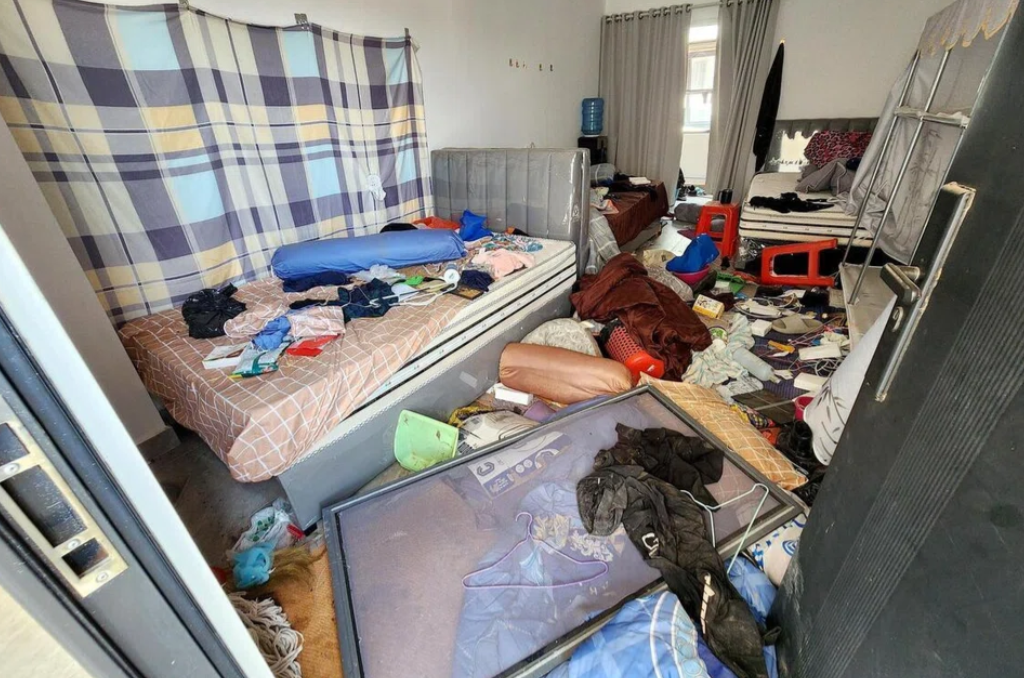
Rotting leftover food emitted a stench, while toppled coffee mugs and ashtrays brimming with cigarette butts hinted at a chaotic and hurried departure.
The Thai military did not specify the owners behind the compound, saying only that it was half owned by Chinese and Cambodians. But analysts told ST that one of the main perpetrators is Ly Yong Phat, a Cambodian businessman who was sanctioned back in 2024.
Where have former occupants of the compound gone?
Despite its vastness, the closure of this scam compound might not leave much of a dent in the lucrative scamming business.
“O’Smach has been a well-known human trafficking and scam compound hub for years,” said Lindsey Kennedy, research director of The Eyewitness Project, a global investigative organisation specialising in reports on crime, conflict and corruption.
The US Treasury Department said in October that Americans lost at least US$10 billion (S$12.8 billion) to South-East Asia-based scam operations in 2024, a 66 per cent increase from 2023. The Global Anti-Scam Alliance estimates that globally, US$442 billion was lost to scammers in 2025 alone.
Said Kennedy, who is based in Phnom Penh: “The problem is that criminal industries are really good at pivoting and adapting in chaos, especially when you have a lot of vulnerable and desperate people to exploit. What we’re seeing is that the scam industry in Cambodia is already regrouping.”
Cambodia acknowledges that the scamming operations have damaged its economy and reputation. It vowed to close down all the scam centres by the end of April, which analysts are sceptical about.
“The ‘crackdown’ meant trafficking survivors were left to fend for themselves on the street or rely on a handful of shelters, and given until the end of April to find the money to leave,” she said.
She added that “scam recruiters are swooping in to offer survivors, with no other options, jobs in scam compounds in Cambodia or in other countries where traffickers will cover the costs of travel”.
“Many compounds will likely go back to business as usual and this time, workers will know not to ask for help to escape.”
Cambodia objects, Thailand defends
Media visits to the scam compound in O’Smach have drawn criticism from Cambodia.
The country’s Information Minister Neth Pheaktra told ST that his country “strongly rejects Thailand’s attempt to legitimise its illegal military presence through staged media visits”.
Replying to ST’s queries, he said Thailand is “attempting to use the issue of online scams as a pretext to justify its unlawful military actions and create a fait accompli on the ground”.
Thailand’s Defence Ministry spokesperson Rear Admiral Surasant Kongsiri denies that, insisting that the kingdom is adhering to the joint statement between the two nations in December as part of the ceasefire agreement.
“Whichever position the troops have taken, they will remain in that position,” he added.
Rear Admiral Surasant added: “it’s not really the discussion about whose territory that part of land belongs to. But it’s the question about the scam centre operations that have been operating throughout this time and we found that it has been illegally operating behind the scenes of casinos.”
Jason Tower, senior expert of the international, non-governmental Global Initiative against Transnational Crime, said Thailand did Cambodia a favour with the media visits in “shining transparency on the extreme nature of the criminality taking place inside the scam compounds”.
“This has assisted the international response, and helped to raise awareness especially of the sophisticated types of law enforcement impersonation scams that have been perpetrated from many of these locations.” - The Straits Times/ANN