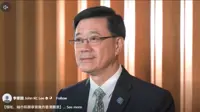
HONG KONG: Hong Kong media tycoon and the city’s most prominent democracy advocate Jimmy Lai was on Monday (Feb 9) sentenced to 20 years in jail, following his conviction in a landmark national security trial that has drawn heavy criticism from the West.
The sentencing of the founder of Hong Kong’s now-defunct Apple Daily newspaper brings to an end a lengthy trial that has dragged on for more than two years, and that has already seen the 78-year-old serve more than five years behind bars.
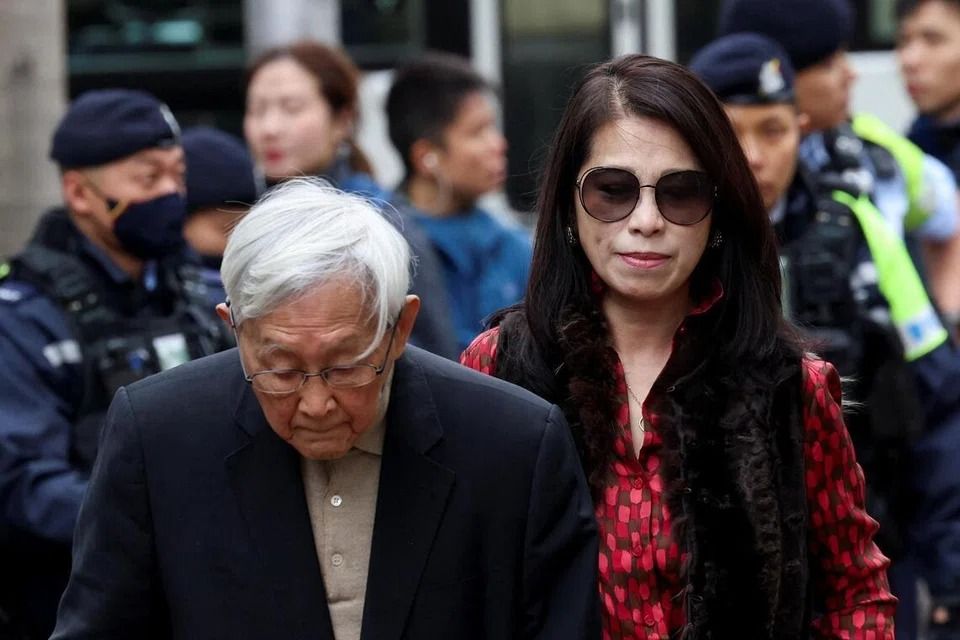
The sentencing at the West Kowloon Law Courts – packed with journalists, diplomats and members of the public to witness the proceedings on the morning of Feb 9 – came shortly after proceedings began at 10am.
Lai can appeal the decision within 28 days.
The sentencing “is the final nail in the coffin for freedom of the press in Hong Kong”, non-profit organisation the Committee to Protect Journalists’ chief executive officer Jodie Ginsberg said in a statement after news broke of the decision.
“The international community must step up its pressure to free Jimmy Lai if we want press freedom to be respected anywhere in the world.”
Lai, the long-time critic of China’s Communist Party – who had been facing up to life in jail – is the highest-profile figure so far to be convicted under a national security law imposed on Hong Kong by Beijing in 2020.
He was in December 2025 found guilty of two charges of conspiring to collude with foreign forces and one charge of conspiring to publish seditious materials. He had pleaded not guilty to the three charges.
Eight others were on Feb 9 awaiting sentencing alongside the tycoon. All eight had pleaded guilty to one charge each of conspiring to collude with foreign forces.
They are activist Andy Li, paralegal Chan Tsz-wah, and six former Apple Daily executives, comprising publisher Cheung Kim-hung, associate publisher Chan Pui-man, editor-in-chief Ryan Law, executive editor-in-chief Lam Man-chung, and editorial writers Fung Wai-kong and Yeung Ching-kee.
The national security trial of Lai and his counterparts has been heavily criticised by Western countries, among them the United States and Britain, who say it is politically motivated.
Critics have also said it reflects Hong Kong’s shrinking press freedoms as Beijing tightens its grip over the territory.
US President Donald Trump claims to have urged China’s leader Xi Jinping to release Lai, while British Prime Minister Keir Starmer has said he has also discussed the issue with President Xi.
The European Parliament has threatened sanctions against Hong Kong’s Chief Executive John Lee and other officials over the matter, which it describes as a crackdown on the city’s freedoms and a violation of its people’s rights.
Mainland Chinese and Hong Kong officials have condemned those threats as “despicable political manipulation”, insisting that Lai received a fair trial.
Hong Kong’s top judge, Chief Justice Andrew Cheung, has said that demands for Lai’s release “strike at the very heart of the rule of law”, after the tycoon’s children lobbied foreign governments and international human rights organisations for help.
In mitigation, Lai’s lawyer Robert Pang had pleaded for leniency on the basis of the activist’s advanced age and poor health. His ailments include hypertension, diabetes, cataracts and an ocular vein blockage.
Lai has been in jail almost continuously since December 2020. His trial began on Dec 18, 2023, and ran for 156 days, nearly twice the 80 days it was due to last.
“Every day that he spends in prison would bring him that much closer to the end of his life,” barrister Pang had said. - The Straits Times/ANN