BANGKOK: Thailand’s Customs Department is preparing to revise free zone duty-exemption criteria and increase per-item fines to curb false origin declarations and under-valuation, while using AI to speed up HS code checks.
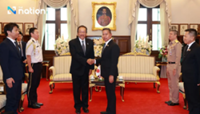
Phantong Loykulnanta (pic), director-general of the Customs Department, said that discussions with the private sector had highlighted key problems with duty-exemption criteria for goods leaving free zones for domestic sale. At present, the exemption relies on Asean rules of origin that set a 40% regional content requirement.
However, Phantong said the 40% threshold often does not reflect “real” value added in Thailand, because current rules allow companies to count profit, or even purchases of goods from importers, as part of Thai content.
To close these loopholes and prevent agricultural products or foreign goods from using free-zone channels to avoid tax—hurting domestic farmers and SMEs—the Customs Department is considering revisions to the relevant ministerial notification, including:
Redefining “value added”
Customs may revise the definition so that the 40% content must come only from domestic raw materials combined with domestic labour, ensuring genuine value added in Thailand.
Tougher conditions under consideration
Officials are weighing stricter measures, such as barring profit from being counted towards the 40% content requirement, or requiring a meaningful manufacturing process, such as a change in tariff classification, rather than only packaging or quality control.
Enforcement: per-item fines and faster settlements
On enforcement, Phantong said Customs is preparing to use the director-general’s authority to revise settlement criteria and increase fines—especially for goods with false origin declarations and prohibited items such as e-cigarettes.
Under the plan, penalties may shift to a per-item basis instead of being tied to declared prices, which often creates problems due to under-valuation or disputes over pricing. Moving to per-item fines would make valuation easier and reduce the need for officer discretion.
Addressing seized-goods backlogs
Customs is also seeking to address a growing backlog of seized items, particularly e-cigarettes. Phantong said the department faces budget constraints in destroying such goods, and that additional revenue from higher fines would be used to fund destruction, reduce storage burdens, and prevent theft of seized items for resale.
“We believe the old criteria do not deter offenders, because some goods have very high margins,” he said, adding that higher fines and faster case handling through Customs-level settlements could also reduce the workload for investigators and the courts.
Low-value import tax: THB300-400m collected so far
Phantong said the policy to collect tax on low-value imports below 1,500 baht, or to levy import tax from the first baht, has generated more than THB300-400 million since January 1. He described this as a significant figure that helps create fairness for Thai businesses, and projected full-year 2026 revenue of around THB4.8 billion from the measure.
Licences cited as biggest pain point; AI support planned
Phantong acknowledged that the biggest pain point for importers and exporters is obtaining licences from numerous agencies—more than 23 to 40 bodies. Customs is pushing for the National Single Window (NSW) to operate more effectively to cut these steps.
He also said the department plans to use AI technology (such as Gemini) to support officers in analysing customs tariff classifications (HS codes), aiming to standardise decisions, reduce disputes between officials and businesses, and speed up cargo clearance. - The Nation/ANN