



Many millions of tonnes of discarded electronics from the United States are being shipped overseas, much of it to developing countries unprepared to safely handle hazardous waste, according to a new report by an environmental watchdog.
The Seattle-based Basel Action Network, or BAN, said a two-year investigation found at least 10 US companies exporting used electronics to Asia and the Middle East, in what it says is a “hidden tsunami” of electronic waste.
“This new, almost invisible tsunami of e-waste, is taking place... padding already lucrative profit margins of the electronics recycling sector while allowing a major portion of the American public’s and corporate IT equipment to be surreptitiously exported to and processed under harmful conditions in South-East Asia,” the report said.
Electronic waste, or e-waste, includes discarded devices like phones and computers containing both valuable materials and toxic metals like lead, cadmium and mercury.
As gadgets are replaced faster, global e-waste is growing five times quicker than it’s formally recycled.
The world produced a record 62 million metric tonnes in 2022.
That’s expected to climb to 82 million by 2030, according to the United Nations’ International Telecommunication Union and its research arm, Unitar.
That American e-waste adds to the burden for Asia, which already produces nearly half the world’s total.
Much of it is dumped in landfills, leaching toxic chemicals into the environment.
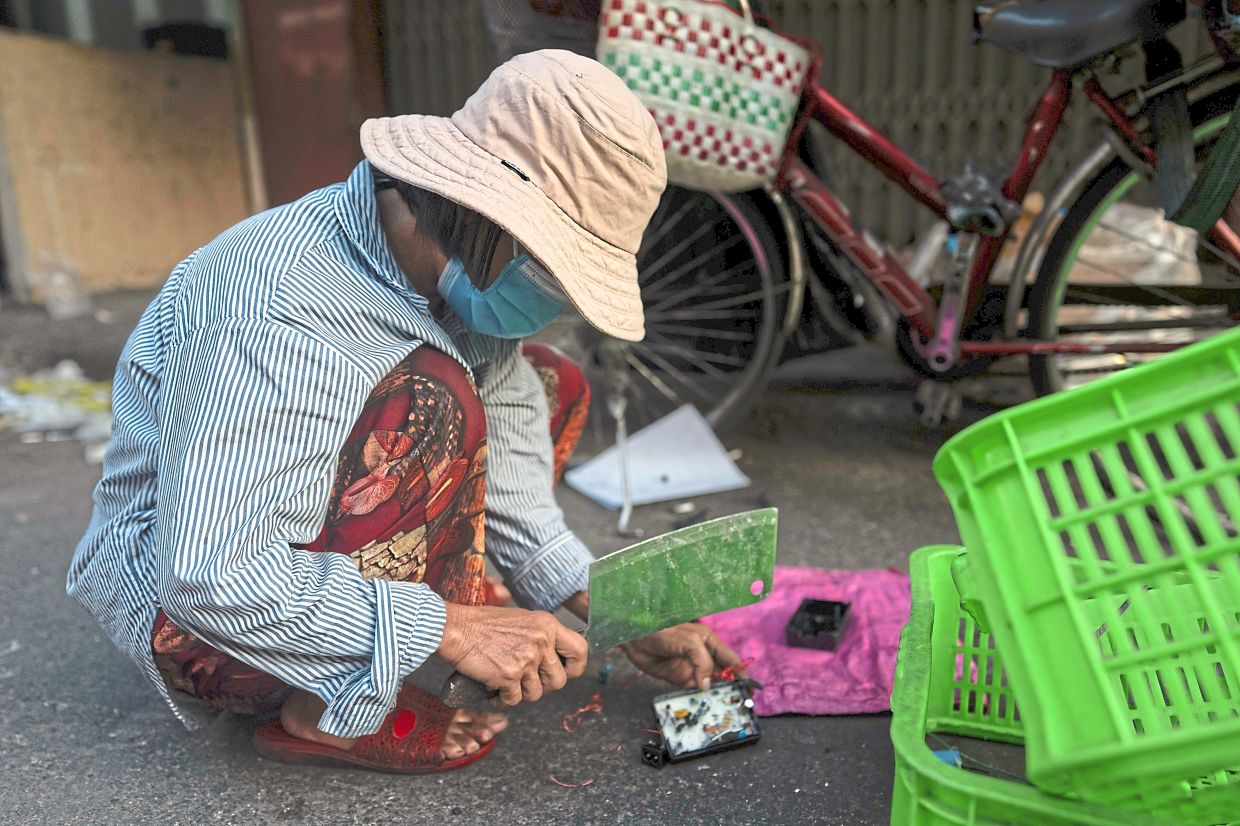
Some ends up in informal scrapyards, where workers burn or dismantle devices by hand, often without protection, releasing toxic fumes and scrap.
About 2,000 containers – roughly 33,000 metric tonnes – of used electronics leave US ports every month, according to the report.
It said the companies behind the shipments, described as “e-waste brokers,” typically don’t recycle the waste themselves but send it to companies in developing countries.
The companies identified in the report include Attan Recycling, Corporate eWaste Solutions or CEWS, Creative Metals Group, EDM, First America Metal Corp, GEM Iron and Metal Inc, Greenland Resource, IQA Metals, PPM Recycling and Semsotai.
Semsotai said it doesn’t export scrap, only working components for reuse. It accused BAN of bias.
PPM Recycling said its warehouses in California and Texas ship only aluminium and other non-iron metals to Malaysia.
It said BAN had exaggerated shipment volumes, adding that it used accurate trade codes and followed US and international rules.
The report estimated that between January 2023 and February 2025, the 10 companies exported more than 10,000 containers of potential e-waste valued at over US$1bil (RM4.2bil), the report said. Industrywide, such trade could top US$200mil (RM836mil) a month.
Several companies operate out of California, despite the state’s strict e-waste laws requiring full reporting and proper downstream handling of electronic and universal waste.
Many e-waste containers go to countries that have banned such imports under the Basel Convention, which is an international treaty that bars hazardous waste trade from non-signatories like the United States, the only industrialised nation yet to ratify it.
The nonprofit said its review of government and private trade records from ships and customs officials showed shipments were often declared under trade codes that did not match those for electronic waste, such as “commodity materials” like raw metals or other recyclable goods to evade detection.
Tony R. Walker, who studies global waste trade at the Dalhousie University’s School for Resource and Environmental Studies in Halifax in Canada, said he wasn’t surprised that e-waste continues to evade regulation.
While some devices can be legally traded if functional, most such exports to developing nations are broken or obsolete and mislabelled, bound for landfills that pollute the environment and have little market value, he said.
After China banned imports of foreign waste in 2017, many Chinese businesses shifted their operations to South-East Asia, using family and business ties to secure permits.
Containers were also sent to Indonesia, Thailand, the Philippines and the UAE, despite bans under the Basel Convention and national laws.
In countries receiving this US e-waste, “undocumented workers desperate for jobs” toil in makeshift facilities, inhaling toxic fumes as they strip wires, melt plastics and dismantle devices without protection, the report said.
Authorities in Thailand and Malaysia have stepped up efforts to curb illegal imports of US e-waste.
In May, Thai authorities seized 238 tonnes of US e-waste at Bangkok’s port, while Malaysian authorities confiscated e-waste worth US$118mil (RM493mil) in nationwide raids in June.
Most of the facilities in Malaysia were illegal and lacked environmental safeguards, said SiPeng Wong, of Malaysia’s Center to Combat Corruption & Cronyism.
“Exporting e-waste from rich nations to developing nations strains local facilities, overwhelms efforts to manage domestic waste and is a form of waste colonialism,” she said. — AP
