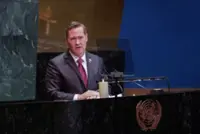
PHNOM PENH (Khmer Times): At the recent United Nations General Assembly, Thailand once again resorted to blame and distortion, portraying Cambodia as an aggressor in the border dispute. But the Cambodian people, and the international community, deserve to hear the truth: it is Thailand’s actions, not Cambodia’s, that have inflamed tensions and undermined peace.
If Thailand truly loves peace, why does it continue to provoke Cambodia through words and deeds? For years, Cambodia has respected international processes, complied with agreements, and sought dialogue.
Thailand, however, has repeatedly chosen provocation — dispatching troops, obstructing negotiations, and using inflammatory rhetoric. A nation that genuinely loves peace does not fan the flames of conflict.
If Thailand is sincere about resolving this dispute, why does it refuse to accept international law? Cambodia has consistently appealed to lawful, peaceful mechanisms, from the International Court of Justice to bilateral agreements.
Thailand, instead, insists on its unilateral interpretation of borders, rejecting the very rules that guarantee fairness. Sincerity is measured not in speeches but in actions—and Thailand’s rejection of international adjudication reveals its true intentions.
If Thailand truly hates war, why does it persist in using a unilateral map as a pretext for military aggression? Cambodia has never sought confrontation. Yet, time and again, Thai forces have crossed into Cambodian territory, citing a map that the world does not recognize. This is not the behavior of a neighbor seeking harmony.
It is the behavior of a state willing to gamble with blood and stability for political gain.
Cambodia does not wish to see its people suffer. We do not wish for soldiers or civilians on either side to pay the price of reckless decisions made in Bangkok. But peace cannot be built on unilateralism, denial of law, or manufactured hostility. Cambodia’s position is clear: let us resolve disputes through law, dialogue, and mutual respect.
The question now falls back to Thailand: if you love peace, if you are sincere, if you hate war, then why do your actions say the opposite?
-- Roth Santepheap is a geopolitical analyst based in Phnom Penh. The views expressed are his own.