
Emergency workers in the country’s Punjab province used drones to find people stranded on rooftops by massive floods as the government expanded its rescue operation with more than 850,000 evacuated, officials said.
The Pakistan Meteorological Department warned of more heavy rain in Punjab’s flood-hit districts and elsewhere in the country, where weeks of above-normal rainfall and the release of huge volumes of water from dams in neighbouring India caused rivers to overflow into low-lying regions.
Authorities say the country’s most populous Punjab province faced its biggest flood on record.
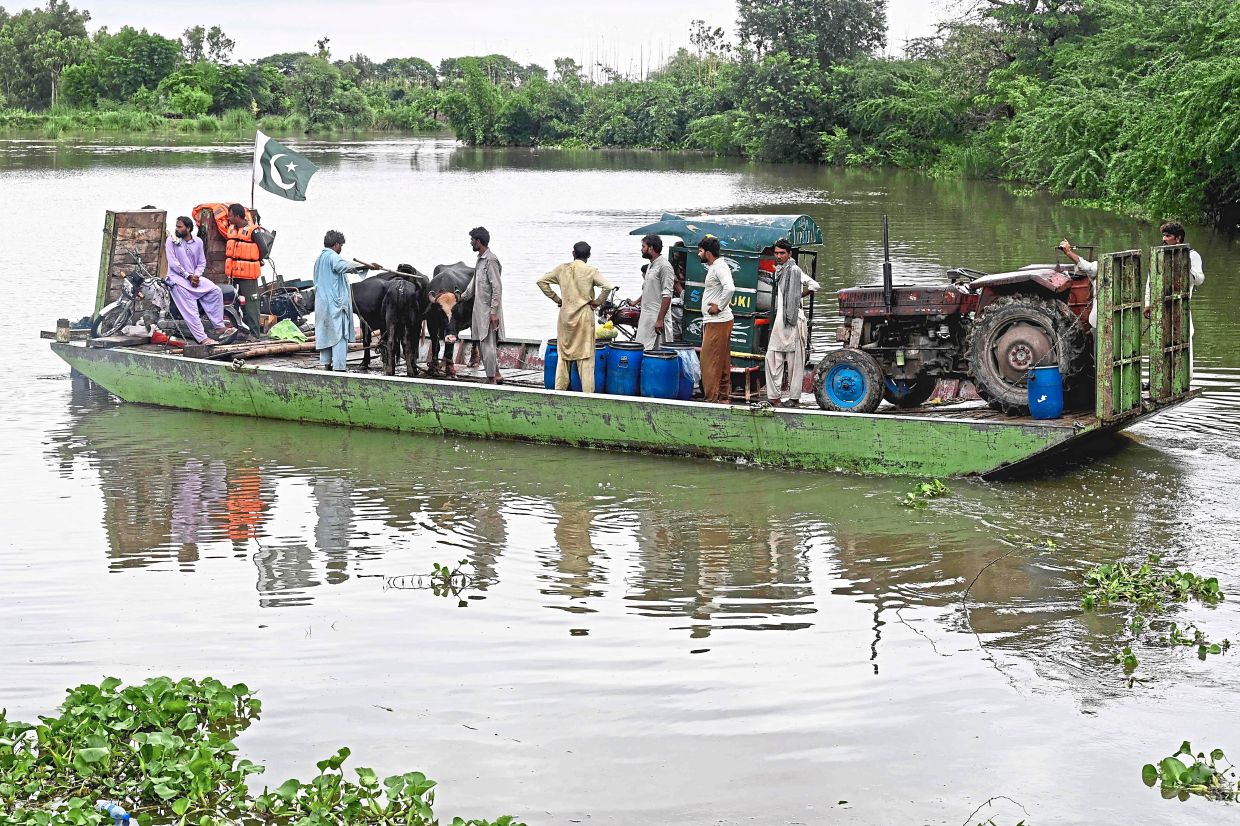
In Multan and Jhang districts, residents early this month waded through floodwaters carrying their belongings to roadsides and higher ground.
They said they had waited for rescuers before crossing on their own nearly 1.5m-deep water to reach safety, while many others remained stranded.
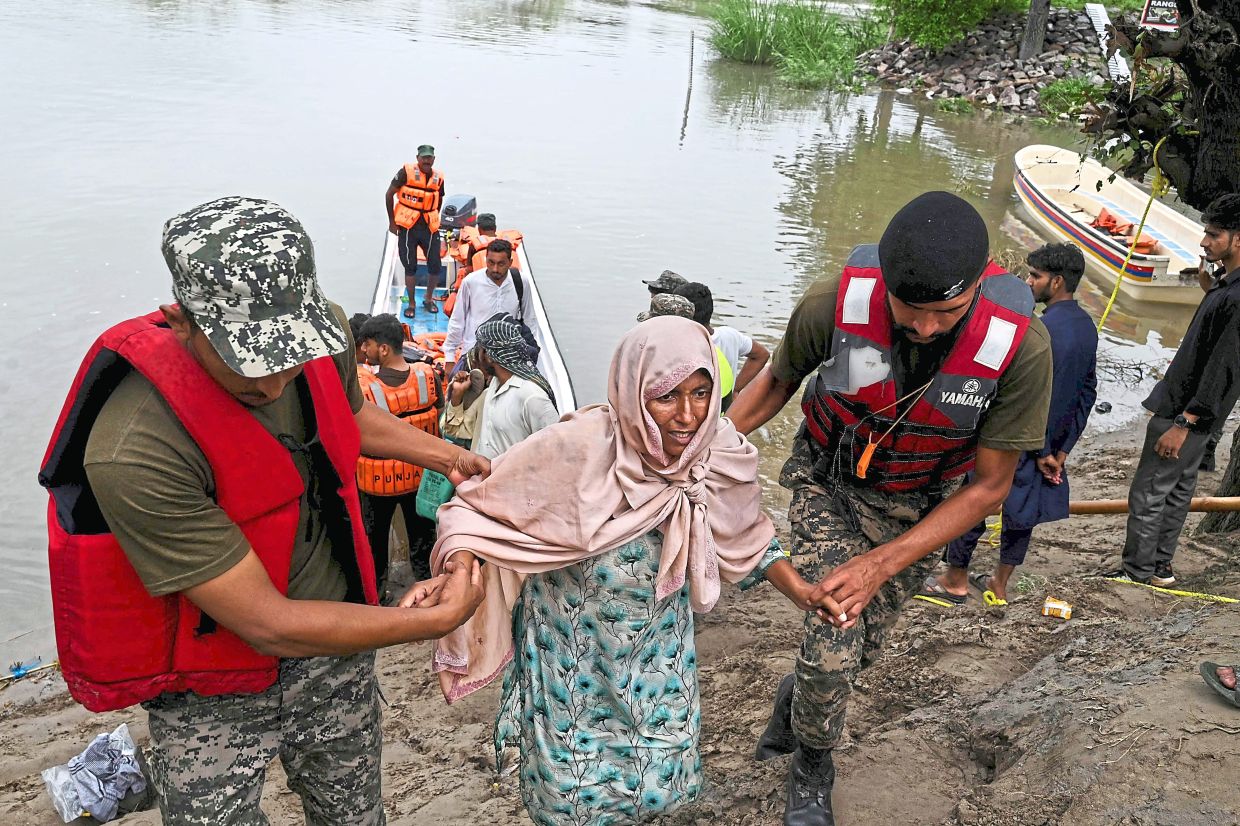
Rescuers, backed by the military and emergency services, have evacuated more than 850,000 people, said Irfan Ali Kathia, director-general of the Punjab Disaster Management Authority. More than 500,000 farm animals were also moved to safety, he said.
“We are handling an unprecedented situation, and we are responding to Punjab’s biggest-ever floods by using the latest technology and all available resources to save lives,” Irfan said.
The Punjab government said drones were deployed in Multan, Jhang and other districts.
“Our priority is to save lives and ensure a steady supply of essential items to survivors,” Irfan said.
The deluge has swamped Narowal, Sialkot and Kasur districts while entire villages have been submerged in Jhang and Multan.
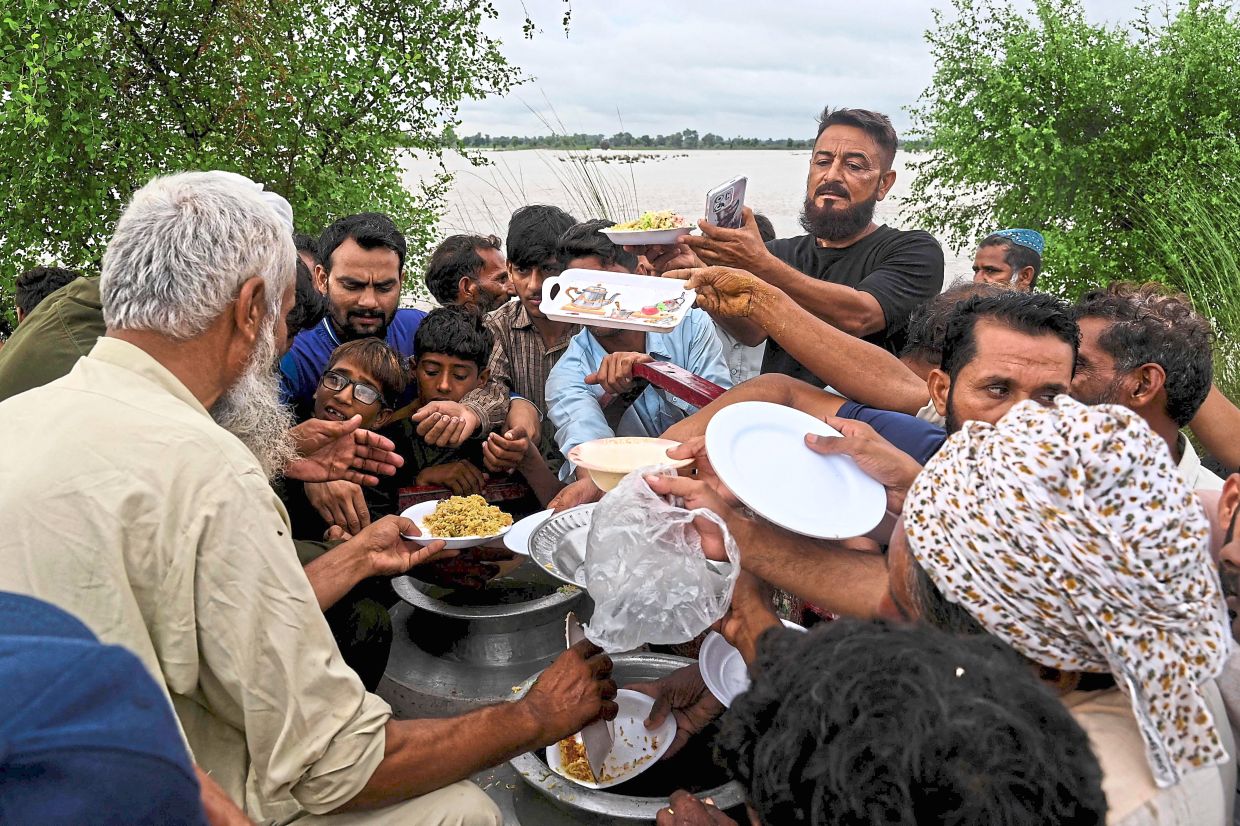
On dusty roadside embankments, displaced families complained of being abandoned.
“We have been destroyed. Everything is gone in the flood,” said Haleema Bibi, 54, who fled her damaged home in Jhang with seven relatives. They now shelter under the open sky without tents or food.
“Whatever we had to eat has nearly finished. You can see how miserably we are living,” she said.
Allah Ditta, a farmer from the same district, said he and his neighbours slept on plastic sheets and carts.
“Rescuers came once by boat, but no one has brought us supplies.
“We keep looking to the road, hoping someone will come with help,” he said.
Farmer Malik Ramzan said authorities advised villagers to move to safer places, but no rescue camps were established.
He said robbers often loot abandoned houses, another reason he chose to remain in his flooded home in Rajanpur district.
Authorities in Punjab say they had set up more than 1,000 relief camps, but government figures show that only about 36,550 of over 800,000 evacuees are housed in them. It is unclear where the vast majority were staying.
Evacuations also took place in southern Sindh province, where Chief Minister Murad Ali Shah warned of a possible “super flood” of the Indus River if water levels top 25,485 cubic metres per second.
Officials blame the catastrophic flooding on weeks of heavier-than-normal monsoon rains, compounded by cross-border waters released from India’s swollen rivers and dams.
The Ravi, Chenab and Sutlej rivers rose simultaneously, inundating wide swaths of farmland and villages.
India had alerted Pakistan about the water release, marking the rivals’ first public diplomatic contact since a military crisis brought them to the brink of war in May.
Punjab, home to some 150 million people and the country’s main wheat-growing region, has recorded 33 flood-related deaths in 10 days – far fewer than the catastrophic 2022 floods – but damage is widespread.
Pakistan’s weather centre said Punjab received 26.5% more monsoon rainfall between July 1 and Aug 27 compared with the same period last year.
Nationwide, at least 854 people have died in rain-related incidents since late June.
In India, at least five people were killed in landslides triggered by torrential rain in northern Uttarakhand and Himachal Pradesh states, officials said.
Rains lashed several parts of India’s Punjab state that borders Pakistan, prompting authorities to shut schools and colleges earlier this month.
Last month, at least 125 people were killed and scores injured in floods in Indian-controlled Kashmir.
Pakistan’s monsoon season typically lasts until the end of September. — AP