BANDAR SERI BEGAWAN: Brunei Darussalam’s energy transition goes beyond adding renewables. It is about the responsible and strategic integration of traditional oil and gas with cleaner energy sources to sustain economic growth, safeguard energy security, and fulfil climate commitments, said Minister at the Prime Minister’s Office and Minister of Defence II Major General (Rtd) Dato Paduka Seri Awang Halbi Mohd Yussof.
He said this as the Minister-in -Charge of Energy at the opening of the 15th Asia-Pacific Economic Cooperation Energy Ministerial Meeting (Apec EMM) at the Nurimaru APEC House from Wednesday to Thursday.
This balanced approach reflects Brunei’s energy landscape and its determination to transition towards a low-carbon future.
As part of this effort, the country is targeting a 30-per-cent renewable share in total power generation capacity by 2035 and is advancing the development of its largest solar photovoltaic project – a 30 megawatt plant slated for completion by 2026.
The Asia-Pacific Economic Cooperation (Apec) is a regional forum established in 1989 to promote sustainable economic growth in the Asia-Pacific region through greater economic integration, technical cooperation, and free and open trade and investment.
Energy cooperation is a key element of Apec’s multilateral agenda. Together, the economies of Apec make up more than 60 per cent of the world’s energy consumption, nearly half of all trade, and gross domestic product.
As the Apec 2025 Chair, South Korea convened the 15th Apec EMM under the theme ‘Accelerating Sustainable, Affordable, Reliable, Secure and Innovative Energy for a Prosperous Future’ and aligned with the Apec 2025 overall theme ‘Building a Sustainable Tomorrow: Connect, Innovate, Prosper’.
The meeting featured three thematic sessions focused on key energy priorities for the region. The first session ‘Electricity Expansion for a Stable Supply’ explored the roles of public and private sectors in mobilising strategic investment, shaping regional strategies, and advancing policy and technological innovation to deliver affordable, secure, and diversified electricity.
The second session ‘Strengthening Grid Security and Reliability’ addressed the modernisation and expansion of transmission infrastructure, emphasising smart grid solutions, enhanced grid flexibility, and cross-border collaboration to support energy resilience.
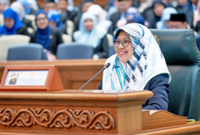
According to the Department of Energy at the Prime Minister’s Office (PMO), the minister also contributed to discussions in this session.
The final session ‘AI-Driven Energy Innovation’ highlighted the transformative potential of artificial intelligence (AI) in energy systems, showcasing best practices, addressing adoption challenges, and encouraging regional cooperation to accelerate AI deployment across Apec economies.
On the sidelines of the meeting, the minister also had a networking session with the other heads of delegation from Apec economies, including Deputy Prime Minister of Malaysia and Minister of Energy Transition and Water Transformation Datuk Sri Fadillah Yusof and Minister of State for Foreign Affairs and Trade and Industry of Singapore Gan Siow Huang.
The 15th Apec EMM also endorsed Joint Ministerial Statement as part of this year’s deliverable. The next Apec Energy Ministerial meeting will convene in China in 2026.
The minister was accompanied by Permanent Secretary (Energy) at the PMO FaridaTalib and representatives from the Department of Energy at the PMO. – Borneo Bulletin/ANN