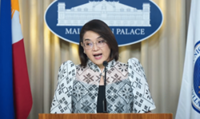
MANILA (Reuters/Bloomberg): The Philippines' sovereign wealth fund Maharlika Investment Corp is buying a 20% stake in the country's electricity grid operator National Grid Corp of the Philippines, the president's office said on Monday.
"The maiden investment represents a vital opportunity for the government to regain greater influence over the nation's critical power infrastructure to ensure that every Filipino has access to reliable and affordable power," it said in a statement.
In another development, the Philippine peso is veering toward an all-time low as the nation’s central bank plans to cut interest rates further in the face of slowing economic growth.
Goldman Sachs Group Inc., Barclays Plc and Fitch Solutions see the peso testing 60-per-dollar mark by midyear, while DBS Group Holdings Ltd. predicts a fall to 60.8. The currency changed hands at 58.420 on Monday, not far off the historic 59 per dollar mark hit in December.
Markets across Asia are reeling from the effects of a strong dollar as investors weigh the impact of Donald Trump’s presidency in the US. A gauge of Asian currencies hit its lowest against the greenback in at least a decade earlier this month, though it has since recouped some of that slide.
The peso is among the worst-hit, dropping 2.4% since the Bangko Sentral ng Pilipinas started cutting interest rates, ahead of regional peers and the Federal Reserve.
BSP has intervened in the foreign-exchange market to limit the currency’s volatility, while lowering rates by a total of 75 basis points since August. It is ready to cut rates further, though potentially at a slower pace due to geopolitical tensions and US policy uncertainties. BSP’s next decision is due Feb. 13.
Breaching the 60-per-dollar mark "remains a very real possibility and much depends on how Trump’s policies will shape up,” said Shi Cheng Low, an analyst at BMI, a Fitch Solutions unit. If the US enacts aggressive tariffs that roil markets, the peso will likely drop and "BSP intervention in the FX market will prove ineffective.”
Additional BSP easing to support the economy coupled with trade jitters stand to exacerbate the downtrend. Philippines may have missed its goal of at least 6% growth last year, an official said Friday. The nation last month widened its projected growth range for 2025 to 6%-8% due to uncertainties over Trump’s trade policy.
Contributing to the currency’s weakness is a deterioration in the current account balance, equities market outflows, and a widening gap in yields with US.
The peso "remains vulnerable, but to a relatively lesser extent than many other Asian currencies,” given the Philippine economy’s domestic focus, said Audrey Ong, a strategist at Barclays. "Less robust external metrics could pose a risk to the peso.” -- Reuters/Bloomberg