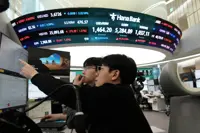
BANGKOK (Reuters): The Thai baht depreciated to a near three-week low on Monday, extending its losing streak into the second week of 2024, after the country's prime minister said rate hikes had not helped the economy and called for interest rate cuts.
Currencies in the rest of the emerging Asian markets started the week largely unchanged while equities were mixed, with investors globally reassessing their U.S. rate cut bets.
The Singaporean dollar, the Philippine peso and the Indian rupee were largely unchanged, while the Indonesian rupiah ticked down 0.1%. Stocks in India, Indonesia and China retreated between 0.6% and 1.3%, while those in Malaysia added 0.5%.
The Thai Baht fell 0.8% to hit 34.958 per U.S. dollar, its lowest level since Dec. 21. Stocks in Bangkok pared some losses and were down 0.5%, after falling close to 1% earlier in the day, their biggest intraday loss since Dec. 13.
Thai Prime Minister Srettha Thavisin, seeking to spur growth in Southeast Asia's second-largest economy, urged the central bank to consider cutting interest rates as inflation remained very low.
Pipat Luengnaruemitchai, an emerging Asia economist at Bank of America, said the Bank of Thailand is likely to "disregard the recent disinflation trend and maintain its hawkish stance for the time being", adding that the chance of a rate cut would be high in the second-half of the year.
Meanwhile, US data last week showed employers hired more workers than expected in December while raising wages at a solid clip, casting some doubt on expectations that the Federal Reserve would start cutting key rates in its March meeting.
A reading on U.S. inflation due later in the week could again alter those views. Alex Loo, a macro strategist at TD Securities, said they suspect moves in the Asian emerging market currencies may be contained until the inflation data.
"Asian EM FX may be given a boost as USD bears are likely to pounce on a weak CPI which should benefit the likes of KRW and THB which has a higher sensitivity to USD moves," Loo said, referring to the South Korean won and Thai baht.
Markets are now anticipating a 64% chance that the Fed could begin easing rates as early as March, compared to a nearly 90% chance a week ago, according to the CME FedWatch Tool.
Elsewhere, the Taiwanese dollar appreciated 0.1% while stocks in Taipei were up 0.3%.
All eyes are on Taiwan's presidential and parliamentary elections on Jan. 13, taking place against the backdrop of increased military and political pressure from China to assert its sovereignty claims over the island.
Markets are also looking forward to a stream of data due through the week, including Bank of Korea's base rate and inflation data from India and China. - Reuters
Already a subscriber? Log in
Get 20% OFF The Star Digital Access
Cancel anytime. Ad-free. Unlimited access with perks.