JAKARTA, Feb 28 (Jakarta Post/ANN): The political decision by the government and the General Elections Commission (KPU) to seal the date for the upcoming presidential election has failed to quash speculations that President Joko “Jokowi” Widodo is seeking to extend his term beyond 2024.
The speculation resurfaced last week after three leaders of the ruling coalition parties publicly suggested that the next elections be postponed, citing the prolonged pandemic and the Russo-Ukrainian war that is expected to have a global ripple effect.
'Big' public support
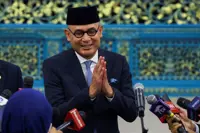
National Awakening Party (PKB) chairman Muhaimin Iskandar was the first political bigwig to make the call, saying that the elections should be delayed by one or two years so that they would not “disrupt economic recovery” amid the pandemic.
“The transition of power and government usually results in economic uncertainty that could disrupt the atmosphere and momentum for very good economic recovery, especially after the [Group of 20 meeting],” he said in a statement.
Muhaimin, who has expressed his intention to run for president but has failed to gain significant support based on surveys by credible pollsters, claimed that his proposal was backed by “big data analysis” of social media conversations, in which 60 per cent of Indonesians supported the idea of postponing the election.
It is not clear which data the politician was citing, but he insisted that he would discuss the proposal with the President and other coalition parties.
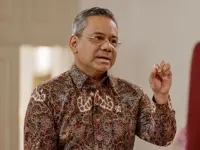
On Thursday, National Mandate Party (PAN) chairman Zulkifli Hasan outlined five reasons why the elections should be postponed. One of them was the global uncertainty caused by the fresh armed conflict between Russia and Ukraine, which he said would disrupt the global economy, including that of Indonesia. Jokowi, he further argued, still had a high public approval.
Also on Thursday, Golkar Party chairman Airlangga Hartarto claimed to have received aspirations from local oil palm farmers in Siak, Riau, who wished for Jokowi’s presidential term to be longer.
"We will discuss this aspiration with the leaders of other political parties; for us, the Golkar Party, the aspirations of the people are the aspirations of the party," Airlangga said.
Not all parties on board
The proposal, however, has received strong opposition from at least two ruling coalition parties, the Indonesian Democratic Party of Struggle (PDI-P) and the NasDem Party.
Responding to the development, PDI-P secretary-general Hasto Kristiyanto said his party would stick to the Constitution and five-year election cycle.
“The five-year election cycle forms a democratic culture. This culture is highly correlated with the quality of democracy. If it is disturbed, it will result in political instability ... [and] serious consequences for the regeneration of the state leadership that has been built,” Hasto said.
“Instead of thinking about postponing the election, it is better we continue taking steps to consolidate in preparation for the election.” NasDem Party central board executive Ahmad Ali said that his party opposed such an idea and suggested that parties refrain from putting out controversial statements that would only spark political turmoil.
"We are sticking to the government and the House’s agreement; the election will be held in February 2024. There has been no change," he said.
Meanwhile, the Gerindra Party has not commented on the issue, but its secretary-general Ahmad Muzani told reporters on Friday his party was still focussing on its agenda gearing up for the 2024 elections to win with its chairman Prabowo Subianto as the next president.
The opposition parties have strongly rejected the proposal and even accused the President, who has repeatedly played down the speculations, of harbouring a personal ambition to stay in power beyond his term limit.
"We know that this is what Pak Jokowi wants, not what [the ruling coalition] parties want," Andi Arief of the Democratic Party, the largest opposition party, said. The President, he added, needed to be transparent and explain his intention to extend his power. “We are waiting for his words,” he said.
Mixed public response
Nahdlatul Ulama (NU) and Muhammadiyah, the largest and most influential Islamic organizations in the country, have responded differently to the proposal.
Abdul Mu’ti, the secretary-general of Muhammadiyah, warned that extending the current administration would have great political and moral consequences for the nation, and asked every party to have a clear head to think about the long-term impact.
"I think we need to have a clear head and think about this in the long term, about the political and moral consequences in the construction of the state administration as well as other considerations concerning the interests of the nation as a whole," he said.
NU chairman Yahya Cholil Staquf has been more receptive, saying that the proposal was worth considering. “There is a proposal to postpone the election. I think it makes sense given the problems facing the country,” he said as quoted by Antara on Sunday.
A national dialogue is needed to discuss the issues, he said, adding, “We will see what we need to do to ease the burdens of the nation.”
Experts, however, have noted the current development as “deeply troubling” and warned that delaying elections and extending the current presidential term would have grave consequences for the country’s young democracy.
Firman Noor, a senior political researcher of the Center of Political Research at the National Research and Innovation Agency (BRIN), noted that any attempt seeking to extend the presidential term was a huge betrayal of the hard-won democratic reform implemented after the fall of the New Order in 1998. “
These dangerous ideas came from traitors of reformasi [the reform movement]. This only proves that our politics at the elite level are undergoing political decay. It is no more a fertile ground of democratic ideas nor attitudes,” Firman said. - The Jakarta Post/ANN
Already a subscriber? Log in
Get 20% OFF The Star Digital Access
Cancel anytime. Ad-free. Unlimited access with perks.