


Is Japan's monarchy dying out?


By Agency
Japanese Emperor Naruhito attending the opening ceremony for the 204th Diet session in parliament in Tokyo, Japan, on Jan 18. Photos: dpa

Is Japan's monarchy dying out? It might at first sound like an outrageous question, but it's not absurd: In a reflection of Japan's rapidly ageing population, the country's hereditary monarchy is gradually running out of heirs.

At issue is the fact that, according to current legislation, only male descendants of the male family line can ascend to the throne, while female family members have no claim and must leave the imperial family and become private citizens if they choose to marry someone.

With 19-year-old Princess Aiko thus shut out from inheriting the throne from her father, Emperor Naruhito, who's in his 60s, there are only three candidates left: Naruhito's brother, Crown Prince Akishino, 55; his 14-year-old son, Prince Hisahito; and Naurhito's uncle Masahito – who is already 85 years old.

If Hisahito, the only remaining male member of the family's youngest generation, fails one day to provide male offspring,"the imperial house will cease to exist", expert Ernst Lokowandt tells dpa.

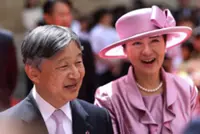
Japanese Emperor Naruhito and Empress Masako arriving at the Imperial Palace to attend the ceremony of
Japanese Emperor Naruhito and Empress Masako arriving at the Imperial Palace to attend the ceremony of "kosho hajime", or New Year's lectures, in Tokyo, Japan, on Mar 23.

To ensure this doesn't happen, Prime Minister Yoshihide Suga has convened a new commission that will now deal with the serious issue of succession to the throne. Consultations could take up to a year.

But it all seems to be overlooking a solution that was proposed back in 2005: A council convened by the prime minister at the time recommended introducing female succession to the imperial throne.

If women were also part of the succession, the problem would be solved in one fell swoop. And it's not like Japan hasn't had a female emperor. In fact, there have been eight, most recently in 1762.

According to polls, many in Japan would also accept a female emperor.

But as politicians seemed almost ready in 2005 to change things, Kiko, the wife of Crown Prince Akishino, suddenly announced that she was expecting another child. "Of course it was a boy," explains Lokowandt. "And the subject of an empress was off the table again."

Members of the Japanese imperial family attending the
Members of the Japanese imperial family attending the "Rikkoshi-Senmei-no-Gi" proclamation rite at the Imperial Palace's "Matsu-no-Ma" state room in Tokyo, Japan, last November.

It wasn't until more than a decade later, when Naruhito's father, Emperor Akihito, said that he wanted to abdicate the throne, did the topic come up again. Politicians were called upon to swiftly debate the rules of succession – and since then, years have passed.

Now, however, things are starting to kick off.

"Securing a stable, imperial succession is an important issue for the foundation of the country," says government spokesman Katsunobu Kato.

In Lokowandt's opinion, the need for an entire year to deliberate the issue is a mystery – after all, there was a solution proffered in 2005. The slow pace, it seems, has something to do with the nationalists in Japan's government, who are not interested in having a woman on the throne despite 80% support in the polls.

Japanese Crown Prince Akishino, (centre), heading to the three shrines on the grounds of the Imperial Palace after attending the
Japanese Crown Prince Akishino, (centre), heading to the three shrines on the grounds of the Imperial Palace after attending the "Rikkoshi-Senmei-no-Gi" proclamation rite at the palace in Tokyo, Japan, last November.

What to do? One idea being bounced around is allowing princesses to remain at the court and establish their own family branches. If they were to have sons, they could potentially ascend the throne, goes the thinking. But arch-conservative emperor worshippers abhor the idea.

They insist that the heir must be a man from the male line. And as recently as Jan 2021, the government had expressed the opinion that priority should be given to keeping male-only succession.

And Japanese nationalists would prefer to see some imperial families who had lost their status after World War II be reinstated.

If no solution is found, then one day the now 14-year-old Prince Hisahito would be forced to marry a woman who would be willing to bear a son. "And if that didn't work out after a certain amount of time, he would need to try with a new woman," explains Lokowandt.

But that is something that many in Japan find to be an unreasonable demand.

What solution the government commission will come to is up in the air. However, many believe that Japan's politicians won't be able to avoid allowing female succession to the throne again – provided that the decision is based on being a blood relative of the emperor. – dpa

Get 20% OFF The Star Digital Access

Monthly Plan

RM 13.90/month

RM 11.12/month

Billed as RM 11.12 for the 1st month, RM 13.90 thereafter.

Best Value

Annual Plan

RM 12.33/month

RM 9.87/month

Billed as RM 118.40 for the 1st year, RM 148 thereafter.

Follow us on our official WhatsApp channel for breaking news alerts and key updates!
japan monarchy , royal family

Next In People

Bespoke milliner makes World Cup-themed cowboy hats in Texas, US
South Korean pianist recreates himself as a one-handed performer after paralyzing stroke
Entrepreneur and father Ma Han Pin is redefining what success looks like
Malaysian veteran photographer and her son share work and family ties at The Star
A living dilemma: Syrians in Germany split over staying or returning to homeland
Entrepreneur and mother of four Nadia Nasimuddin on redefining wellness and bodycare
She's only 10, but she's taking college courses in the US
Iban woman leads Malaysia's parasitology and tropical medicine society
What keeps this Malaysian vendor delivering The Star for decades
Couple goals: Married medics face war side by side in Ukraine

Others Also Read
