KUALA LUMPUR: When in doubt, don’t do it – that’s the advice of several legal experts to multinational corporations (MNCs) trying to get business in a foreign country.
This is because MNCs might get into trouble with anti-corruption laws of their home country even if actions such as giving paid holidays to foreign government officials is not illegal in that country.
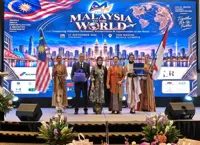
This was the opinion of employment lawyers at the session “Complying with Corruption and Bribery Regulations – Strategies for Multinational Employers” at the 2016 Inter-Pacific Bar Association Meeting and Conference here yesterday.
They were Trent Sutton (United States), Khong Aik Gan (Malaysia), Carolyn A. Knox (US), Linda Liang (China), Fiona Loughrey (Hong Kong) and Jenny Tsin (Singapore).
Sutton, who was the moderator, said according to a study two years ago, bribery from the private sector to the public sector might exceed US$1 trillion (RM3.8 trillion) every year.
The three laws that appear the toughest and most far-reaching are UK Bribery Act 2010, the US’ Foreign Corrupt Practices Act 1977 (FCPA) and Brazil’s Clean Company Act 2014.
Sutton said the US’ Foreign Corrupt Practices Act 1977 (FCPA) used to apply to everybody except the one who took the bribe.
“A Japanese company trading on the US exchange who bribes an official in Malaysia would be liable under US law,” said Sutton, but following a recent amendment it now applied to anyone who violates the law in the United States, regardless of whether he or she is a citizen.
The British law had the most far-reaching consequences, said Loughrey, who spoke on the laws and trends in Hong Kong and Britain.
“Prosecutions have involved actions in Asia and Africa,” she said.
Knox, who is an expert on Brazil and Latin America, explained that as Brazil’s law was a strict liability statute, intent was unimportant.
She added that while Denmark was listed as the least corrupt country in Transparency International’s Corruption Perception Index, a major Danish company was being investigated in Brazil on allegations of giving bribes to government officials.
“The FCPA allows for facilitation payment – in order to get something done, you’re allowed to pay something small – in less developed companies, for example, it may be difficult to get phone lines or electricity or water pipes even. The law in Brazil has no such provision,” she said.
Knox stressed that whistle-blowing protection was needed to fight corruption, especially in a country like Colombia where “they take retribution very seriously”.
While the gifting of a traditional tin of tea to a Chinese person during Chinese New Year may not be viewed as a bribe in an Asian country, some of the experts felt it was better not to pin hope on a technicality to escape criminal charges.
Already a subscriber? Log in
Get 20% OFF The Star Digital Access
Cancel anytime. Ad-free. Unlimited access with perks.