
Palliative care aims to provide comfort to a patient who has a life-threatening disease, from the time of diagnosis and throughout the course of illness.
The practice of palliative or end-of-life care for patients with life-threatening illnesses is still at its infancy in Malaysia. But the Government is pushing for greater interest by medical practitioners and support personnel in this important area.
As the country’s standard of living improves, there is also an increase in awareness of the need to ensure good quality of life, despite having illnesses, and the provision of end-of-life care in conditions where cure is not possible.
The scope of palliative care in Malaysia is constantly growing. Previously, palliative care was only provided to patients with late-stage cancer.
Today, however, palliative care is being provided to patients with non-cancerous life-limiting conditions, says Dr Richard Lim Boon Leong, a pioneer in palliative care in Malaysia.
Dr Lim, who is also the national advisor on palliative medicine at the Health Ministry and head of the Palliative Care Unit at Hospital Selayang, Selangor, gives an insight on the current state of palliative care in Malaysia:
What is palliative care?
Palliative care is an area of medical care aimed at providing comfort to a patient who has a serious or life-threatening disease from the time of diagnosis and throughout the course of the illness.
It is ideally provided by a doctor who works with a team of other healthcare professionals, including nurses, physiotherapists, occupational therapists, dietitians, pharmacists and social workers.
Most importantly, it should be provided concurrently with all other medical treatments, including those to control disease and prolong life.
The goal is to offer as much comfort as possible and improve quality of life.
One of the primary goals is symptom management.
Patients with serious illnesses, such as cancer, can have many symptoms, like pain, breathlessness and nausea.
This is commonly due to the disease itself, but sometimes, may also be due to treatments such as chemotherapy or surgery.
By providing relief for various symptoms, palliative care can help patients not only carry on with their daily lives, but also improve their ability to undergo or complete their medical treatments.
Many may not know that palliative care is actually not a new field in Malaysia as dedicated palliative care units have been set up in government hospitals since the mid-1990s.
What is the difference between palliative care and hospice care?
Actually, in Malaysia, there is no distinction between the two terms.
I personally refer to both terms synonymously.
In some countries however, like in the United States, the healthcare system makes a distinction between the two, mainly because of funding issues.
So, in the United States, hospice care refers to care that is provided to people in the last six months of life, who are not receiving any further disease-modifying therapies, and the focus is on symptom management and end-of-life care.
Palliative care, on the other hand, is a broader term that refers to an approach that aims to reduce suffering of patients who are facing problems associated with life-threatening illnesses, and is applicable regardless of duration of survival and treatments received.
Some may also regard hospice care as care that is provided in a specialised facility known as a “hospice”. This is because the term “hospice” originally referred to places where weary pilgrims and travellers would seek shelter and rest in medieval times.
Dame Cicely Saunders, who was the founder of the modern hospice/palliative care movement, adopted this term to refer to specialised medical care for the dying in the late 1940s.
She then started St Christo-pher’s Hospice in London, Britain, which was the first dedicated centre providing this form of care.
In Malaysia, you will come across the term “hospice” quite frequently, referring to organisations providing care to patients at home, and so, some may think that hospice care refers to care in the community setting, as opposed to a hospital.
So, there may be various perceptions about the terminology. However, I think that what is most important to understand is that palliative/hospice care is a continuum of care that addresses the unique needs of patients who are facing very challenging times due to problems associated with life-threatening illnesses.
That continuum of care spans across various settings, including hospital, outpatient clinics, nursing homes, dedicated palliative care units, daycare centres, and last, but not least, the patient’s home.
It also spans a patient’s course of illness, from diagnosis all the way till death and bereavement for family.
What are some common misconceptions of palliative care?
Many believe that palliative care cannot be offered to patients who are still pursuing treatments such as chemotherapy for cancer.
Sometimes, doctors are reluctant to consider palliative care for their patients because they think it means giving up.
To me, the biggest misconception is that palliative care is what we do when there is nothing else to be done, that it is only focused on care for the dying.
Many people also think that palliative care is merely about hand-holding or counselling, and do not understand that it is an active field of medicine that applies interventions requiring knowledge and skills.
Palliative care does not mean “nothing will be done”, and it certainly does not mean we are “giving up”.
If I could get one message out, it would be that rather than focusing on death and dying, palliative care is really about helping people live their lives in the best way possible till the very end.
NEXT PAGE: Where to get palliative care
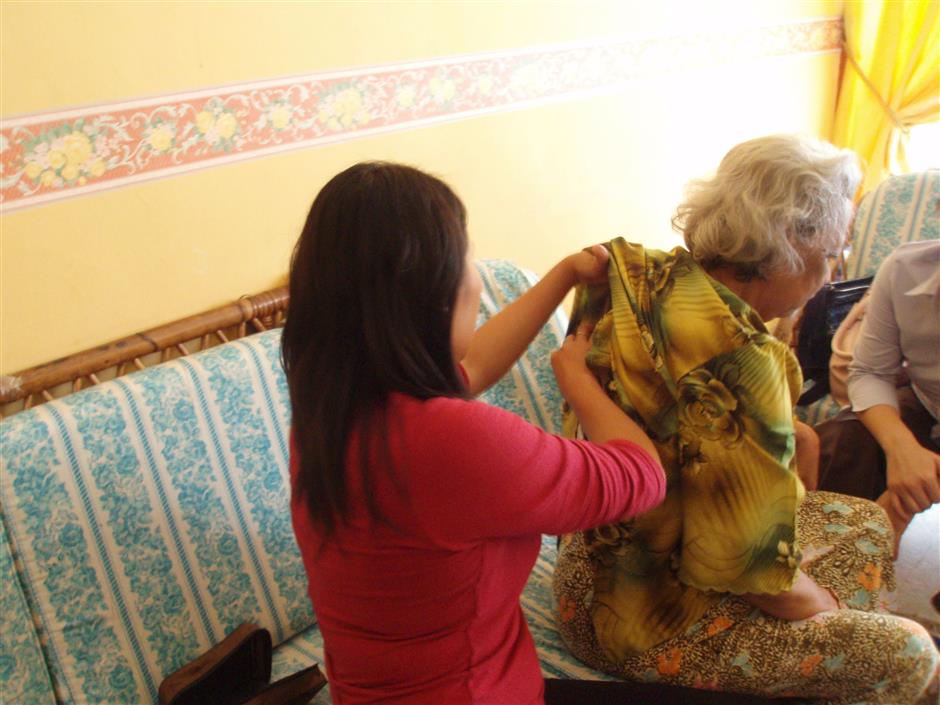
Where can patients with life-threatening disease get palliative care, other than from government hospitals?
There are a total of 25 hospice NGOs providing free-of-charge palliative care services throughout Malaysia.
The majority of NGOs provide community palliative care service, meaning they provide home visits to patients in the community. Two NGOs provide in-patient care.
How many patients have received palliative care in Malaysia?
Data collected in 2012 showed that the hospice NGOs had served 4,816 cases in 2010 and 2011, but not all NGOs provided data for this survey.
Meanwhile, data from 21 government hospitals with palliative care units showed that they handled 3,995 cases in 2013.
However, the total number of units in government hospitals is 29, but only three have specialist palliative care.
The Universiti Malaya Medical Centre and Hospital Universiti Kebangsaan Malaysia also provide specialist palliative care, and in 2011, the total number of patients seen were 1,060 cases.
Does Malaysia have enough palliative care specialists?
Based on the number of deaths occurring in Malaysia, and extrapolating this number with common diagnoses requiring palliative care, the minimum estimated number of people requiring palliative care in the country is about 32,000.
It is estimated that Malaysia needs at least 60 specialists in palliative care.
This is based on the ratio of one specialist per 500,000 population, and hence, 60 is the estimated number for Malaysia’s population of 30 million.
This, however, is a very conservative ratio, and the ideal norm should be about 1:200,000 population.
Currently the number of specialists to the population in Malaysia is only 1: 1.7 million, which translates to only seven specialists, with 10 others still undergoing training.
These figures reflect the urgent need for more medical practitioners in Malaysia to become specialists in palliative care because there is great demand for it.
It is not a totally new field in Malaysia, but the interest among healthcare professionals is still very small compared to other countries.
Norms in developed countries such as Britain and Australia is about 1:100,000-200,000 population.
To overcome the problem, the College of Physicians from the Academy of Medicine of Malaysia has organised a two-day conference (April 11 and 12) in Kuala Lumpur on the end-of life care.
Entitled “Fulfilling the Duties of a Physician to Relieve and Comfort”, it aims to create greater awareness and interest among medical practitioners to become more involved and specialise in palliative care.
How do NGOs in Malaysia get funding to run their palliative care activities?
Funding for NGO palliative care activities is mainly through charitable donations and fundraising by the individual organisations.
However, there are annual government grants that vary in amount every year, depending on the national budget.
This could vary between 10% and 30% of the operational expenditure for patient care activities.
All NGOs have differing levels of service provision, but an average hospice organisation would normally need an operating budget of between RM400,000 and RM600,000 annually to run homecare activities.
What’s on your wish list for palliative care in Malaysia in the next 10 years?
My hope is that every person in Malaysia will be able to request for palliative care in their preferred settings, and that such care is also accessible to people living in rural and remote areas.
I also hope that there will be enough healthcare professionals in Malaysia with the knowledge and skills to provide palliative care to every patient that needs it.
My expectation is also that more Malaysians would recognise the importance of palliative care and the role it plays in providing physical, psychological, social and spiritual support to terminally-ill patients and their families, so that even towards the end of life, comfort and dignity are priorities that will always be maintained.
Already a subscriber? Log in
Get 20% OFF The Star Digital Access
Cancel anytime. Ad-free. Unlimited access with perks.