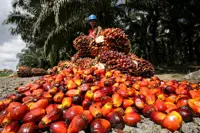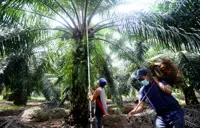
El Nino dry weather to lead to rise in the palm oil price


Tek: ‘History has shown that CPO price reacts positively everytime El Nino occurs.’

PETALING JAYA: The El Nino dry weather conditions have already affected many oil palm plantations in Malaysia and are set to become more extreme that could last until middle of next year.

Industry players say a prolonged dry weather could negatively impact the global production of palm oil, thus triggering speculation of a higher crude palm oil (CPO) price in the coming months.

Back in 2009-2010, the El Nino phenomenon saw the CPO price swinging between RM2,500 and RM3,000 per tonne.

“History has shown that CPO price reacts positively everytime El Nino occurs as it brings lesser rainfall and drought, which tends to lower the crop production,” says Sabah-based IJM Plantations Bhd CEO and managing director Joseph Tek Choon Yee.

Weather is just one of the many factors determining price, apart from competing edible oils, crude mineral oil and the use of palm oil in biodiesel, inventory levels, currency volatility and policies.

“But a strong and significant El Nino this time round will be a major catalyst to drive up the CPO price trend on a gradual basis but with greater certainty,” Tek told StarBiz recently.

Malaysia posted its largest drop in CPO production during the strong El Nino events in 1982-1983 and 1997-1998.

Tek pointed out that there had been prolonged “bone-dry” episodes or below average rainfalls since early this year in some parts of Malaysia and Indonesia.

“These episodes have triggered dry soil conditions, which led to moisture stress in palms.

“Significant unopened number of spear (palm leaves) of up to half a dozen, were observed confirming the trauma experienced by the trees.”

OilWorld also reported that Sabah, Pahang, Perak and Negri Sembilan experienced below-normal rainfall and suggest there will be lower palm oil yields in the affected areas between October this year and March next year.

Tek, who reads plant sciences, further elaborated on the potential effects of El Nino on the palm oil outputs and plantation operations.

“There will potentially be clear symptoms relating to crop production arising from the interplay of plant physiology and climatic El Nino effects following any significant moisture stress beyond two months.

“The immediate impact will see a delay in ripening of bunches and dangers of fire hazards from the dry spell in operations.

“On the milling side, some palm oil mills may end up with the concern of long-term availability of water for processing.

Thus, the estate-mill supply chain may be disrupted,” added Tek, who is also president of the Malaysian Estate Owners Association.

On the potential total reduction in crop production, Tek said that it depended on the severity of the moisture stress, with studies quoting up to 30% lower than normal production.

In addition, the prevailing haze does not help. The haze spell has been in line with that forecast as blazes in some of the peat areas will be exacerbated by El Nino, which makes dry weather drier leading to the hot spots to burn more readily.

The haze may hinder photosynthesis resulting in smaller size bunches and palm productions been deprived.

Kuala Lumpur Kepong Bhd (KLK) group plantation director Roy Lim Kiam Chye meanwhile said:

“Normally during dry weather, we would generally see the full impact on productivity nine to 12 months after the event.”

Most recently, although non-El Nino related, KLK’s oil palms have experienced some poor growth arising from the dry weather which took place during the second quarter of financial year 2014, explained Lim.

Should El Nino hit Malaysia or other oil seeds producing countries, he said the implication would be lower production “but not immediate”.

However, buyers would still take that into consideration and it might prove to be the catalyst to push CPO prices higher, added Lim.

Palm oil industry expert M.R. Chandran said the El Nino factor if it materialised could give a 15% to 20% boost to the CPO price.

Currently, the third-month CPO futures for December is already trading at RM2,200 to RM2,240 per tonne range from its low of RM1,867per tonne in August this year.

“The El Nino could create a bullish price environment for palm oil and even reduce the risk to earnings among plantation companies,” said Chandran adding that it was also one of the key indicators for the plantation sector’s growth.

Any rainfall deficit of 100 mm per year can translate into a reduction of between 10% and 20% in fresh fruit bunches.

In Malaysia, the average rainfall varies between 1,600 mm and 2,400 mm per year.

For this year, Chandran said the factors to watch for palm oil were the potential supply shortage, inventory level, the price discount between CPO and its competitor, soybean as well as the climate changes including El Nino.

Get 20% OFF The Star Digital Access

Monthly Plan

RM 13.90/month

RM 11.12/month

Billed as RM 11.12 for the 1st month, RM 13.90 thereafter.

Best Value

Annual Plan

RM 12.33/month

RM 9.87/month

Billed as RM 118.40 for the 1st year, RM 148 thereafter.

Follow us on our official WhatsApp channel for breaking news alerts and key updates!
Business , El Nino , palm oil , dry weather , cpo , oil palm , price , al nino , plantations , klci , klse ,

Next In Business News

Synergy House receives RM7.83mil in U.S. tariff refunds
Enest remains upbeat on bird's nest industry
Sapura Industrial disposes of Melaka land for RM10.5mil
Aemulus secures orders worth RM8mil
CHGP to acquire KL land for RM455mil
Ringgit ends higher against most major currencies, weaker versus US dollar
EITA unit secures RM20.5mil Indonesia data centre contract
Pan Merchant wins RM17mil membrane filtration solutions supply contract
Hektar REIT completes RM30mil acquisition of first industrial asset
Infomina wins RM21mil JPJ contract

Others Also Read