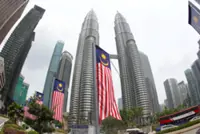
KUALA LUMPUR: Templeton Emerging Markets Group’s executive chairman views South-East Asia as among the most exciting investment destinations available to emerging and frontier market investors.
In his newsletter to investors, Mark Mobius said the range of opportunities available to investors was remarkable.
This ranges from the highly developed and technologically sophisticated Singapore market through emerging markets in various stages of development such as Thailand, Indonesia and the Philippines to exciting frontier prospects such as Vietnam and Myanmar.
Mobius expected this year to be a pivotal one for a number of countries in Asia, as Asean had set ambitious plans for a new Asean Economic Community (AEC) to come to fruition in 2015.
He is enthusiastic to see the outcome of discussions among Asean members to prepare for the AEC and working out the fine points.
Mobius sees the AEC having a very significant impact in Asia, especially as the role of Asian markets in the global economy has grown significantly in recent years. He expects this trend to continue in the future.
Many of these countries have also made fundamental improvements to their economies, and he thinks these changes are here to stay.
Asean – founded in 1967 – is a strong regional economy made up of 10 members: Brunei, Cambodia, Indonesia, Laos, Malaysia, Myanmar, the Philippines, Singapore, Thailand and Vietnam.
The 10 individual Asean members already have attractive characteristics for investors, including favourable demographic profiles, abundant natural resources and low-cost labour, among other factors.
Combined into a single market, the population exceeds 600 million and a wide range of economic attributes from the financial, trading and technology skills available in Singapore to the largely untapped reserves of labour and natural resources in Myanmar that, when combined, could well represent far more than the sum of their parts.
When the AEC was mooted, it was envisaged to be: (a) a single market and production base, (b) a highly competitive economic region, (c) a region of equitable economic development and (d) a region fully integrated into the global economy.
“Because Asean countries have to work toward a collective vision and cooperative spirit when AEC fully comes together, we think it should strengthen their partnership, even though there has been some outlying resistance and concerns about some aspects.
“If it is fully implemented later this year, the AEC represents an opportunity to further promote cross-border trade and connect economies, companies and people within the region in the years to come,” he said.
Mobius cited a recent study conducted by the Boston Consulting Group that businesses in the region were remarkably bullish about the AEC.
A total of 80% of those surveyed regarded the AEC as a business opportunity for their firm and believed it would help accelerate growth in their respective industries.
Business executives also acknowledged that progress had been made over the years in most sectors, and two-thirds of the companies responding to the survey said they were adjusting their product offerings and upgrading their organisations and supply chains.
However, Mobius was quick to point out that some business executives in Asean also expressed concern that governments would not whole-heartedly facilitate the free flow of goods across the region. “In our view, the enviable location of the proposed AEC, bordering the fast-growing economic giants of India and China, could be a major potential benefit for companies within Asean as well as investors,” he said.
The region lies on one of the “one belt, one road” trade routes identified by the Chinese government as significant focuses for investment. Chinese firms are already active investors in countries such as Vietnam, taking advantage of significantly lower wage rates in comparison with southern China, and ambitious plans for transport infrastructure improving China’s links with South-East Asia are under development.
International trade could become a further stimulus to growth for South-East Asia, with some of the countries of the region closely involved in major free trade initiatives such as the Trans-Pacific Partnership, currently under negotiation, while also looking to deepen intra-regional trade links.
“Asean has seen continuing population growth over the last 15 years, totalling 620 million people in 2014 and expected to increase further to close to 670 million by 2020, a growth of about 30% from the 514 million in 2000.
“We believe this growth potential, combined with increasing per capita incomes and relatively younger population structures, could further drive the growing consumer demand in the region as a reduction in the cost of doing business, improved labour and capital movement and the streamlining of taxation can only increase the opportunity for growth,” he says.
As a result, Asean economies are increasing domestic consumption of a wide range of goods and services. According to various forecasts, the prospects for gross domestic product (GDP) growth in the region going forward are far stronger than in developed markets, and in excess even of other emerging-market regions.
GDP growth in emerging Asia is expected to average 6.6% in 2015, while frontier markets such as Myanmar, Cambodia and Laos are forecasted to grow even faster.4 At the other end of the spectrum, Brunei is expected to contract by 0.5%, while Thailand and Singapore are expected to expand by a still-reasonable 3.7% and 3%, respectively.5
Indonesia is in the midst of a significant reform programme initiated by President Joko Widodo, while Thailand’s military government is looking to shore up support through growth-oriented activities.
In his view, Singapore’s role as a global trading hub should permit continued growth and prosperity for that market.
Myanmar’s opening to market forces could receive a significant boost should scheduled elections pass off successfully, while Vietnam is also engaged in a cautious opening to global investors and gradual reform of its banking sector. Laos has the potential to join compelling frontier stock markets as demand for its hydropower and mineral resources boosts economic growth.
“We believe economic reform proposals under way elsewhere in the region also have the potential to boost economic growth and corporate profitability,” he says.
With its excellent international trade links and the availability both of sophisticated technology and low-cost labour, South-East Asia has long been an important centre for the supply-chain activities of Japanese companies, while labour cost advantages have seen much basic manufacturing activity migrating from China.
“We would also like to see continued progress in removing barriers to the global flows of goods and services in the region, and policies that encourage foreign investment. In order for AEC to gain credibility and develop as envisioned, we believe various obstacles need to be addressed, including differences in regulations and policies, bureaucratic pressures, and perhaps a perception or concern among some business owners about whether Asean can be an open market.
“AEC, if successfully implemented, will represent a common market with a combined GDP of nearly US$2 trillion. We believe the fact that all Asean countries will ultimately have to work toward a collective vision and cooperative spirit when AEC comes together should strengthen their partnership and, hopefully, improve the lives of the people.
“We think the future for the region remains positive, supported by several factors including solid growth prospects, strong labour and natural resources, favourable demographics, advantageous trade links and geographical positioning, as well as watershed initiatives for reform,” said Mobius.
Already a subscriber? Log in
Get 20% OFF The Star Digital Access
Cancel anytime. Ad-free. Unlimited access with perks.