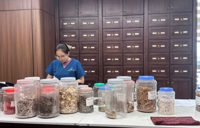
Hundreds of traditional medicine shops selling products made from endangered bears


A sun bear at the Bornean Sun Bear Conservation Centre. The sun bear is Malaysia's only species of bear, and is facing threats from poachers, logging, plantations and urban development. Photo by CHAN TAK KONG/The Star, April 2014.

KUALA LUMPUR: Roughly half of over 300 Malaysian traditional medicine shops surveyed in 2012 were found selling illegal items made from endangered bears.

Wildlife monitoring group Traffic found that some 175 of 365 shops surveyed here were selling medicine made from bear gall bladder or bile.

"The rate was highest in Peninsular Malaysia, where 51% of the shops surveyed were found to sell bear products (or 148 shops)," the report named "Hard to Bear" said.

Products sold in these shops were found in many forms including whole bear gall bladders, bear bile pills, bile extract and many more.

Some of these are likely to have been sourced from Asiatic black bears found across East Asia and sun bears found in Southeast Asia, including Malaysia.

Bear gall bladders reportedly sourced from ‘domestic’ bears within Malaysia, found at an unknown traditional medicine shop. Photo courtesy of TRAFFIC Southeast Asia.
 

Prices, Traffic found, ranged from RM0.40 a pill to RM3,360 for a whole gall bladder weighing 38g.

While many of these items appear to have been imported, some gall bladders were supposedly sourced from Malaysia.

"Nearly 60% of all bear gall bladders observed for retail were claimed to have been sourced from local bears," the report said.

Some shop owners admitted to Traffic that main sources of bear bladders included native Orang Asli and aborigines from Sabah and Sarawak.

Poachers, the group said, may have also been involved in the killing of bears here, though TRAFFIC said it did not have numbers of how many were hunted.

It is not known how many bears are being killed every year for their body parts, though the number may be anywhere from the hundreds to thousands.

Xiongdan (bear bile) pills up for sale at an unknown traditional medicine shop in Malaysia. Photo courtesy of TRAFFIC Southeast Asia.
 

The report added that more than 13,000 bears were likely held in bear farms across China, Laos, Myanmar, South Korea and Vietnam.

According to Malaysian law, the sun bear is a "totally protected" species in the Peninsular and Sabah. It enjoys a lesser "protected" status in Sarawak.

Malaysia is a signatory to the Convention on International Trade in Endangered Species, which makes trade of the Asiatic black bear and sun bear illegal.

Get 20% OFF The Star Digital Access

Monthly Plan

RM 13.90/month

RM 11.12/month

Billed as RM 11.12 for the 1st month, RM 13.90 thereafter.

Best Value

Annual Plan

RM 12.33/month

RM 9.87/month

Billed as RM 118.40 for the 1st year, RM 148 thereafter.

Follow us on our official WhatsApp channel for breaking news alerts and key updates!

Next In Nation

Two foreigners remanded over murder of five-year-old boy in Penang
MMEA, enforcement agencies stepping up security to prevent trespassing on Penang bridges
Ayob Khan receives heartfelt gesture from AKPS chief after retirement ceremony
Surging investments drive Negri Sembilan's economic transformation
12 cops under probe over alleged RM2mil extortion of foreign national
Controversial businessman Liow not a PKR member, says Fuziah
Perikatan open to exploring further cooperation with Barisan, says Ahmad Samsuri
Sack with human skeletal remains found in Kangar farm
Malaysia to host Bahrain Grand Prix from Oct 2-4
Wedding bells soon for Syed Saddiq & Bella?

Others Also Read