A change of regime in Taipei could affect relationships in the region.
IN a way, this has happened before. The usually all-powerful Kuomintang suddenly finds its voter base split by a third party candidate and this allows the opposition Democratic Progressive Party (DPP) to win the Presidential vote. That’s how Chen Shui-Bian won the 2000 presidential election, with ex-Kuomintang man James Soong coming in second, ahead of the “official” candidate Lien Chan.
This time around, Soong is at it again, and the DPP’s Tsai Ing-Wen holds a huge lead ahead of Kuomintang’s Etric Chu with polls due on Jan 16.
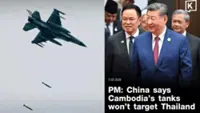
The implications of another DPP presidency are manifold, with the People’s Republic of China making its displeasure clear in advance. In November, Chinese President Xi Jinping and incumbent Taiwanese President Ma Ying-jeou beamed for cameras around the world, and such images are unlikely to be repeated if Tsai becomes Taiwan’s first female head of state.
While the growing power of China in the region is indubitable, there certainly have been the odd domestic hiccup like Hong Kong’s umbrella revolution in late 2014.
Taiwan’s own volatile politics has always made Beijing uncomfortable. Chen’s controversial period in power even included a re-election in 2004 that was affected by a shooting incident at the presidential convoy, which opponents accused him of having staged. And as recently as the last couple of years, the Sunflower Student movement and the anti-black box movement have both harnessed Taiwanese opposition to China.
As a colourful campaign reaches a crescendo, it remains to be seen if other personalities such as Wayne Chiang, great-grandson of founding father Chiang Kai-Shek, death metal vocalist Freddy Lim or ex-Tiananmen Square dissident Wu’er Kaixi can make an impact.
While China and Taiwan present a potential banana skins in the world of international diplomacy, we can expect to see more jostling for influence even within our own Asean region.

I was at forum recently at which leftists from around the region made a convincing case that Asean is being groomed to serve the needs of competing powers like the US and China.
Sonny Melencio of the Party of the Labouring Masses of the Philippines believes that political and economic activity in the region are being controlled more and more by big-business interests.
“The likes of US and China are keeping watch with a major role to play and lately the talk is of integrating the economies of developing countries like Myanmar and Cambodia. This is a neo-liberal globalisation. Countries are being asked to open their economies to the big multi-national corporations.”
Indeed, it can be argued that while pushing for media-friendly faces like Ninoy Aquino, Jokowi and Aung San Suu Kyi, the common man in Asean could be on the losing end of regional realignments.
“The interests of working people of individual nations could easily be subverted. Labourers are employed on contracts, often as migrant workers. This means no strong unions and good working conditions.”
As alliances rise and fall around the region, it’s important to note that little changes in far flung places could have a ripple affect on us all.
Star Online news editor Martin Vengadesan remains fascinated by the possibility of a shake-up in Taiwan.
Already a subscriber? Log in
Get 20% OFF The Star Digital Access
Cancel anytime. Ad-free. Unlimited access with perks.