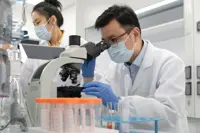
DESPITE their science background, these students won’t be graduating as engineers, architects or scientists.
Instead, they’re opting for non-science degrees.
First-year accounting student Chia Chun Hui, 19, was never interested in the subjects but went to a pure science class because she “wanted to be with my friends”.
She says at least half of her pure science classmates have opted to do degrees in the arts and humanities. The daughter of an accounts clerk has no regrets moving away from the sciences.
“My friends studying in fields like engineering and pharmacy are always so stressed out. I don’t think I could have coped,” she says, adding that she’s very happy with her choice.
Tan Heng Fatt, 21, switched to an economics degree after doing his foundation studies in science.
“I knew nothing about accounts or economics but I’d spent eight months working as a sales promoter and really enjoyed interacting with, and observing, people. The experience also made me realise that only by doing business can you become rich.”
While he also enjoyed learning the sciences, Tan decided to see where his newfound passion would lead him.
Like Chia and Tan, Lam Zhi Hao, 21, was also a pure science student in secondary school.
Hoping to follow in the footsteps of his property agent brother, he’s studying for a building and property management degree.
“I didn’t think I’d do well if I pursued a science-related degree. There’re so many calculations in science subjects ... the pressure is too high.”
Meanwhile, an engineer who declined to be named, quit his job recently. The 27-year-old Penangite is heading to Singapore next week to become a hawker.
“After eight years in this field, it’s time for a change. The economy is slow. It’s tough asking for higher pay here. I tried to apply for an engineering position in Singapore but bosses there say they can get two engineers from China for the salary I’m asking. So, I’ll sell chicken rice there instead.”
While his colleagues were surprised, his family was encouraging. They told him gaining new experiences is good as age is on his side.
He thinks he’ll earn more in Singapore with a basic pay of S$1,500 (RM4,500) and a commission of S$0.50 (RM1.50) for every plate of rice sold.
“My accommodation, food and health care are all taken care of. The stall and ingredients are all provided.”
Asked if he feels his science education is wasted, he says it’s something he can always fall back on.
“Now, what’s important is to earn as much as I can. I’m not bothered about job status.”
Already a subscriber? Log in
Get 20% OFF The Star Digital Access
Cancel anytime. Ad-free. Unlimited access with perks.