Satellite mapping ushers new era of transparency for palm oil players


Satellite mapping has ushered in a new era of transparency for palm oil players.

In the past, companies used “vegetable oil” as a generic label, as manufacturers would switch crops according to fluctuating commodity prices.

Even when palm oil became an affordable and plentiful staple, food manufacturers continued to use generic labels. As such, they haven’t played a huge part in spreading awareness about sustainable palm oil.

All that changed last December when new European food labelling regulations came into force.

Food manufacturers in Europe must now state the specific type of vegetable oil used, a move that has been well received by the palm oil industry.

For starters, last year saw a 65% spike in certified sustainable palm oil (CSPO) sales over the first half of 2014 compared to the same period in 2013, and many think this may have been the result of companies acting in preparation for the regulations.

Roundtable on Sustainable Palm Oil (RSPO) acting communications director Stefano Savi feels that the EU move will help raise the dialogue around sustainability.

“It’s not just a regulation focused on palm oil; it creates information for (about 500 million) consumers in Europe about all vegetable oils, which I think is very good. And even though it doesn’t mention sustainability as such, by increasing awareness that there is a difference between different oils used in different products, (this) will make consumers more likely to want to look into where those products come from.”

Sime Darby’s group head of sustainability and quality management Khairudin Hashim believes it will mean more pressure for companies to ensure they buy from sustainable sources, because it is a strategy to differentiate themselves from competitors.

In many ways, this creates more room for those lower down the supply chain, such as retailers and manufacturers, to address a missing piece of the puzzle – how can consumers play their part if they don’t know which product contains sustainable palm oil and which doesn’t?

The palm oil industry welcomes the new EU regulation that compels food manufacturers in Europe to state the specific type of vegetable oil used, as it can increase awareness and transparency about palm oil.

Keeping score

Today, new tools such as the Sustainable Palm Oil Transparency Toolkit (SPOTT) compel palm oil players to be more open about their commitment to sustainability and innovation.

SPOTT is an online platform that allows public access to satellite mapping and policy-based performance assessments of the world’s 25 largest public-listed palm oil companies. It allows the people to rank the performances of different palm oil companies, and reward the good players whilst putting pressure on the bad.

It also serves to complement certification standards by adding a new layer of accountability. (The Malaysian Sustainable Palm Oil newly implemented this year is the third certification standard in the world for palm oil, after the Indonesian Sustainable Palm Oil launched in 2011, and the multi-stakeholder international grouping Roundtable on Sustainable Palm Oil set up in 2004.)

“SPOTT presents stakeholders with a standardised route to make smarter investments, creating a credible business model that reduces risks,” says Nicola Manomaiudom, a senior press officer for the Zoological Society of London which developed SPOTT.

SPOTT enables investors to evaluate their options in underachieving companies, which should encourage companies to increase their scores by adopting innovative practices aligned with certification standards.

“We want oil palm growers to be proud of the commitments they have made to environmental management, reducing green house gasses, and other sustainable undertakings,” says Manomaiudom.

United Plantations chief executive director Datuk Carl Bek-Nielsen, who was recently appointed co-chair representing the Malaysian Palm Oil Association on the RSPO board of governors, says toolkits such as SPOTT and Global Forest Watch (which uses satellite images and crowd-sourced data to monitor deforestation and forest cover on the ground) are helping people make informed decisions, instead of emotional ones.

“And it’s not just SPOTT, it’s generally tighter regulations. This movement of becoming much more transparent reflects a 21st century trend; people want to know what they are buying,” he says.

Indeed, the Zoological Society of London’s wider Sustainable Palm Oil Platform (SPOP), which was launched just over two years ago, received over 100,000 views last year – almost a quarter of which came from Malaysia, Indonesia and Singapore, where the biggest palm oil companies are based.

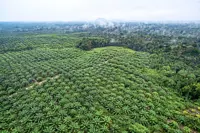
In many ways, satellite mapping technology has ushered in a new era of transparency. Images capture what’s going on on the ground, and platforms like SPOTT interpret it in a way that consumers and investors can understand.

“This makes it difficult to hide if you aren’t doing things by the book,” says Bek-Nielsen. “I guess one can say the days of going unnoticed as a ‘black sheep’ are over, which is a positive step.

“It would be great if we could see the same level of scrutiny applied to other oil crops too,” he adds.

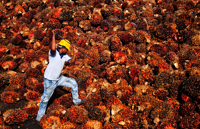
Consumer choice: Certified sustainable palm oil (CSPO) empowers the consumer, who could choose to pay a slight premium for the oil to support producers committed to sustainability. Photo courtesy of Malaysian Palm Oil Council
Certified sustainable palm oil (CSPO) empowers the consumer, who could choose to pay a slight premium for the oil to support producers committed to sustainability. Photo courtesy of Malaysian Palm Oil Council

National standards

Demand for sustainability comes mainly from Western markets. Despite the rise in CSPO sales, Bek-Nielsen points out that demand is still considerably lower than supply; uptake of CSPO from many of the large multinationals have not lived up to their initial commitments.

Buyers were reluctant to commit to higher prices without their competitors making the first move. Just a couple of years ago about half the sustainable oils produced went unsold – a major gripe of planters who had invested millions to comply with the scheme.

The challenge is to ensure that growth in demand keeps pace with growth in supply.

And with national level-certification present for two of the world’s biggest palm oil producing countries (combined, Malaysia and Indonesia supply about 85% of the world’s palm oil), it is imperative that awareness is raised among consumers on differences in matters such as stringency and clarity of criteria these standards entail.

The MSPO certification standard addresses the dilemma of smallholders who face difficulty complying with RSPO standards. Bek-Nielsen believes that a mandatory national certification can also help to raise, not just the ceiling, but the floor as well.

“They need support in moving their production towards a more sustainable and environmentally-friendly and efficient structure. Smallholders are after all an important piece of this puzzle, accounting for 35%-40% of Indonesia and Malaysia’s plantation area,” he says, adding that “we can leave it to customers to decide whether they want RSPO for certain markets, or MSPO.”

One common criticism of the RSPO is that the standard is too costly for smallholders to partake in. To this, RSPO’s Savi says the organisation has a US$1.25mil smallholder support fund that grants all cost of certification to smallholders.

“If an application is done, and there’s a case, the RSPO supports 100% of the certification costs. If you look at the number of smallholders we have certified, we are talking about thousands. I would say there is really no case to say the standard is too high.”

On complaints that the RSPO is “toothless”, Savi says: “This year, members who have not complied (with reporting requirements) for one year will get a warning, two years will face suspended membership, and three years their membership will be terminated.”

NEXT PAGE: Companies Step Up Commitment To Sustainable Practices

Photo courtesy of Malaysian Palm Oil Council

Game changers: Companies step up commitment to sustainable practices.

One of the first initiatives to make palm oil more sustainable was mooted by the Roundtable on Sustainable Palm Oil (RSPO), an organisation established in 2004 to promote the growth and use of certified sustainable palm oil.

Its members came from parties on both sides of the fence – green NGOs that wanted to make sure oil palm expansion would not be at the expense of wildlife habitat and biodiversity loss, and industry players who were feeling the heat from campaigners.

RSPO members included a diverse group of stakeholders – plantation companies, processors, traders, consumer goods manufacturers, retailers, financial institutions, environmental and social NGOs – all after an amicable solution.

The solution they came up with was certification – to create a market for sustainable oils. Certified sustainable palm oil (CSPO) would empower consumers, who could choose to pay a slight premium for the oil to support producers committed to sustainability and subjected to regular audits.

Teething problems

When the first CSPO started appearing in 2008, things didn’t quite pan out as envisioned.

Set back by low demand and disappointing premiums from buyers, a tragedy-of-the-commons style scenario seemed to prevail, with companies reluctant to commit to higher prices without their competitors making the first move. Just a couple of years ago, about half the sustainable oils produced went unsold – a major gripe of planters who had invested millions to comply with the scheme.

The RSPO was labelled toothless by critics while others accused it of “shifting the goal posts” too much, unfairly making the cost of compliance a barrier to smallholders.

At the same time, anti-palm oil sentiment seemed to be growing, fuelled perhaps by wider public access to social media. Last December, the Washington DC-based Environmental Investigation Agency (eia-global.org) reported that oil palm expansion in Indonesia was linked to surges in illegal logging.

But, bad publicity without context can be counter-productive. The deeper context of local governance structures, state corruption and land use planning – often the primary reasons why unsustainable practices continue – are often relegated to a mere footnote.

The differentiation between good companies which we need to encourage, and bad ones which we need to shame, is lost.

Domino effect

Amidst all this, leaders emerged within the palm oil landscape.

Public perception is important to brands. And companies responded to negativity by announcing no-deforestation commitments.

In 2010, Nestlé and its supplier Golden Agri-Resouces reacted to campaigns by Greenpeace with a pledge to clean up its supply chain.

However, the big game-changer came in December 2013 when Wilmar – the world’s largest palm oil company which trades about 45% of the commodity on the market – announced its No Deforestation, No Exploitation policy.

What sparked it off was the international consumer goods company Unilever, its biggest customer, announcing a move towards a 100% fully traceable sustainable supply chain by the end of 2014.

With help from the environmental charity The Forest Trust, Wilmar responded with the most ambitious and comprehensive policy any company had made.

Unlike previous commitments, this one extended to all of the company’s operations worldwide, including subsidiaries and any refineries, mills and plantations that Wilmar owned.

And just like that, the dominoes began to fall.

One by one, its competitors – Golden Agri-Resources Cargill, Bunge, IOI and Musim Mas for example – either created or expanded existing no-deforestation policies. In just over one year, global trading of palm oil covered by no-deforestation policies jumped from 5% to over 95%.

And as a leader, Wilmar has proved itself, following through on its promises. Just recently, it launched a new online “dashboard” that maps out its own supply chain; traceability within the supply chain has always been one of the greatest practical challenges to making the system work.

Wilmar is the first company to offer a way of following palm oil all the way from buyer to mill, by listing the names and locations of all its refineries and supplier mills.

These developments are only logical in the face of tightening of regulations and sourcing policies in the West.

And with these national level commitments made by both governments and industry to aim for 100% certified palm oil use by this year, the hope is, Wilmar’s competitors will continue to follow suit.

NEXT PAGE: Green Revolution

Green Revolution

Increased food production to feed the world’s population — seven billion presently and calculated to hit nine billion in 2050 — raises concerns that agricultural expansion will be at the expense of forests, biodiversity and ecosystems.

Among the major oil-producing crops, oil palm with its high yield is a major contender in meeting the rising demand for edible oils. The crop takes up a mere 6% of the world’s farmed oil crop land, yet accounts for 39% of global vegetable oil production.

Palm oil is versatile; it is used in food, fuel, and in the cosmetics, pharmaceutical and lubricant industries.

Global demand for palm oil is set to double by 2030 and triple by 2050, with the two most populous nations — China and India — the biggest importers of the commodity.

The world needs palm oil. We just need to make sure the crop is farmed sustainably.

For too long, public debate over this important agricultural commodity has been charged with over-simplified messages that pit the crop against conservation.

The year 2014 marked a major turning point for the sustainable palm oil agenda.

New European food labelling regulations, a spate of commitments by governments and palm oil players, and the advent of satellite imagery-based tool kits that track the oil palm landscape have generated greater levels of transparency and accountability within the industry.

These developments are part of an ongoing paradigm shift led by the industry and civil societies, who have joined hands to spark a transformation process in the global supply chain.

Get 20% OFF The Star Digital Access

Monthly Plan

RM 13.90/month

RM 11.12/month

Billed as RM 11.12 for the 1st month, RM 13.90 thereafter.

Best Value

Annual Plan

RM 12.33/month

RM 9.87/month

Billed as RM 118.40 for the 1st year, RM 148 thereafter.

Follow us on our official WhatsApp channel for breaking news alerts and key updates!
Environment , palm oil , oil plam

Others Also Read