



PETALING JAYA: Most people would imagine the bottom of an ocean to be filled with colourful coral, seaweed and pretty fishes. However, the reality is that the ocean is being destroyed by the rubbish that humans dump into the seas, rivers and beaches.
"Humans only care about what they can see with their eyes, they don't bother about what they don't see," said ocean activist and environmentalist Noreha Md Jani.
"We can see the pollution on the ground, the water pollution floating on the park's lake, but what about what's underwater?
"I've always wondered where all the rubbish on the beach goes. When I started to dive, I realised that all the rubbish is underwater and destroying all the coral and marine life," said Noreha.
She said that the amount of rubbish she sees underwater is shocking.

"The rubbish keeps flowing into the ocean, and nobody is picking the rubbish up," she said.
This was why the 41-year-old from Kedah decided to take action and formed a group called Braveheart Ecodivers, whose members join through word of mouth.
"We organise underwater and beach clean-ups every two or three months," she said.
Noreha said that many of the divers are shocked at the amount of rubbish found underwater.
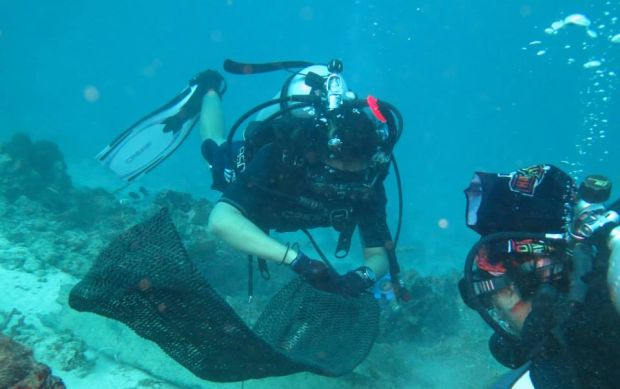
"Last November, we did an underwater clean-up in Mabul Island, Sabah, and we collected 90kg of rubbish in two hours," said Noreha.
"The pollution and rubbish can cause death and damage to ocean and marine life. We are most concerned about all those species underwater that are still alive and need to be protected," she said.
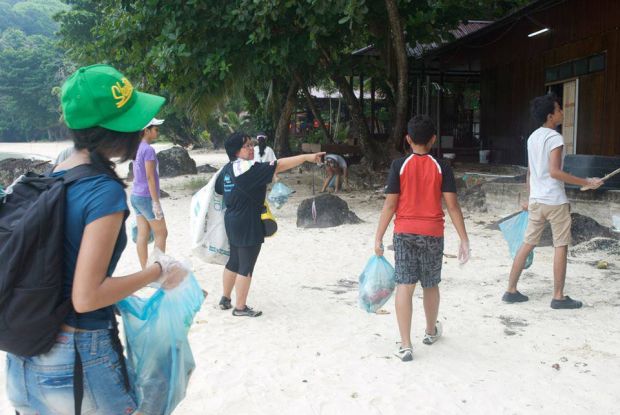
While she has no collaborations with other environmental groups, she works with businesses and schools to sponsor the cost of the clean-ups.
Noreha added that ocean conservation must be addressed before it gets progressively worse.
"What will happen if the damage and pollution to the ocean and marine life spreads? We can't reconstruct all the damage," said Noreha.
She said that the present generation should keep in mind the preservation of the ocean for future generations.
"What will happen when the future generations can only see the sharks, dolphins and turtles in the aquarium? It's not the same. They're not in their natural habitat, they're not free," said Noreha.
Water pollution will not only be harmful for environment, but it will also be a blow to the tourism industry, she added.
"If the tourism industry advertises certain marine life and tourists come to the island and they cannot see what was advertised, what are you going to tell them? We need to provide what we promise the tourists," said Noreha.
"The tourism industry should also think about how they can further educate the people and promote awareness," she said.
Ultimately, Noreha believes that the ultimate difference comes from the home.
"Develop the good habit of picking up rubbish when you see it lying around. Be sure to clean up after yourself when you visit a beach or a waterfall, don't use non-degradable plastics when you can, and care for our surroundings and environment," said Noreha.
"Before we educate people, we should practise it ourselves. So first start with yourself, then your family, your friends and the message will spread.
"And if everyone practises this good habit, there will be less rubbish or no rubbish at all," said Noreha.
If you are interested to join the Braveheart Ecodivers, you can send a message to Noreha through her Braveheart Adventura Facebook page.
Related stories:
Netizens share pledges for World Environment Day
Seven Wonders of Malaysian Eco-tourism
One-stop environmental platform
Already a subscriber? Log in
Get 20% OFF The Star Digital Access
Cancel anytime. Ad-free. Unlimited access with perks.
