
An internationally-renowned parasitologist shares his life journey as part of his debt to society.
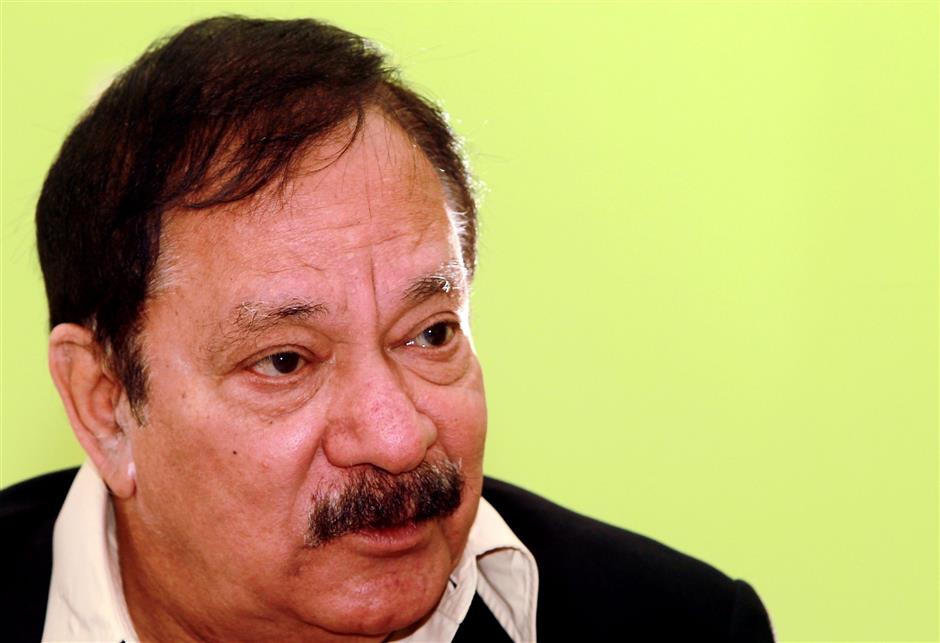
IF filarial worms worldwide were sentient enough to have a public enemy number one, it would undoubtedly be Prof Emeritus Datuk Dr CP Ramachandran.
These parasitic roundworms of the family Filarioidea are the cause of two important neglected tropical diseases: lymphatic filariasis, commonly known as elephantiasis, and onchocerciasis, also called river blindness.
Prof CP, as he is popularly known, has been involved in the study, control and eradication efforts of these diseases from his earliest research days during his Masters degree in medical parasitology at the Liverpool School of Tropical Medicine, Britain.
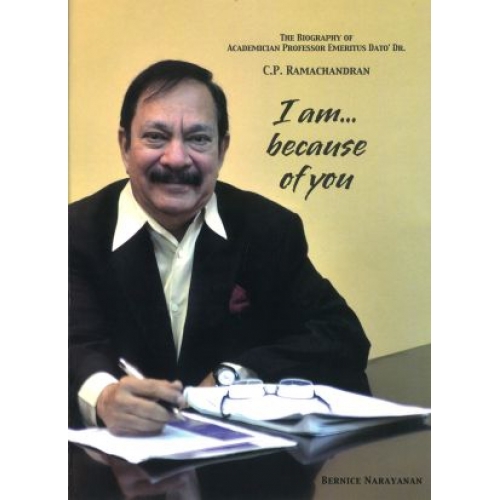
In fact, his biography, I am... because of you, often reads like a cliff notes version of the international efforts to treat and prevent lymphatic filariasis and onchocerciasis.
This 78-year-old researcher was initially reluctant to pen his autobiography when first approached by the Academy of Sciences, Malaysia (ASM), after he was appointed as one of the (currently) 24 senior fellows of the Academy, with the title of Academician.
“I wasn’t initially inclined at all,” he says.
“The Academy of Sciences asked me about five years ago when I became an Academician, because they knew that I had worked at different levels – the university level, the United Nations level and so on – and had spent a good deal of my life working in Third World countries, in Latin America, Africa and Asia Pacific.
“I asked myself, who wants to read my biography?
“I felt I had done my little piece for whatever it was worth; so I said, ‘No, I’m not interested’, and left it there.”
It did not help when he noticed fellow prominent scientists taking several years to finish their autobiographies – a length of time he did not wish to commit to this task.
But then, ASM president Tan Sri Dr Ahmad Tajuddin Ali asked him to reconsider writing his story.
Still reluctant, Prof CP told Dr Ahmad he was not really inclined, but would think about it.
“I went back home and I thought about it, and then said to myself, perhaps there is a reason for me to do it.
“And the reason was that I owe society something: an answer to why I did what I did,” he says.
“Society supported me with whatever I did, and at a global level, the scientific community supported me. I’m answerable to them, and maybe it would be a good idea to place on record what I had done.
“So, that was my justification, not for my own popularity or anything like that.”
He also made two strict resolutions: to not take too long to write the book, and to not make it too thick.
“I said, okay, I’m not going to take five years to do it, I’ll do it in eight months, which I did.
“And also, I don’t want to make it an encyclopaedia, I’ll make it short and sweet. I told myself, not more than 200 pages, and if you look at the book, it is exactly 199 pages.”
Rather than write it himself, Prof CP opted to have his story put together by writer Bernice Narayanan.
His reasoning was that autobiographies can often sound self-laudatory, resulting in a boring read.
“That was not my intention. My intention was for somebody else to appreciate and talk about the little things I have done that might have been useful to mankind,” he explains.
That is also the raison d’etre behind the title of his biography.
“My whole life, whatever I have achieved, is not because of me, but because of others.
“In life, one has to remember that we don’t live on an island, we live in a connected world and we have to help each other.
“You may be intelligent, but you cannot achieve everything without the help and existence of your friends, colleagues, parents, siblings and teachers,” he says.
And Prof CP has certainly achieved a lot.
Among his accomplishments are:
• Being part of the pioneering staff of three medical faculties – those of Universiti Malaya (UM), Universiti Sains Malaysia (USM) and Universiti Putra Malaysia (UPM).
• Helping to establish centres of excellence for the study of tropical diseases in many developing nations in his role as the Research Strengthening Group secretary of the World Health Organisation’s (WHO) Special Programme for Research and Training in Tropical Diseases (TDR).
• Initiating the WHO Global Programme for the Elimination of Lymphatic Filariasis (GPELF) in 2000, along with Dr Eric Ottesen.
• Enabling and driving much of the research done around the world on lymphatic filariasis and onchocerciasis in his capacity as WHO/TDR Chief of Filariasis Research and Control,
• Leading the charge against these two diseases that resulted in the decrease from some 120 million infected people worldwide in 2000 to less than 45 million 14 years later, not including the millions more who have been protected from being infected in the first place.
Included in his biography are also several personal photos, which Prof CP shares were picked randomly from his vast collection.
One of them is of him with former United States president Jimmy Carter in 1992, when Prof CP met him to obtain support for the GPELF.
In fact, Carter recently sent Prof CP a letter of appreciation for remembering him and his wife Rosalyn in his book, a copy of which was sent to them.
When asked what he would like readers to take away from I am... because of you, Prof CP hopes that they, especially the younger ones, will be inspired to work harder and take their own initiative.
“What I’m trying to say is that younger people should not expect that everything be given to them.
“They should work for something, they should take up the challenges.
“Failure doesn’t matter, just don’t assume that society owes you something; it is the other way around, you owe society.
“That’s the sort of thinking I have anyway,” he says.
Already a subscriber? Log in
Get 20% OFF The Star Digital Access
Cancel anytime. Ad-free. Unlimited access with perks.