
Growth in the Philippines may have slowed down in the third quarter of 2014 but that isn’t putting a dampener on how some view this market.
“We are forecasting a 7% growth next year with improvements in private consumption, faster public spending and sustained investment growth,” says Luz Lorenzo, chief economist at Maybank Kim Eng Philippines.
The Philippines GDP growth for Q3 2014 was at 5.3%, which was well below consensus expectations of 6.5% and its Q2 2014 rate of 6.4%.
Analysts put down the dismal Q3 to domestic demand not strengthening sufficiently to offset slowing external demand.
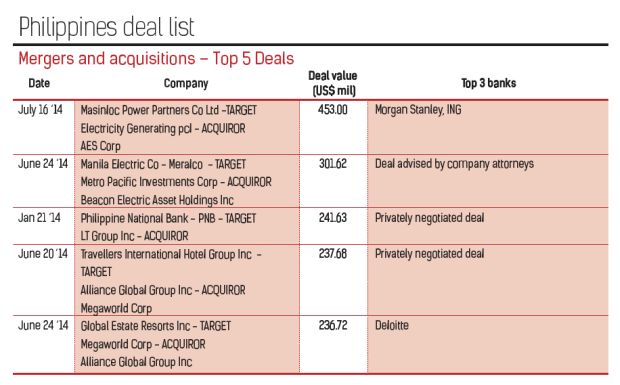
However, Lorenzo reckons that the 2015 growth of 7% can be easily funded by the banking system, which has been given a positive rating by Moody’s.
“It (Moody’s) highlighted the central bank’s strong track record in maintaining price and fiscal stability that has led to favourable operating conditions,” Lorenzo points out.
Lorenzo also points out that the Philippines is resilient in the face of plunging commodity prices, especially crude oil, and weak global growth. This is due to it being a net importer of oil.
“With a lower oil import bill, the country’s external balances improve as exports consist mainly of manufactured goods. Business process outsourcing revenue and workers’ remittances are also not greatly affected by the drop in commodity prices.
“These give the Philippines advantages over more commodity-reliant exporting countries,” Lorenzo says in a recent report.
Ratings agency Standard & Poor also raised its Philippine credit score to BBB this year, which are two notches above investment grade, citing improvements in structural, administrative, institutional and governance reforms.
Mark Mobius, executive chairman of Templeton Emerging Markets Group, points out that the future appears to be looking bright for the Philippines, as it recovers from the devastation of Typhoon Haiyan in November 2013.
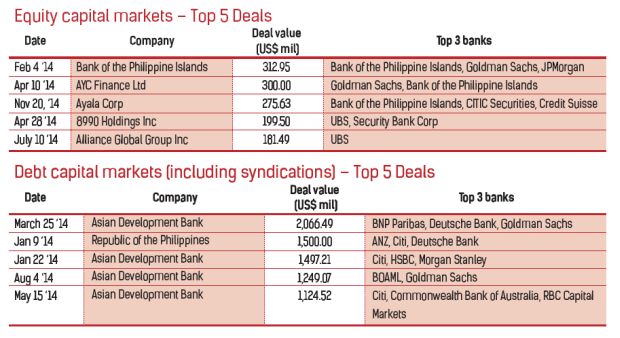
“The Philippines looks to be a key contributor to growth in the region next year and its local stock market has reflected investor optimism so far,” he says.
The Philippine stock market has risen by around 20% year-to-date.
The Philippine Stock Exchange president and chief executive officer reckons that there will be 10 new listings on the exchange in 2015.
He also says that capital-raising in the local bourse could hit 200bil pesos (RM15.6bil) in 2015.
Mobius, is particularly bullish on the consumer sector in the Philippines.
“This is predicated by its youthful population, combined with factors such as the rising per capital GDP that is generally seen in the Asean region and its progress towards reforms and collective cooperation with other Asean countries,” he says.
“In addition, Japanese investors look favourably on the Philippines and relations between the two countries are very good. When you combine these favourable demographics with the Asean region’s growth potential, you can see why there’re worth paying attention to,” adds Mobius.
A recent report by DBS on regional economies noted that investment growth for the Philippines is likely to remain strong at around 8% in 2015, and that this is supported by the government’s on going infrastructure overhaul. And it is in infrastructure investments where a significant number of corporates are eyeing.
“These companies are looking to secure projects either by themselves on by teaming up with other local or big international names, to capitalise on the public-private partnerships (PPP) initiatives by the government,” notes Maybank’s Lorenzo.
Related stories:
Economic outlook depends on health of the global economy
Thai tycoon is supremo of M&As in Singapore
Will Indonesia live up to its billing?
Bakrie Group hogs the limelight
Already a subscriber? Log in
Get 20% OFF The Star Digital Access
Cancel anytime. Ad-free. Unlimited access with perks.