The Cuban adventure that landed a Malaysian biotech firm in the big leagues.
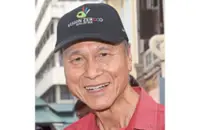
It all began in 2002 when Fidel Castro was president of Cuba. Malaysia enjoyed favourable bilateral relations with the republic, and a business partner invited Johan Indot to tag along with a commercial delegation seeking new business opportunities there.
A serial entrepreneur of sorts, Johan had by then co-founded two companies: a direct sales outfit which was sold off in the early 1990s, and Inoilco, an offshore marine services company servicing the oil and gas industry. He felt ready for his next venture, and the trip proved fruitful – they came back with plans to set up a company importing generic drugs for sale in Asean.
With waves of big pharma patents eventually set to expire, it seemed like a good idea. However, they soon learnt how tightly regulated the industry was. “We hadn’t understood the full complexity of it; the regulatory process was very strict,” Johan admits. The experience gave him some important insight into the workings of the pharmaceutical industry.

Though the drug import business did not materialise, their contact with the Cubans led to another opportunity – the commercial rights to a potential lung cancer therapy under development. Today, Bioven – the company originally set up to enter the generic drug import business – has emerged as a dark horse in a drug development space dominated by big pharma.
Seated in the glass-walled meeting room of his Inoilco office in Plaza Damas, Kuala Lumpur, Johan is still the corporate face for his oil and gas business, but also the proud executive director of a front-runner in the targeted cancer immunotherapy space.
Interesting opportunity
When Bioven came across it in early-stage clinical trials targeted at non-small cell lung cancer, immunotherapy was an emerging concept. Epidermal growth factor (EGF) immunotherapy, as it is known generically, was developed by the Cuban Center of Molecular Immunology (CIM), a research institution in Havana.
Founded in 1994, CIM has a special focus on cancer immunotherapies, perhaps no coincidence in a country famed for its production of cigars, and where smoking rates – and prevalence of smoking-related cancers – are high.
Cuba has a mature bioscience research and biotechnology industry. Heavy investment in the sector was one way the Cubans adapted to half a century of US sanctions. This maturity has already benefited emerging players in the biopharmaceuticals space; Biocon, India’s largest biotech player, is a case in point.

In 2006, it acquired a CIM-developed anti-cancer drug called nimotuzumab. The drug, targeted at head and neck cancers, has become the first flagship brand in the company’s line of new oncology treatments.
It’s easy to see why Bioven, given the opportunity that same year to acquire the Asean market rights to another CIM-developed EGF immunotherapy, was tempted. It took the chance and has not looked back since.
Big pharma’s playbook
Working with the Cubans had its advantages, namely an unusually extensive data set accumulated over decades of research, Johan says. To really make things work, he realised they would need the right people on board.
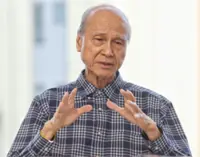
The Malaysian Biotechnology Corporation helped put him on the right track, and eventually he got in touch with Steve Drew, a 30-year veteran of the global pharmaceutical scene. Drew had been vice president of Global Strategy at one of pharma’s big five firms, and came from the sort of corporate environment where “small fry” like Bioven get eaten for breakfast.
If anyone was in a position to help Bioven navigate the demanding and unmerciful world of pharmaceuticals, it would be Drew, who was offered the post of group CEO. Understandably, the offer to come on board as group CEO was greeted with caution.
“My immediate questions were: have they concluded proper diligence? Is the science of clinical and commercial value? What about manufacturing strategy?” Drew recounts.
Looking at preliminary data, Drew agreed they had something to work with. His conditions for coming on board were: three months of due diligence, hire the industry’s best consultants (the same ones used by big pharma) to go over the existing Cuban data and commission additional research to fill in any gaps.
Under Drew’s guidance, Bioven used every step in big pharma’s playbook to confirm if the drug would make the cut – Britain-based law firms, EU-qualified experts in manufacturing and meetings with key thought leaders in oncology.
They roped in top guns like the Swedish Karolinska Institute and Cancer Centre and Paul Erlich Institute in Germany for clinical research as well as law firms like JAG Shaw, Burns and Levinson, and Taylor Wessing for intellectual property matters.
At the end of the process, Drew was convinced – as were the company’s shareholders. Bioven bought up rights to the European market, and eventually the Austral and Middle East markets too.
Biomarkers
The investigational dossier it submitted to the European Medicines Agency (EMA) and US Food and Drug Administration (FDA) – the two regulatory authorities monitoring the drug’s two eventual target markets – consisted of 40% Cuban and 60% new data.
Bioven also obtained permission to start Phase III trials, which is where the drug is compared against current standards of care for that specific disease, but stopped halfway through recruiting patients because of new regulatory requirements.
“We made the decision to include a biomarker,” explains Drew. (Not all cancers are the same; a biomarker is a biological measurement used to detect what specific disease, and therefore treatment, a patient is likely to respond to.)
“Our immunotherapy is aimed at the EGF pathway (see sidebar Tailor-made treatments). So in this case, our biomarker would have to be something we could test for, to identify patients most likely to respond to treatment targeted at that pathway.”
Finding such a biomarker in itself entails additional investigation, which costs time and money. Again, the Cuban link paid off. It didn’t take long to find their biomarker from blood samples of patients who had responded positively to the treatment.
“Without a biomarker, the chance of success within a non-small cell lung cancer oncology trial is about 11%; with one, it’s about 62%,” Drew adds.
Gaining respect
Lung cancer, 85% of which is accounted for by non-small cell cancers, is by far the leading cause of death among cancer patients.
With biomarkers in place, Bioven’s drug was filed under an Investigational New Drug application, and obtained clinical trial approvals in Britain, Germany, the Czech Republic and Malaysia. Its applications are still under review in three other countries. (An approval could take as little as two years after trials begin.)
The company is in the midst of raising fresh funds to take it through Phase III trials in 71 centres across Europe and Asia. Getting both EMA and FDA approvals has been an important part of the plan. Bioven’s end goal is to attract buyers from the big pharma space.
Many global pharmaceutical firms want to bolster their immunotherapy portfolio. The health industry is also moving towards a future in personalised medicine; one where a cocktail of different immunotherapies targeted at different pathways may be combined and tailored to suit an individual’s needs.
Immunotherapies such as the one Bioven has on offer – should it get approved – are in high demand.
Finding its place
The industry has seen big changes in recent years.
Drew explains: “Most senior executives in pharma have lived through at least two or three mergers or acquisitions. Part of the transition has been a move to shed R&D and sales jobs, and to look outside at innovative biotech (firms) and academic institutions.”
Most acquisitions are made during the early stages of research with staggered payouts for each successful phase. Bioven, on the other hand, is seeing the drug development process all the way through. It will only solicit buyers once it has proven scientific support, due diligence and regulatory approvals.
Johan knows it’s too early to jump the gun. “But whether or not the drug succeeds, we are a small Malaysian company, and we got to internationally recognised Phase III trials.”
At the end of the day, there is only one set of rules in the industry – large or small, every company has to get through the same regulatory approvals.
“There are no shortcuts,” says Drew. “I’m proud to be associated with a group of Malaysian shareholders keen to lead, and take the risk (inherent) in this industry,” Drew adds.
Last year, the venture took on a new significance for Johan, who recently lost his father to cancer. “It’s a unique opportunity for us to be in a business where we can make such a big difference to cancer patients and their families all over the world,” he says. “Having experienced that myself, I know what it means.”
NEXT PAGE: Bioven's significance to Malaysia's biotech sector -->

Bioven's significance to Malaysia's biotech sector: There is still a scarcity of investment advisers with sufficient expertise to make recommendations in this niche industry
It is remarkable that a small Malaysian startup like Bioven has succeeded in getting this far in the drug space. There simply aren’t enough venture capital and private equity fund managers within Malaysia who have the expertise and knowledge to make investment decisions in this niche area.
What gave Bioven an advantage was executive director Johan Indot’s established reputation within the Malaysian business community, and the tacit credibility the company enjoyed by having Tan Sri Abu Bakar Suleiman – a respected figure within the medical community – as company chairman.
So far, shareholders in the company have put US$32mil (RM114mil) into the venture, which is again remarkable considering that taking a new drug to market typically costs billions. Either way, Abu Bakar, who is also president of the International Medical University (IMU), says partnerships such as the ones Bioven has developed are important for the local commercial R&D scene.
Though Bioven’s registered headquarters is in London, and its innovation centre is in Aberdeen, Scotland, the company also has a number of contract research partners working on other oncology-related products in the pipeline. One of these is the IMU; others others include the renowned Beatson Cancer Institute in Glasgow, and Pangea Biotech in Catalan, Spain.
Abu Bakar says this cross-collaboration between industry and research institutions represents a significant contribution to the local biotech sector: “It offers proof that we can be effective in research, if we have the right and skilled partners to navigate complex regulatory environments.”
He thinks the impact, should Bioven achieve its goals, will be immense. “It will show that a small, innovative, flexible and responsive company can be effective and efficient. Right now, Malaysia does not have the critical mass to support this type of clinical research... if Bioven succeeds, the process to support this type of research activity may develop,” he adds.
NEXT PAGE: Big pharma's contingency for expiring patents -->
Big pharma's contingency for expiring patents: How top global pharmaceutical firms are reinventing themselves to cope with major upcoming challenges
For years, big pharma has braced itself for an impending patent cliff – when patents expire, so does market exclusivity and resulting in an abrupt drop in sales. And with few new “blockbusters” – drugs with annual sales of more than US$1bil (RM3.56bil) each – in the pipeline, it is no wonder the industry has been scrambling to reinvent itself.
It has been estimated that over the next decade, 120 brand-name prescription drugs will lose market exclusivity. The first big wave of expirations came in 2012, leaving USD$35.1bil (RM124.86bil) worth of branded products open to competition by the generics drug market. Another huge wave – valued at about USD$33.5bil (RM119.17bil) – is due this year.
In response to this, new trends have emerged. Rapid-fire mergers and acquisitions have left fewer but bigger fish in the market. Big players have also been shedding their internal R&D units to become leaner and more streamlined. Instead of generating leads, big pharma scours the emerging biotech scene, snapping up potential winners.
This new model has spawned hundreds of small biotech innovators with the exit strategy of being bought out. Some of these are spin-off companies from top research institutions; others, startups by scientists turned entrepreneurs.
Once these smaller outfits have done the early research to build confidence in their product, big pharma funds the more costly clinical trial stages, with a full buyout once the drug is approved.
In a way, this new trend improves efficiency. You’ve probably heard the reference: it costs over a billion US dollars to get one drug to market. But that sum takes into account development costs for all the failed leads – and there are usually many. A tremendous amount of attrition occurs at each stage of the process.
Few make it past phase I trials, fewer past phase II, and fewer still past phase III. It has been estimated that out of roughly every 10,000 drug compounds, one will make it through to the final stages of the US Food and Drug Administration (FDA) approval process. So instead of doing all that on its own, big pharma is entering later in the game.
It’s the new playbook, if you like.
Related story:
Already a subscriber? Log in
Get 20% OFF The Star Digital Access
Cancel anytime. Ad-free. Unlimited access with perks.