KUALA LUMPUR: A possible blacklisting of US companies or a ban on rare earth metals exports to the US as retaliation for restrictions on Huawei would be disruptive for the US technology sector, Fitch Ratings said.
It said on Tuesday theses curbs could could also negatively affect some Chinese sectors due to globally-integrated supply chains and China's reliance on foreign technologies and exports
Financial effects on technology companies generating significant revenue from China or using rare earth minerals in manufacturing may be material but it is too early to assess potential credit implications, the rating agency said.
China's "unreliable entities" blacklist has not been published, possibly because of the 90-day temporary general license ending in August granted to US suppliers of Huawei.
Implications for China's businesses and economy are likely being considered on a company by company basis.
“We believe the effectiveness of unilateral sanctions will be complicated by China's dependence on critical components, such as semiconductors and software, produced by foreign companies, and exports for economic growth.
“Made in China 2025 aims to reduce China's reliance on foreign technologies but a decoupling of China and Western technology companies is unlikely in the intermediate term,” it pointed out.
China is a major consumer of US technology products. Last year, sales generated in China represented 20% or more of the annual revenue generated by Texas Instruments (A+/Stable); Flex Ltd. (BBB-/Negative); Intel Corporation (A+/Stable); Western Digital (BB+/Positive); and Jabil (BBB-/Stable), according to data from Factset.
“We view Apple, Dell (BB+/Negative) and HP (BBB+/Stable) as potential blacklist candidates. China is a major market for these corporations, which are key competitors to Chinese companies, such as Huawei for smartphones and Lenovo for personal computers.
“However, Lenovo depends on processors from US-based Intel and AMD, which effectively control the global PC chip market, so a ban on Dell and HP could have negative consequences for China should it lead to US retaliation.
“Sanctions against Qualcomm, Cisco and Google are viewed as less likely as China is dependent on their technologies,” it said.
Fitch Ratings said Qualcomm supplies application processors for nearly 50% of the global smartphone market and a substantial portion of 3G and 4G intellectual properties.
China is reliant on Cisco's network switching equipment for its technology infrastructure and Google's Android operating system (OS) is the main OS for all Chinese smartphone manufacturers.
Google is working with Huawei during the US's 90-day temporary general licence period but plans to comply with potential US sanctions.
Large retailers including Walmart (AA/Stable) and Amazon (A+/Stable) import products from China but may also be less vulnerable to sanctions due to their global scale and China's reliance on exports.
Exports made up 19.8% of China's GDP in 2017, per The World Bank. Bans for national security reasons, assuming China's actions align to those of the US, may also be a reach for US retailers.
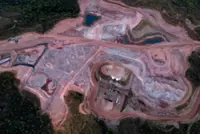
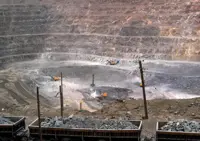
Rare earth metals are used in products including memory chips, rechargeable batteries, cell phones, catalytic converters, GPS equipment and military devices. Substitutes are available for many applications but generally are less effective.
“As such, a ban on shipments to the US could cause prices to increase and result in higher raw materials costs for US semiconductor manufacturers including Intel, GlobalFoundries and Micron Technology (BBB-/Stable), because these elements are used in chip production in the US.
“The effect on semiconductor companies, such as Qualcomm, which primarily rely on outsourced fabs could be limited as the major contract semiconductor fabs are located outside the US,” it said.
According to the US Geological Survey, 71% of rare earth metals were produced in China in 2018.
In response to China's threat regarding these metals, the US is considering stockpiling and sourcing rare earth elements from other countries.
US production is minimal as extraction of the minerals from ore is fairly toxic so implications for the US mining sector are limited.
“Given the long time for mine development, a China ban would have a meaningful effect on prices paid by US companies,” it said.
Already a subscriber? Log in
Get 20% OFF The Star Digital Access
Cancel anytime. Ad-free. Unlimited access with perks.