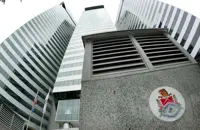
KUALA LUMPUR: Cement producer Lafarge Malaysia Bhd plans to increase exports to the region as pricing pressure and oversupply in the local cement industry continues to persist.
Lafarge president and chief executive officer Thierry Legrand said the company planned to increase sales to regional markets and negotiate new contracts.
“We are exporting to many countries like Bangladesh, Myanmar and Indonesia. Developing exports is certainly one of the avenues we are looking at.
“The strategy is to maximise our sales volume. Where local demand is not enough, we look to replace this with exports,” he said at a briefing after Lafarge AGM.
He said the company’s export ratio ranged between 5% and 15% and was on an uptrend.
Lafarge executive director and chief financial officer Micheal Lim said there could be more opportunities in the region, given that Japan and Taiwan were expected to cut down on their exports this year.
He said the company’s integrated plant in Langkawi was geared towards the export market as it was close to the port and thus, was cost-effective.
“In the international market, there are many suppliers of cement such as from Taiwan, China and Japan.
“In the near future, Japan is expected to slow down on their exports as they have the Tokyo Olympics coming up. Taiwan has a new tax imposed which makes their export costs higher.
“With the rebalancing of demand and supply in the regional market, we think there is a possibility that our plant in Langkawi will soon increase its utilisation rate,” he said.
The building materials firm slipped into the red in its first quarter ended March 31, reporting a net loss of RM48.9mil compared to a net profit of RM20.6mil for the same period a year ago due to lower operating profit and worsening pricing pressure.
The company’s revenue decreased by 16.1% to RM561.9mil year-on-year.
Legrand noted that the cement market shrank by about 7% last year while companies involved in producing cement increased their capacities, creating an imbalance in demand and supply as well as intense pressure on prices.
“We believe that in the second half of the year, with infrastructure projects gaining momentum, it should bring more volume – but how fast this will happen is difficult to say.
“In the meantime, we are aggressively looking at reducing costs and at the same working on product and solution differentiation,” he said.
He expects cement industry sales to continue to contract this year after the 6% fall in 2016.
“This year, we see a number of infrastructure projects that are gaining momentum and this will have more impact in the second half of the year.
“But, overall, this year we anticipate the market will shrink further by about 4% or 5%,” he said.
Already a subscriber? Log in
Get 20% OFF The Star Digital Access
Cancel anytime. Ad-free. Unlimited access with perks.