Poverty goals at risk on trade backlash


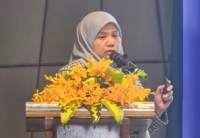
JAKARTA: The anti-trade mood sweeping parts of the world will hurt global efforts to pull millions of people out of poverty, according to Indonesian Finance Minister Sri Mulyani Indrawati.

The former World Bank managing director said in an interview in Jakarta that she’s worried about the threat from rising barriers to trade at a time when “populist sentiment has been translated into political rhetoric and policy, which is really against the wider need.”

Anxiety is growing in emerging markets, particularly in Asia, as trade policies turn more protectionist under US President Donald Trump. He pulled the US out of a Pacific trade deal that would have benefited Asian nations from Malaysia to Japan, and has threatened to punish China with higher tariffs. For South-East Asian nations like Indonesia, free trade has been key in boosting economic growth and living standards.

The sentiment that “trade is a zero sum game – if you’re profiting, then somebody else is losing – this is not the basic core or value or belief or theory, whatever you name it, it’s not economics,” Indrawati said. A worrying aspect is that “the relationships in this world are actually dictated by this zero sum game,” she said.

Globalisation and rising trade has helped to cut world poverty rates to 9.6% in 2015 from almost 30% in 1999, according to the World Bank. In Indonesia, the government has made inroads in reducing inequality as the economy grew on average 5% in the past five years.

Indrawati said that while there was “genuine insecurity from quite a significant part of the people because of this globalisation” the response was “not serving the world best at this moment”.

Countries in the Association of South-East Asian Nations group, or Asean – particularly smaller ones like Laos, Cambodia and Myanmar – “would never be able to reduce poverty without global trade,” she said.

“The achievement of the Asean countries in reducing poverty in such a very impressive and significant way is the achievement of this global trade,” she said. “When this is no longer there, when global trade is no longer believed as a good policy, then you should come up with what is then the alternative policy.”

With a population of 260 million people, Indonesia has a strong and growing domestic market that helps to shield the economy from trade risks. The country is among the least trade-dependent ones in Asia, with exports accounting for about a fifth of gross domestic product (GDP), compared with 71% in Malaysia and 69% in Thailand, according to World Bank data. — Bloomberg

Get 20% OFF The Star Digital Access

Monthly Plan

RM 13.90/month

RM 11.12/month

Billed as RM 11.12 for the 1st month, RM 13.90 thereafter.

Best Value

Annual Plan

RM 12.33/month

RM 9.87/month

Billed as RM 118.40 for the 1st year, RM 148 thereafter.

Follow us on our official WhatsApp channel for breaking news alerts and key updates!
Business , Indonesia , trade

Next In Business News

Enhancing standards at development financial institutions
MODERNISING WITHOUT BREAKING THE BANK
Premature de-industrialisation
EM debt�–�Resilience over yields
The real question behind Malaysia’s new MyKad
Going boldly with Enterprise
Ferrari’s EV gains speed
SPACs find fresh momentum
Pace set for wearable data
China’s borrowers turn to bonds

Others Also Read