KUALA LUMPUR: Malaysia-based Leong Hup International, now a major poultry player in Asean with a regional annual turnover of near RM6.0bil, is planning to list on Bursa Malaysia and/or other bourses to raise funds for expansion, acquitions, research and development (R&D).
The Lau family, which has been in the livestock business for more than half a century, took Leong Hup’s Malaysian company private in 2012 at a cost of RM700mil after its share price persistently stayed below the value of its net tangible asset.
“We have plans for listing of the whole group within one to three years. It can be in or outside Malaysia – but most probably here. We will act when the market conditions improve. It could be 2019 or 2020, when our annual turnover is expected to hit RM7bil-RM8bil,” says Francis Lau, executive chairman of Leong Hup (Malaysia) Sdn Bhd.
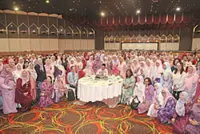
“Proceeeds from the IPO (initial public listing) will fund our regional expansion, capital-intensive R&D and acquisitions of other players in the livestock business,” Francis, also executive director of Leong Hup International, tells StarBiz in his Ampang Hilir bungalow during his Chinese New Year open house on Sunday.
He said as the family is in the process of looking for a merchant banker, he could not provide details on the IPO for the group, whose main business activities include breeding, rearing, slaughtering, processing and retailing of chickens and eggs.
However, two years ago Singapore-based private equity firm Affinity Equity Partners reportedly took a stake of 23% in Leong Hup International, valuing the latter at US$600mil (RM2.2bil then), excluding debt.
Against the privatised cost of RM700mil in 2012, the amount paid for by Affinity was seen as indicative of the fast growth that Leong Hup had undergone from 2012 to 2015.
In 1990, Leong Hup Holdings Bhd was the first livestock company to be listed on the Kuala Lumpur Stock Exchnage. It was privatised in 2012 along with its listed feedmiller Emivest Bhd.
But Leong Hup International still controls two listed companies in Asean -- Indonesia’s PT Malindo, an integrated poultry player, and local egg producer Teo Seng Capital Bhd .
.
In Malaysia, Leong Hup (Malaysia) Sdn Bhd – a member of Leong Hup International -- holds a market share of 23%-25%. It is the single biggest chicken supplier in the country.
Since delisting its Malaysian unit, the Leong Hup group has continued to expand locally and in Asean. Its group turnover has been growing at a rate of 8%-10% per annum but its net margin has stayed at 5-8%, says Francis.
“The year ahead is very challenging due to the weak ringgit and other uncertainties. But we still see 8-10% growth in turnover in the next three years as chicken is still the cheapest protein food for all races,” says Francis, with colourful porcelain chickens of different shapes and actions on his table.
On its website, Leong Hup states it is “one of the top leading” integrated food and poultry producer in Malaysia and Asean region with business operations in Indonesia, Vietnam, Singapore and the Philippines.
Leong Hup, which has its humble origin in Muar, has a significant business in Indonesia. PT Malindo posted a revenue of RM1.3bil and a pre-tax profit of RM100mil in the last financial year. Malindo produces animal feeds and breeds commercial day-old chicks and broilers.
In Malaysia, Leong Hup’s 51.1%-owned Teo Seng contributed RM412.9mil in revenue and net profit of RM40.9mil in the financial year ended Dec 31, 2015.
For the whole Asean region, Leong Hup International’s total turnover in 2016 was estimated to be within RM5.5bil-RM6.0bil, according to Francis.
Unlike currently, Leong Hup’s Lau brothers were often in the corporate limelight in the 1990s. They were in the news over tussle for control of Kentucky Fried Chicken franchise.
The Laus, who held about 30% stake in listed KFC (Malaysia) Holdings Bhd then, were facing a tough and painful corporate battle with politically-linked Datuk Ishak Ismail.
After years of squabbles, the Laus finally backed out and sold their holdings to Ishak in 1996 “at a high price” -- one year before the setting in of the 1997/1998 Asian financial crisis that led to the collapse of markets in the region, including Malaysia.
Already a subscriber? Log in
Play, subscribe and stand a chance to win prizes worth over RM39,000! T&C applies.
Cancel anytime. Ad-free. Unlimited access with perks.