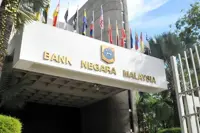
KUALA LUMPUR: Malaysia's economy is expected to expand at between 4.5% and 5.5% in 2015 when compared with the 6% growth last year, amid a more challenging external environment.
Bank Negara Malaysia governor Tan Sri Dr Zeti Akhtar Aziz said on Wednesday the more moderate recovery of the global economy projected for 2015 is generating a challenging environment across both the advanced and emerging economies.
"Although the growth momentum is strengthening in some economies, weaknesses in several major economies suggest that the global economy remains vulnerable to downside risks," she said.
Zeti said pointed out the significant decline in global oil prices was also having a differentiated impact on the world economy.
She cautioned this uneven growth momentum prevailing in the global economy has raised the prospect of a divergence in the direction of monetary policy in the advanced economies, resulting in shifts in global liquidity and increased volatility in the international financial markets.
While the Malaysia was not insulated from these global developments, the diversified structure of the Malaysian economy and strengthened fundamentals have however enhanced the economy's resilience.
Zeti pointed out economic growth in 2015 will continue to be primarily driven by private sector-led domestic demand with some support from the expansion in exports.
While the mining and commodity sectors have an important role in the economy, growth is expected to be sustained by the broad-based expansion in the services, manufacturing and construction sectors that now account for more than two thirds of the economy.
"Investment is also increasingly being driven by capital spending by the non-energy-related private sector and public enterprises. The lower inflation outlook and the positive labour market conditions will also continue to support household spending during the year," she added.
The report points out the economy, which is measured by Gross Domestic Product (GDP), would continue to be underpinned by a sustained expansion in domestic demand amid strong domestic fundamentals and a resilient export sector.
The main engine of growth will be the services sector with a forecast growth of 5.6% in 2015 albeit slower than 2014's 6.3%, followed by manufacturing 4.9% (6.2%). Construction is expected to also grow at a slower pace of 10.3% (11.6%); mining and quarrying 3.0% (3.1%) and agriculture 0.3% (2.6%).
BNM sees the services sector contributing 3.1 percentage points to GDP growth (2014: 3.5 percentage points). Manufacturing 1.2 percentage points (1.5 percentage points) and mining 0.2 percentage points (0.3 percentage points).
Construction is expected to be unchanged at 0.4 percentage points. Agriculture's contribution is expected to be minimal at near zero compared (0.2 percentage points).
The plus factors for the economy will be sustained growth in domestic demand and resilient export sector.
BNM also said domestic demand will continue to anchor growth in 2015, driven by private sector spending.
After registering five consecutive years of above-average growth rates, private consumption is expected to grow by 6.0% in 2015.
BNM acknowledged the implementation of the Goods and Services Tax (GST) in April and lower earnings in the commodity-related sectors are expected to affect spending.
On a positive note, this will, however, be partially offset by higher household disposable incomes from lower fuel prices, the favourable labour market conditions and the government measures to assist low- and middle-income households.
As for inflation, it is expected to remain relatively stable amid modest demand pressures. BNM forecasts inflation to rise at a slower pace of between 2% and 3% (3.2%), mainly due to lower global energy and food prices.
"The decline in global oil prices will lead to lower domestic fuel prices through the managed float fuel pricing mechanism," it said.
However, it is cautious about the external environment. It explains: "While improving, downside risks to the global growth outlook remain given the continued weakness in a number of major economies.
"In addition, given uneven growth prospects, monetary policies in the major economies could potentially diverge, which may lead to sizable shifts in global liquidity and contribute to greater volatility in global financial markets and capital flows," it said.
Elaborating on this, BNM said with the prospect of the US Federal Reserve (Fed) starting to normalise its monetary policy amidst continued monetary easing by the European Central Bank and Bank of Japan, "the volatility of capital flows, financial markets and exchange rates will continue".
Policy measures undertaken to ensure that such capital flow volatility and the corresponding fluctuations in the domestic financial markets and exchange rates do not spill over into the real economy will be a key focus of policy.
In this regard, efforts to strengthen domestic buffers and resilience to tolerate larger and more volatile capital flows have become important.
"For Malaysia, strong domestic fundamentals, greater exchange rate flexibility, adequate levels of international reserves, deeper and more diversified financial markets and a strong banking system, have all been crucial to Malaysia's resilience to bouts of capital flow volatility.
"Policy flexibility, including the ability to use micro- and macroprudential tools, has also been important in managing the risks associated with such capital flows," it said.
The sharp decline in the price of oil and the uncertainty over its future price path, coupled with the effects on the prices of other commodities, further compounds the challenging global environment.
"Monetary policy in 2015 will continue to support a steady growth of the Malaysian economy amid contained risks to inflation. The operating environment for monetary policy will be shaped by key challenges on the external front, which would affect the overall outlook for the domestic economy," said the BNM report.
Fiscal policy will focus on strengthening fiscal management amid the environment of low global commodity prices.
"The expected lower oil-related revenue has prompted the government to introduce pre-emptive fiscal adjustment measures and to revise the fiscal deficit target from 3% to 3.2% of GDP.
"The net impact of lower oil prices on Malaysia's fiscal position is expected to be manageable," said BNM, pointing out the government's decision to step up the diversification of sources of revenue over the years.
In turn, this will be further supported by the implementation of the GST and the expenditure rationalisation measures of fuel subsidy reforms and the scaling back of discretionary spending.
BNM said after three years of double-digit growth, private investment is expected to expand by 9.0%, amid lower investments in the mining sector.
"Nevertheless, private investment growth will be supported by on-going projects and new investments in the manufacturing and services sectors with firms benefitting from the continued global recovery and expansion in domestic demand," it said.
The central bank sees more moderate growth in public consumption due to lower spending on supplies and services following the government's move to rationalise its expenditure.
Public investment is, however, expected to turn around to record positive growth, with higher capital spending by public enterprises and to a lesser extent, by the Federal Government.
Public enterprises are expected to continue investing in key infrastructure projects, particularly in the utilities and transportation sub-sectors.
BNM said Malaysia, being a highly open economy, would be adversely affected if some of the external risks materialise.
However, the strong prevailing underlying fundamentals would act as a buffer to mitigate the impact.
"The economy is well-diversified, inflation is low, and the balance of payments position is resilient. Labour market conditions remain healthy.
"The deep financial markets, strong banking system, and ample liquidity conditions will ensure that effective financial intermediation continues and will provide support to Malaysia's resilience during bouts of volatile capital flows.
"External debt remains manageable with the majority of debt being in medium- to long-term tenures, and with more than 40% being denominated in ringgit. This, together with ample international reserves, accords the economy with the policy flexibility to manage external risks.
"The combination of these factors will cumulatively enable a more effective policy response to mitigate the impact of any external shocks on domestic demand," BNM pointed out.
Related stories
BNM FSPS Report 2014: Household debts moderating
BNM Report 2014: Malaysia to see volatile capital flows
BNM Report 2014: Reliance on oil-related revenue reduced
BNM Report 2014: Diversification to mitigate lower commodity prices
BNM Annual Report 2014: Debunking Malaysia’s investment myths
BNM Financial Stability Report 2014: Banking system pre-tax profit at RM32b
Already a subscriber? Log in
Get 20% OFF The Star Digital Access
Cancel anytime. Ad-free. Unlimited access with perks.