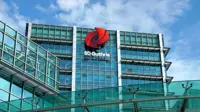
KUALA LUMPUR: Petroliam Nasional Bhd (Petronas) may be looking at building a US$27bil liquefied natural gas export terminal in northwestern Canada on the site of an abandoned Royal Dutch Shell Plc energy project, according to the company’s chief executive officer.
While Petronas, as the stateowned company is known, has yet to make a financial decision to move forward with its Pacific Northwest LNG project in British Columbia, Shell’s Ridley Island site “could be one of the options” for a location for the complex, CEO Datuk Wan Zulkiflee Wan Ariffin said in an interview here last Friday.
The Pacific Northwest LNG project won Canadian government approval in September following more than three years of regulatory reviews and strident opposition from environmentalists, scientists and indigenous communities.
At the same time, the project’s facing economic headwinds with 18 gas export proposals in the province stalled by a global glut and plunging prices.
Shell said March 10 that it had dropped an LNG project on Ridley Island, acquired as part of its merger with BG Group.
The island is next to the islet where Petronas proposed its own terminal.
Petronas had already been looking at moving the project’s docking facilities to Ridley in a modification that would help to both quell local opposition and potentially save as much as US$1bil by eliminating the need for a bridge over a sensitive marine area.
Petronas is carrying out a “total review” before deciding whether to move forward with the LNG plant so that, “when we build the project, it will be a competitive LNG producer compared to the other North American producers,” Wan Zulkiflee said in an interview in Kuala Lumpur.
If built, Petronas’s terminal would be the largest private investment in British Columbia’s history.
The sheer size of the project has turned it into a campaign issue ahead of a provincial poll in May.
BC Premier Christy Clark has faced criticism for promises of LNG prosperity that have failed to materialize.
Of the more than 20 projects the government once said were planned in the province, one smaller one is getting built.
Her main opponent has pledged to find “a better place” for Petronas’ project if elected.
Petronas, which bought Progress Energy Resources Corp for C$5.2bil in 2012 to take control of gas fields that would supply the LNG export terminal, appears to be in no rush to make a final decision.
“You know why Because today, we are producing around half a billion standard cubic feet a day that we are selling into the domestic market,” said Wan Zulkiflee. “We are earning cash.”
None of Petronas’ partners China Petrochemical Corp, Japan Petroleum Exploration Co, Indian Oil Corp and Brunei National Petroleum Co have contested this slow approach, Wan Zulkiflee said.
“This is really what I would call a generational decision,” he said. “It will really shape how Petronas will be as an LNG exporter in years to come.” — Bloomberg
Petronas is also undertaking a review of all its assets, Wan Zulkiflee said, adding that “if they don’t fit, then we will have to look at options on how to improve them or divest them.”
The company is the midst of completing an asset sale in Algeria, he said, without giving details. Nonoil and gas assets account less than 5 percent of the group’s total of 603.3 billion ringgit ($136 billion), he said.
Petronas may consider buying some shares in Saudi Aramco’s initial public offering if it’s invited, he said. “As of to date, we have not been invited. Anybody who invites us, we will look at it.”
Saudi Aramco’s firsttime share sale, which could be the world’s biggestever IPO, will probably take place in the second half of 2018, according to Chief Executive Officer Amin Nasser. The Middle Eastern government plans to list shares in Saudi Arabia and at least one foreign stock exchange that could include London, New York, Tokyo, Singapore or Hong Kong. — Bloomberg
Already a subscriber? Log in
Get 20% OFF The Star Digital Access
Cancel anytime. Ad-free. Unlimited access with perks.