The big business of small, men’s undergarments


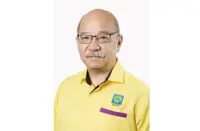
From left to right - Halid Esa, Nasrullah Jamaluddin and Rosman Kasiman showing the World Cup 2014 men's underwear at The Under Shop outlet at the Johor Baru City Square shopping complex.

To PUT it briefly, Steed Chiew, administration and product manager for men’s underwear company Depi Corporation Sdn Bhd, estimates the production capacity of the factories run by the company’s Chinese manufacturing partners in Fujian stands at about 360,000 pairs of men’s underwear a month.

Style wise, this includes trunks, bikinis, minis, tangas, boxers and classic briefs. Trunks and bikinis, only became popular around the start of the new millennium (the brand Renoma is said to have set the trend when they became the first to introduce the sport bikini in Malaysia), while minis and tangas were buoyed by the bodybuilding fever during the 1990s.

Colour and design-wise, Malaysia appears to be a fashion leader. This was made known to Chiew after a factory manager started comparing our rainbow hued undies with those from the European and the US market, which mostly confine their privates in blacks, and whites.

“This Chinese factory manager said it’s shocking how Malaysian men like their underwear in so many colours and designs!” Chiew recalls.

Even so, the products from men’s underwear company FashionGraphy might raise more than a few eyebrows.

Matt Goh, the 33-year-old founder of FashionGraphy, says the company caters only to what he calls a niche market.

Just two years old, the online store is already recording sales of RM150,000 per year.

Bestselling item- Matt Goh says he can move up to 50 pieces a  month in Malaysia.
Goh says he can move up to 50 pieces a month in Malaysia.

Goh and his partner, Osmenn Koo, a graphic designer whose main role is to touch up the site’s fashion spreads, have made themselves known to underwear collectors and wholesalers in Muar and Thailand who give them between RM2,000 to RM5,000 worth of orders at least twice a year. Their best-selling pieces are one-sided trunks at 20 a month, and thongs at 50.

All in, he knows of some 10 other competitors in the market. An avid online shopper himself, Goh started a market survey on sexy men’s underwear when he got fed up with what was available and realised he could fill a market gap.

“Brands seem to forget low-waist jeans are in fashion and wearers are going to need smaller briefs,” says Goh.

The male underwear market, he opines, is also forgetting more men are going to the gym.

“After all that hard work and dieting, they’d be looking to show off. So, this is where selfies come into the picture. Since these pictures are going to go on view, they’d naturally want nice garments,” says Goh whose target market is the 20 to 35 age group.

From classsic (left) to tanga  it has taken Malaysian  males 40 years to make the switch.
From classsic (left) to tanga, it has taken Malaysian males 40 years to make the
switch.

Depi’s designer Alan Hew who has been looking at ways to support the male anatomy for the past 15 years, reckons men started singing the thong song so to speak during the 1990s when idols like Mark Walhberg and David Beckham started appearing in underwear campaigns. Just recently, Christian Ronaldo launched his own line.

“In this aspect, it has influenced the Malaysian male to make the transition from the classic brief to the tanga in the 1990s,” explains Hew.

In Liew’s experience however, very few Malaysian men, in his age group at least, are willing to wear it proud in public. Though there were plenty of male sex symbols from his era, they, unlike the new generation of buff celebrities, prefer to keep their trousers on.

“It’s not common in Asia for men to want to show off their underwear — even if it’s at a pool party. In general, what the mass market wants is comfort and support,” says Chiew who points out they could always rely on the aspect of a roomier fit as a selling point.

Where Depi’s sizes in are concerned, their S is considered an M in other labels.

But where men’s briefs are concerned, it is important to be on the ball.

There is, says Liew, a curve in Y-front briefs and a centre point must be determined to balance the whole garment. This applies to all sizes. Get this wrong and the wearer will be left in a wobbly and unbalanced state.

For an intimate view of a mass market brand, Chiew, who started working for Depi in his teens, recalls in 1978, there were only two other competitors in the market — Byford and Clubman. Today, they have to jostle with 80 other brands.

“Many of them were in the classic style, made of knit cotton, locally manufactured in Johor by Wei Yap Knitting Factory,” recalls Chiew.

The idea to start an undergarment factory dates back from the 1950s when his late grandfather Chiew See Fah started trading fabric under the name Hon Ming Textiles. A joint venture with two other partners, also fabric traders, resulted in three manufacturing entities. One made shirts, the other trousers and Chiew, underwear.

“We started with 20 sewing machines and two basic designs featuring pastel colours like white, light blue, beige and light yellow. Our major clients were the department stores in Batu Road (now Jalan Tuanku Abdul Rahman), Pertama and Campbell Complex. Work at the factory started at 8am and overtime went on till 11.30pm. In the 1970s, stores had yet to implement consignment counters and we just delivered the stock and got our payment after 90 days. No headaches,” recalls Chiew.

When consignment counters became the business standard by 2004, the products became the manufacturers’ and it affected cash flow.

As placement within a department store was based on sales performance, it became evident that as industry big brother, they had to perform.

Different styles for different folks. The bottom piece is  designed for optimum support.
Different styles for different folk. The bottom piece is designed for optimum support.

“From two designs, we increased to 12 and later, 24. This was when our pastel hues made way for bright primary colours, like striking reds and bright blues,” says Chiew.

The plus point in all this was they finally knew what the customer wanted, based on sales analysis as the company had started computerising their inventory and retail system in 1998.

But interestingly, as undies are regarded as basic items, often relegated to dead corners in department stores to draw traffic to these areas, there is no lull period where sales are concerned. This is unlike sales for childrens’ wear for example, which can shoot up as high as six times during the festive seasons.

So, the niggling question here is why move manufacturing to China?

Liew said the decision to move the manufacturing lines to Fujian, China, in 2003 was made as early as 2000. Factors spurring this decision include the 1997 Asian financial crisis which crippled local support systems. In the past, the company could import yarn from Pakistan, have it knitted in Banting, Klang, and do the dyeing in Shah Alam.

When these factories closed, there were alternative in Johor but this jacked up logistics costs.

Would they consider forming a collective workforce locally now that the Government has introduced an incentive scheme to subsidise sewing machines for village women?

“It is untried and unproven. The process of drafting, cutting, sewing, putting in elastic waistbands, labelling and packing for 3.6 million pairs of underwear per month requires precision and order,” says Liew.

The China arrangement is working well, so far. Hew, is in the midst of launching another line for career men called Monsieur Nicole, which takes on a prim British demeanour. Constructed of modal, a fabric known for its stretchable breathability and moisture absorbing properties, it is expected to debut sometime this year.

To compare prices over the years, a single pack from Depi was between RM16 to RM18 in the 1980s. Today, a three-piece pack costs RM40.

Get 20% OFF The Star Digital Access

Monthly Plan

RM 13.90/month

RM 11.12/month

Billed as RM 11.12 for the 1st month, RM 13.90 thereafter.

Best Value

Annual Plan

RM 12.33/month

RM 9.87/month

Billed as RM 118.40 for the 1st year, RM 148 thereafter.

Follow us on our official WhatsApp channel for breaking news alerts and key updates!
Business , Men's underwear

Others Also Read