As autonomous vehicles (AVs) pick up steam overseas with players like Waymo, Uber and Baidu deploying their fleets on public roads, Malaysians have already had the chance to ride aboard driverless electric buses being tested back home.
Some might even describe Malaysia as being ahead of the curve, due in part to local start-up eMooVit Technology – the autonomous driving company behind last year’s public AV bus trials in Putrajaya.
The three-month pilot tests aimed to gauge public interest and reactions to the technology, says eMooVit CEO Dr Hairi Zamzuri. He describes a positive reception, noting two types of passengers from survey responses during the trial.
“There’s a certain group of people that know our bus is autonomous – they are eager to ride it and understand the technology, how it works, and so on. The other group of people just want to ride a bus that gets them where they want to go.
“They feel comfortable, and they feel safe – that is the objective,” Hairi says, adding that the public has not been too afraid to try it out.
What’s under the hood?
eMooVit is targeting public commercial availability for its AV buses as early as next year, with plans to deploy an 8.2m-long model, stepping up from the 6m prototype used in its earlier pilot tests.
Each bus is equipped with an array of sensors, including Lidar (Light Detection and Ranging), radar, and cameras that give full 360° coverage for the vehicle, and act as redundancies if any system is disrupted by extreme weather or other conditions.
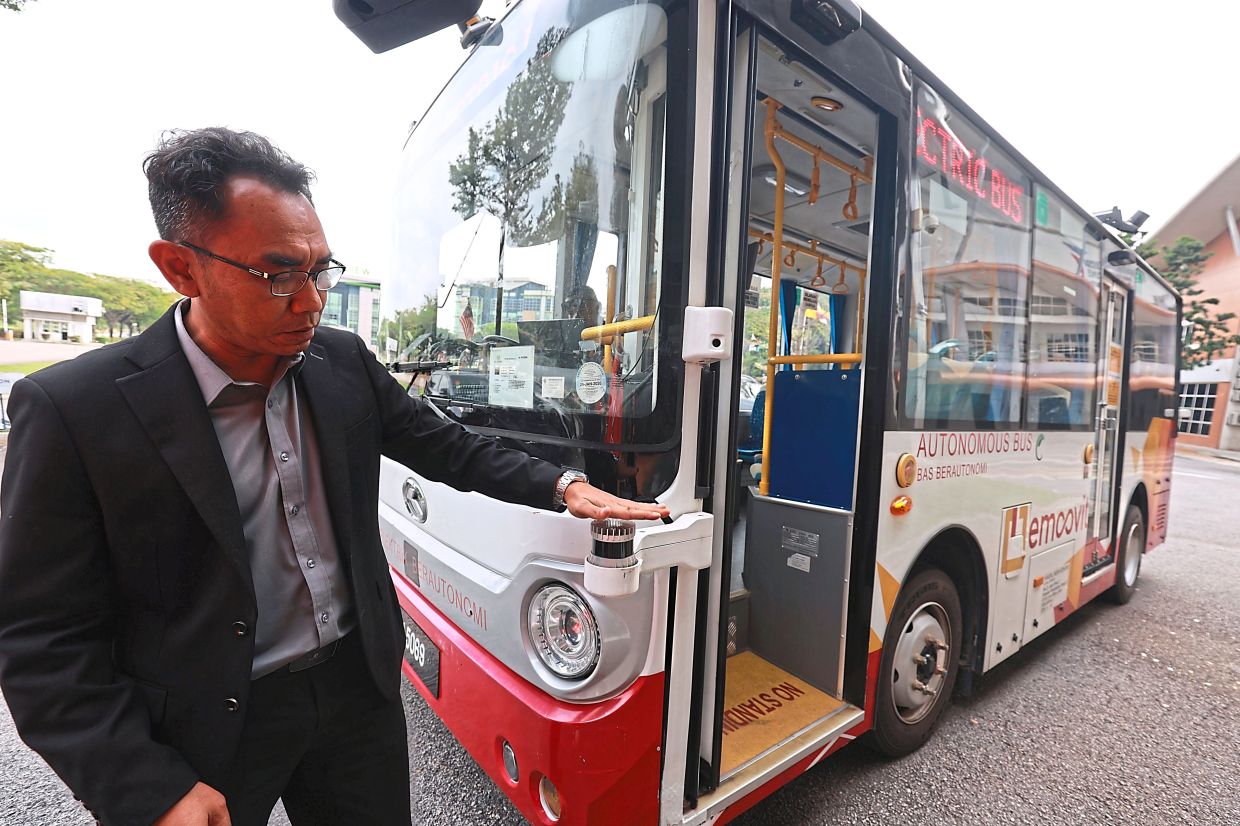
“For every position, there will definitely be at least two kinds of sensors. Let’s say Lidar and camera – the idea is to have redundancy, and redundancy means safety. We cannot rely on one single kind of sensor.
“So what we do is we combine it (the sensors) together, and translate it to meaningful data, recognise what kind of objects, where we should go, the speed, trajectory, and so on.
“Then it goes into what we call the ‘decision-maker’. That decision maker will recognise if something is a vehicle or pedestrian, and will react accordingly,” he says.
According to Hairi, the artificial intelligence (AI) model that powers the bus’ decision-making system was built by eMooVit from the ground up in Malaysia, rather than adapting an existing model trained overseas.
This means that eMooVit had to gather a veritable treasure trove of Malaysia-specific data in order to train the model, with training data including areas such as driver behaviour, traffic, road conditions, and the overall environment.
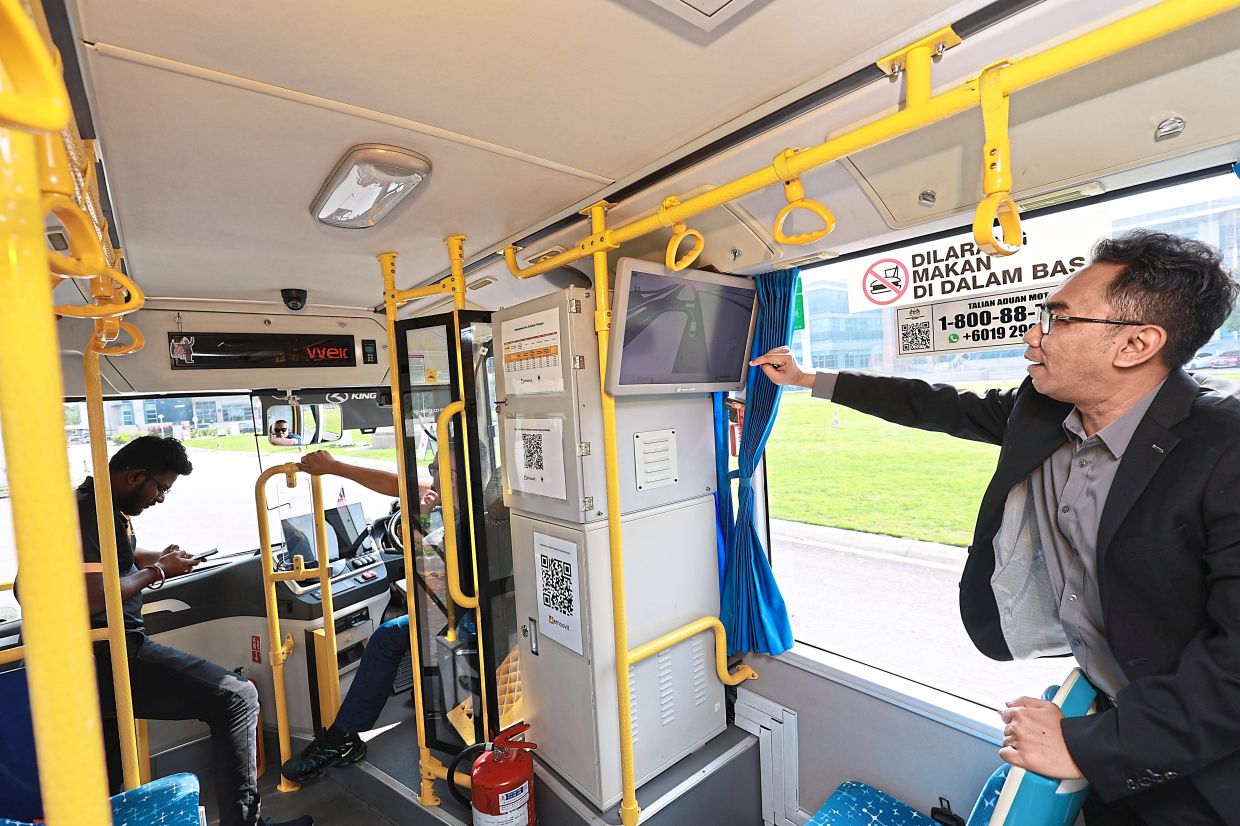
The data gathered was also not just limited to the designated trial location in Putrajaya and the eMooVit office in Cyberjaya, but also from other parts of the country.
“When we’ve already trained the model, we then need to evaluate it. We cannot just put it in a vehicle and send it out to the public.
“So we have thousands of testing scenarios, for example, how vehicles cut in or what happens when multiple vehicles stop by the side of the road,” he says.
Another area of focus for eMooVit is how the AI model reacts to different types of road users, which has served as a significant challenge it had to address in ensuring safety.
“Our concern is a few layers. What is the reaction if there is a pedestrian? That reaction will be different from the reaction to a car, for example. Motorcycles are also different, because they are fast moving and small.
“People are very fragile, so there is a difference in how to react. For us, if there is a pedestrian in front, let’s say on a walkway, we won’t overtake because this person is very fragile. But let’s say there is a parked car, then it will overtake,” he says.
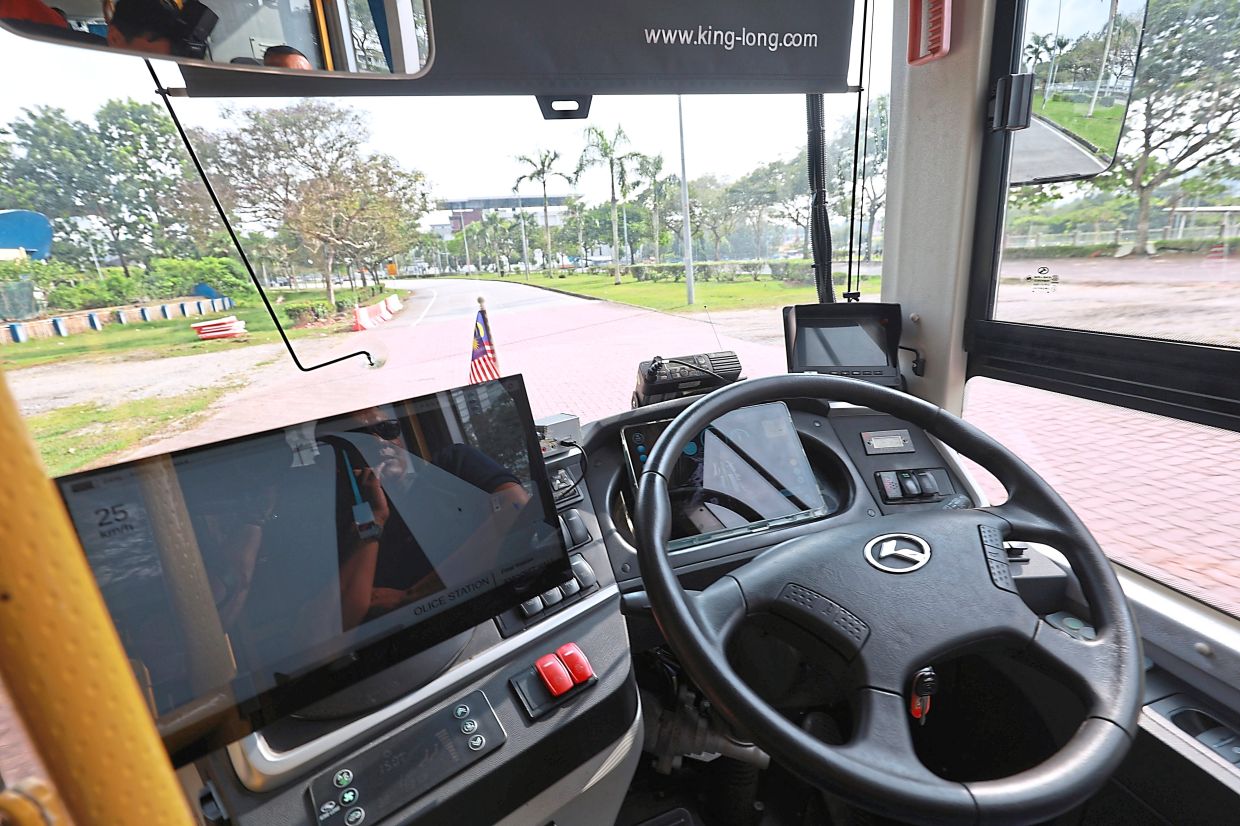
These decisions and reactions are all computed locally on each bus via edge computing, allowing it to respond quickly to critical safety situations. Edge computing refers to the processing of data directly on the vehicle rather than relying on an external server.
Meanwhile, the role that the cloud has in the deployment of eMooVit’s autonomous buses comes in the form of monitoring. This includes the tracking of vehicle health, such as any faults in the system, or warnings that require human intervention.
Such intervention could come from the safety driver who will be present on the buses once they are deployed for public use.
However, eMooVit’s long-term goal is for its buses to operate fully autonomously, with a remote operator stepping in only when necessary, such as if a bus encounters an unfamiliar situation.
Hairi explains that this remote intervention would require 5G for its low latency, enabling critical issues to be communicated to the company’s control tower in real time, while its high bandwidth allows the large volume of data from each bus’ sensor array to be transmitted for analytics.
5G also enables V2X (Vehicle-to-Everything) communication, allowing eMooVit’s autonomous buses to connect with smart city devices and share real-time information. Such connectivity to smart city infrastructure has already been seen in the pilot test deployment in Putrajaya.
This further works alongside cloud analytics to account for traffic conditions and perform projections during peak hours for a more predictable and reliable day-to-day operation of bus services.
In the long run, Hairi predicts that autonomous and connected vehicles will help ease road congestion, provided adoption is sufficient.
He further believes that applying AI in roles that interact with the physical world, through technologies like autonomous vehicles, will be the next major step for the technology.